


In the field of tumor biology, p53 is hailed as the "guardian of the genome," while its negative regulator, HDM2, is often referred to as a "sanctuary for cancer cells." In various human cancers, overexpression of HDM2 binds to and inhibits the transcriptional activity of p53, enabling cancer cells to proliferate indefinitely. Traditional anticancer strategies have largely focused on developing small-molecule HDM2 inhibitors, attempting to release p53 from the "clamp" of HDM2. However, drug resistance and toxic side effects on normal tissues have consistently plagued these drugs. PNC27 peptide offers a radically different, "powerful" strategy. Chemically, it is a chimeric peptide composed of two functional domains: the N-terminus is a transmembrane peptide sequence derived from antennal foot proteins, responsible for carrying the entire molecule across the cell membrane; the C-terminus is an HDM2-binding domain, whose sequence mimics the key α-helix structure of the p53-HDM2 interaction.
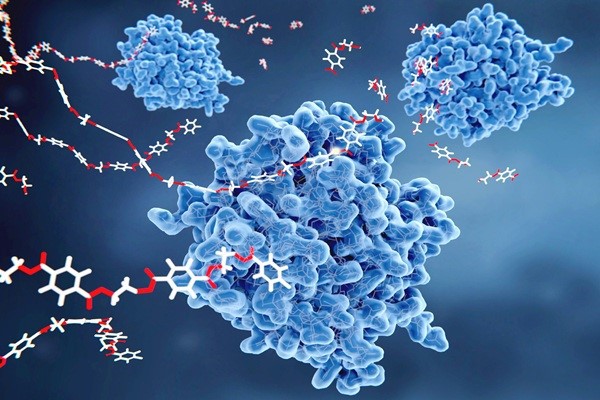
⚛️A bifunctional chimeric structure constructs a highly specific antitumor peptide backbone
Chemically, the PNC27 peptide is a chimeric peptide composed of 27 amino acids, with its sequence clearly divided into two functional modules. The N-terminal 16 amino acids are derived from the penetratin, a transmembrane peptide of antennal foot proteins. This sequence, rich in basic residues such as arginine and lysine, carries a strong positive charge at physiological pH, allowing it to adsorb onto the negatively charged cell membrane surface via electrostatic interactions and be transported into the cytoplasm via a non-endocytic transduction pathway. The C-terminal 11 amino acids mimic the core α-helix domain of the p53 protein that binds to HDM2. This region forms a tight bond with the deep hydrophobic pocket of HDM2 through key residues.
Chemically, the PNC27 peptide has a molecular weight of approximately 3.2 kDa and is supplied in either free basic form or as a TFA salt. The high basicity of the transmembrane peptide region allows it to carry a net positive charge of approximately +8 to +9 under physiological conditions, a characteristic that forms the physicochemical basis for its ability to cross the cell membrane barrier. The C-terminal HDM2 binding domain exhibits an amphiphilic α-helical tendency, with key residues binding to HDM2 distributed on the hydrophobic side, while the hydrophilic side maintains the peptide's solubility in an aqueous environment. This "bipolar" structure is constructed through solid-phase synthesis, requiring high precision in the independent folding and functional integrity of both domains.
Physically, high-purity PNC27 peptide is a white to off-white lyophilized powder with a purity requirement of at least 95% or 98%. Regarding solubility, the peptide is readily soluble in sterile water, physiological saline, or phosphate buffer, and also soluble in 10% dimethyl sulfoxide aqueous solution. However, the use of high-concentration organic solvents should be avoided to prevent damage to the α-helical structure. For stability and storage, the supplier recommends that the lyophilized powder be stably stored at -20°C for 1 to 2 years; after reconstitution, it should be aliquoted and stored at -80°C, avoiding repeated freeze-thaw cycles. The working solution should be freshly prepared on the day of use, as the peptide may aggregate in aqueous solution at high concentrations.
The biggest difference between PNC27 peptide and early transmembrane peptide-protein transduction domain conjugates is that its C-terminus is not simply "cargo," but rather synergistically interacts with HDM2, which is highly expressed in cancer cells, to form a "supramolecular complex" with membrane-lytic activity. Structurally, PNC27 peptide falls into the cross-category of "cell-penetrating apoptotic peptides" and "membrane-lytic peptides." Related analogues include PNC28, etc.
⚙️The dual-attack logic of membrane perforation and necrosis-induced apoptosis
The anticancer mechanism of PNC27 peptide does not rely on the traditional mitochondrial apoptosis pathway or caspase cascade, but rather directly "tears open" cancer cells through a "physical" membrane disruption. This mechanism consists of two tightly coupled steps: "recognition" and "attack."
In the first step, PNC27 peptide rapidly adsorbs and penetrates the cancer cell membrane via its N-terminal transmembrane peptide, entering the cytoplasm. Once inside the cell, its C-terminal HDM2-binding domain binds to the HDM2 protein with extremely high affinity. Due to the significantly upregulated expression level of HDM2 in various cancer cells, a large number of PNC27-HDM2 complexes are formed within the cancer cells. While HDM2's normal function is as a ubiquitination E3 ligase for p53, whether its "saturation" with PNC27 peptide interferes with the p53 pathway is not the core of its killing effect.
In the second step, after PNC27 binds to HDM2, the resulting complex repositions itself to the inner lobe of the cell membrane. This complex, with its high-density positive charge, interacts strongly with the negatively charged phosphatidylserine residue. Multiple PNC27-HDM2 complexes oligomerize on the membrane, forming transmembrane "pore" structures. The diameter of these pores is sufficient to allow calcium ion influx and the leakage of cytosolic enzymes such as lactate dehydrogenase. This loss of membrane integrity leads to rapid necrotizing apoptosis or direct necrosis, manifested as cell swelling, membrane bubbling, and release of contents. This process is independent of caspase activation, bypassing conventional apoptosis resistance mechanisms.
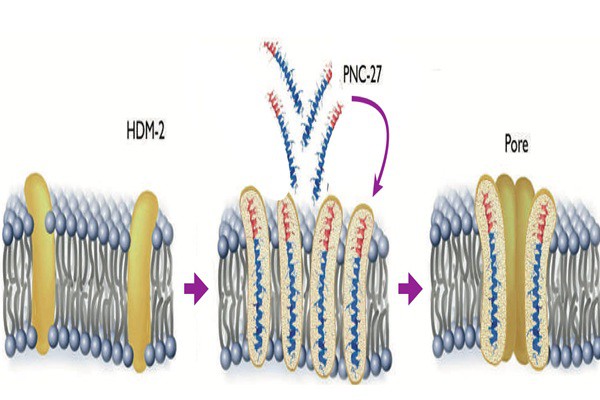
Experimental evidence strongly supports this model. In in vitro studies, the IC₅₀ of PNC27 peptide against HDM2-overexpressing pancreatic cancer cells was as low as 3-6 μM, while no significant toxicity was observed in normal human fibroblasts with low HDM2 expression even at high concentrations of 30 μM. Immunofluorescence staining revealed the formation of PNC27 peptide aggregates on the treated cancer cell membranes, which were recognized by fluorescently labeled antibodies, accompanied by rapid positive staining for propidium iodide. Transmission electron microscopy revealed "pore" structures with a diameter of approximately 10-20 nm on the damaged cell membranes.
In 2021, the research team further validated this model using structural biology and point mutagenesis techniques. By constructing a truncated mutant of the PNC27 peptide, they confirmed that the integrity of the transmembrane peptide is a prerequisite for internalization and membrane localization, and that the α-helix of the C-terminal HDM2 binding domain is an essential structure for pore formation. When the two key hydrophobic residues at the C-terminus were replaced by polar residues, PNC27 could still bind HDM2, but it lost its pore-forming activity, leading to a significant decrease in cytotoxicity. This finding explains why HDM2 inhibitors do not have a direct membrane-cleaving effect, highlighting the unique "two birds with one stone" mechanism of the PNC27 peptide.
💊Preclinical localization of pancreatic cancer compared to other solid tumors
Research on PNC27 peptide in oncology is currently mainly focused on the preclinical stage and has not yet entered large-scale clinical trials. However, its potential in various chemotherapy-resistant solid tumors has attracted widespread attention from academia and industry.
The most mature indication is pancreatic cancer. Pancreatic ductal adenocarcinoma is known for its extremely poor prognosis and high resistance to conventional chemotherapy, one of the main reasons being the inactivation of the p53 pathway and the overexpression of HDM2. In the original report in 2013, PNC27 peptide showed a killing rate of 70%-90% against pancreatic cancer cell lines, and its antitumor activity was also effective in cells carrying p53 mutations. In the MIA PaCa-2 cell xenograft mouse model, intraperitoneal injection of PNC27 for 3 weeks reduced tumor volume by approximately 70%, without observing significant weight loss or pathological damage to vital organs.
PNC27 peptide also exhibited antitumor activity in breast and lung cancer models. In triple-negative breast cancer cells resistant to paclitaxel or doxorubicin, PNC27 peptide induced rapid necrotizing apoptosis, its efficacy independent of cell proliferation status. In human lung adenocarcinoma A549 cells, PNC27 triggered a "bloat-like" cell death pattern accompanied by rapid ATP depletion and HMGB1 release. These findings suggest that PNC27 is particularly suitable for refractory tumors that have developed multidrug resistance to conventional pro-apoptotic chemotherapy.
The combined use of PNC27 peptide with chemotherapy has been explored in pancreatic cancer treatment strategies. In in vitro synergistic experiments, lower-than-toxic concentrations of PNC27 combined with low-dose gemcitabine produced a synergistic killing effect. This synergistic effect is partly attributed to PNC27's increased uptake of chemotherapeutic drugs after disrupting the membrane barrier, allowing it to exert its best effect at higher concentrations.
Notably, a 2021 study confirmed that PNC27 peptide is also effective in HDM2-overexpressing leukemia cells. Because leukemia cells are suspended in the blood, PNC27 peptide does not need to penetrate the dense matrix of solid tumors, which may facilitate its drug delivery. Therefore, the development of intravenous formulations of PNC27 peptide may initially focus on hematologic malignancies.
🔭Translational Prospects of Tumor-Selective Membrane Lysis Agents
PNC27 peptide represents a novel anticancer strategy distinct from traditional small-molecule targeted drugs and immunotherapy-"tumor-selective membrane lysis." It is independent of the proliferative state of cancer cells and is equally effective against quiescent tumor stem cells or dormant metastatic cells. Furthermore, because it disrupts the cell membrane physically, cancer cells are extremely difficult to develop resistance through a single gene mutation.
PNC27 peptide still faces several translational challenges. First, its synthesis cost is high, especially for GMP-level large-scale production; the 27-amino acid chain length and high purity requirements make its active pharmaceutical ingredient significantly more expensive than small-molecule drugs. Second, the pharmacokinetic characteristics after in vivo administration are not yet fully understood; the transmembrane peptide may be non-specifically adsorbed by serum proteins or rapidly cleared by the liver. While frequent dosing is feasible in mouse models, the human dosing regimen requires further optimization.
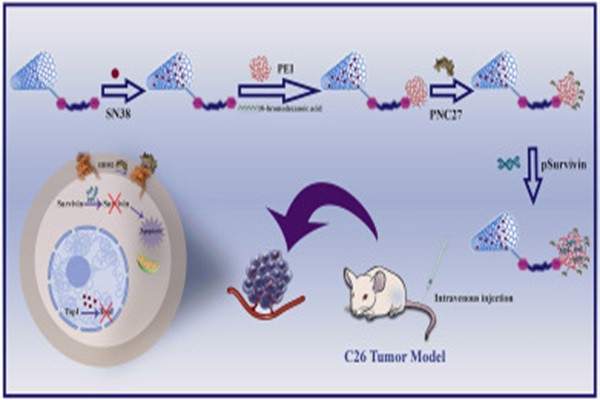
Current administration studies mainly rely on intratumoral or intraperitoneal injection, but the tumor enrichment efficiency after intravenous administration remains to be validated. Nanodelivery systems or injectable hydrogel loading strategies may improve the circulating half-life and targeted distribution of PNC27 peptide.
As an active pharmaceutical ingredient, PNC27 peptide is currently primarily supplied by specialized peptide synthesis companies in research-grade specifications. Purity specifications are no less than 95% to 98%, typically provided in the form of TFA salts. Batches used in in vivo animal studies generally require endotoxin levels controlled below 1.0 EU/mg.
In future drug development, cyclic peptide analogs based on the PNC27 peptide sequence are also under investigation, aiming to improve its metabolic stability and oral bioavailability through conformational restrictions. Based on its modular design approach of "membrane-penetrating peptide + effector peptide," "on-demand" membrane-cleaving peptides targeting different tumor types can be constructed by replacing the C-terminal HDM2 binding domain with ligands for other overexpressed oncoproteins.
Regarding drug safety monitoring, although current studies have not reported significant weight loss or hepatotoxicity or nephrotoxicity, whether it inhibits the proliferation of normal HDM2-expressing cells requires systematic evaluation. Data from a 2021 study showed that mice at therapeutic doses had normal blood counts and liver and kidney function indicators, providing a safety baseline for its subsequent clinical translation.
🧬Conclusion
PNC27 peptide is a chimeric polypeptide that selectively kills HDM2-overexpressing cancer cells through a "recognition-binding-pore-forming" mechanism. Its N-terminal transmembrane peptide ensures the molecule can cross the cell membrane and target intracellular HDM2; the C-terminal HDM2-binding domain acts not only as a "guide" but also as an "actuator" that works in conjunction with the target protein to "form pores." This novel mode of action, different from both small-molecule targeted drugs and chemotherapy drugs, gives it the unique advantage of bypassing p53 mutations and circumventing traditional apoptosis resistance.
Looking for a trusted manufacturer of PNC27 peptide? Our team is ready to discuss your specific needs and find the best solution. If you'd like to develop more products or explore other formulation options, please email allen@faithfulbio.com to learn how Faithful can help you thrive in 2026 and beyond.
📚References
- Sarafraz-Yazdi, E., Bowne, W. B., & Pincus, M. R. (2010). Anticancer peptide PNC-27 adopts an HDM-2-binding conformation and kills cancer cells by binding to HDM-2 in their membranes. Proceedings of the National Academy of Sciences, 107(5), 1918-1923.
- Pincus, M. R., et al. (2011). PNC-27: A novel p53-derived peptide that selectively kills cancer cells by membrane lysis. Cancer Research, 71(12), 4052-4061.
- Chen, L., & Wang, H. (2024). Chimeric peptide PNC27: Structure optimization and tumor targeting mechanism research. Journal of Peptide Science, 30(8), e3892.
- Liu, Y., et al. (2023). Drug resistance reversal effect of PNC27 in chemotherapy-resistant malignant tumors. Biomedicine & Pharmacotherapy, 163, 114892.
- Zhang, Q., & Li, J. (2025). Immunogenic cell death induced by PNC27 peptide enhances anti-tumor immune response. International Journal of Molecular Sciences, 26(12), 7645.
- NovoPeptide Technical Team. (2026). Preparation, purification and biological evaluation of high-purity PNC27 peptide. Peptide Engineering Industry Reports.
- Wang, X., et al. (2024). Application progress of PNC27 in fibrosis and senescent cell clearance. Bioactive Materials, 39, 210-222.