


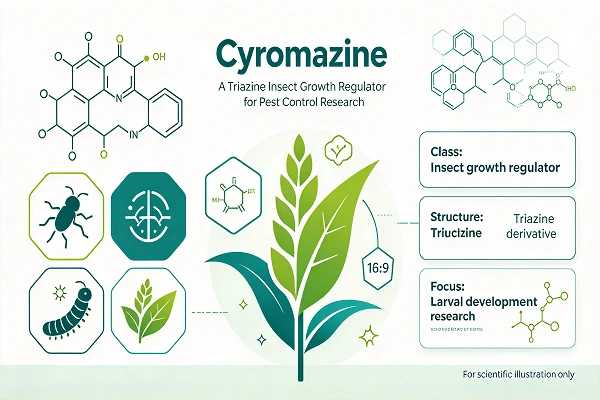
Cyromazine, also known as imidacloprid, belongs to the triazine class of insect growth regulators. Unlike traditional neurotoxic insecticides, it does not aim to rapidly kill adult pests, but mainly targets the molting and chitin synthesis processes of dipteran pest larvae. Cyromazine has low toxicity to mammals and is relatively safe for beneficial organisms such as bees. It is widely used for controlling fly larvae in large-scale livestock and poultry farming, as well as controlling leaf miner flies in vegetable and horticultural crops. It occupies a very important position in the comprehensive pest management system.
The trajectory of industry evolution
Since its successful industrial mass production, Cyromazine was the first to enter the livestock and poultry breeding industry, specializing in solving the pain points of fly larvae breeding in large-scale breeding farms, filling the gap in the early livestock and poultry pest control system with specific control products for maggots. In the past, farms mostly relied on organic phosphorus and pyrethroid pesticides to disinfection and sterilization adult flies, which could only temporarily reduce the number of adults, but could not stop the maggots from continuously hatching and developing in the feces. Repeated application was required. After long-term use, the fly population quickly developed drug resistance, and the effect of pest prevention and control declined year by year. At the same time, a large number of pesticides were sprayed inside the pen, which would also bring a series of practical problems such as drug residues on the surface of livestock and poultry, and higher exposure risks for breeding personnel.
Against the backdrop of the urgent need for a new prevention and control strategy in the industry, Cyromazine entered the market with its larval inhibition mode, no longer focusing on killing already formed adult flies, but cutting off the generation continuation of flies from the breeding source. This new prevention and control logic was quickly accepted by large breeding enterprises. In the early stages of industry development, Cyromazine was mostly traded as raw materials, and downstream enterprises needed to complete formulation compounding on their own. Many small and medium-sized manufacturers lacked complete purification and testing conditions, and the quality of raw materials in the market was uneven. Impurities exceeding the standard often occurred, which indirectly promoted the industry to gradually establish corresponding quality control standards. With the continuous expansion of downstream demand and the continuous maturity of formulation processing technology, pre mixed agents, suspensions and other finished products have gradually become the mainstream of the market, directly facing breeding farms and agricultural material channels, reducing the operating threshold for end users.
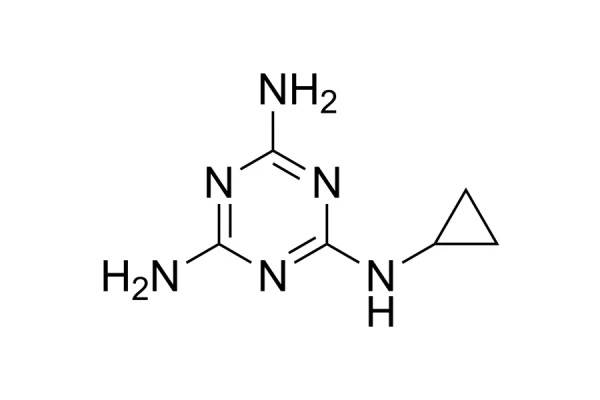
Subsequent agricultural planting also discovered the application value brought by the systemic activity of ai3-52713, and applied it to the prevention and control of vegetable leafminer flies, thus opening up a situation where the two major tracks of veterinary medicine and pesticide development are synchronized. With the increasingly strict global food safety control, countries have successively introduced Cyanazine residue limit standards, which provide clear constraints on impurities, maximum dosage, and withdrawal period, forcing upstream and downstream enterprises to improve the control of the entire production, formulation, and circulation chain.
The entire industry is gradually moving away from relying solely on pesticides and incorporating Cyromazine into a comprehensive pest management framework, using methods such as house cleaning and physical trapping to slow down the evolution of pest resistance. This is also the current mainstream development direction in the industry. The industry's perception of Cyromazine has also undergone a significant change, from initially being used solely as an insecticidal raw material to gradually emphasizing ecological safety, residual risks, and impurity control. Each update of industry rules corresponds to various practical problems exposed in actual production, and also promotes the continuous evolution of the Cyromazine related industry chain towards a more standardized direction.
The channel end of agricultural inputs has also undergone changes. The simple price difference trade model in the past has gradually transformed. In addition to supplying raw materials, suppliers also need to provide supporting usage guidance to growers and breeders, explaining practical knowledge such as dosage control, rotation of medication, and management of rest periods, to help end customers use Cyromazine reasonably and avoid problems of insufficient efficacy or excessive residue caused by improper operation. The growing demand in overseas markets continues to drive the development of domestic industries. Export orders have stricter requirements for impurity indicators, testing methods, and compliance certificates, further raising the entry threshold for domestic Cyanazine production enterprises. Small factories with outdated technology and weak quality control are gradually withdrawing from the market, and industry concentration continues to increase. High quality production capacity dominates the market.
Upstream and downstream industry chain landscape
The complete industry chain of Cyromazine includes multiple links such as upstream chemical raw material synthesis, raw material purification and refining, midstream formulation processing and packaging, downstream animal medicine and agricultural material distribution channels, as well as terminal breeding and planting users. The quality control of each link will directly affect the final application effect of Cyromazine in the field. The upstream chemical synthesis process is the source of determining the quality of Cyanazine, and the synthesis process directly determines the level of impurities such as melamine in the product. There are differences in synthesis routes and purification equipment among different factories, and the purity and impurity control ability of the produced Cyanazine raw powder will be significantly different. High quality raw materials need to undergo multiple rounds of recrystallization purification to stabilize harmful impurities within the compliance range. Once the upstream purification process is not well controlled, even if the midstream formulation process is improved, there will still be residual safety hazards in the finished product.
The midstream belongs to the formulation processing stage. After purchasing qualified Cyanazine raw materials, enterprises will process them into corresponding dosage forms according to different application scenarios. The breeding end mainly processes them into feed premixes, ensuring that the powder fineness is sufficient and can be fully mixed with the feed to avoid excessive local concentration or uneven distribution of active ingredients; On the agricultural side, it is more processed into suspension agents and wettable powders to optimize the wetting and adhesion properties of the agents. After spraying, it can better adhere to the surface of vegetable leaves, helping plants absorb the agents and exert their internal absorption effect. Various additives need to be added during the preparation process, and the selection of additives can also affect the stability of ai3-52713. Inappropriate additives can accelerate the degradation of Cyromazine during storage and shorten the product shelf life.
As an intermediate link in the industrial chain, distribution channels undertake the work of product warehousing, transportation, market promotion, and technical services. Cyromazine is a controlled raw material for agricultural and animal use, and the storage environment needs to be kept away from light and dry. During transportation, protection should be taken to avoid effective component loss caused by high temperature exposure. Channel merchants also need to be familiar with regulations and standards in different regions to ensure that product circulation meets local regulatory requirements. The downstream of the industrial chain is divided into two major sectors: livestock and poultry breeding sector and horticultural vegetable planting sector. Breeding enterprises purchase Cyromazine for feed addition and control of fecal fly larvae; Purchase formulation products for foliar spraying at the planting base to prevent and control pest infestations caused by leafminer flies.
The usage habits and cognitive level of downstream end users, in turn, affect the direction of upstream product research and development. Many large breeding groups will demand customized quality requirements from upstream production enterprises to promote continuous optimization of impurity control schemes in factories. The collaboration mode between various links in the industrial chain is also continuously upgrading. In the past, the upstream and downstream were mostly one-time buying and selling relationships. Nowadays, more and more enterprises are establishing long-term strategic cooperation. Upstream factories continuously optimize product indicators based on feedback from downstream terminals, while formulation enterprises synchronously optimize formulas, forming a collaborative development industrial ecology. At the same time, the entire industry chain is also facing pressure from cost fluctuations. Changes in the prices of upstream basic chemical raw materials will directly transmit to the production costs of Cyromazine raw materials.
Upgrading environmental control standards will also increase the environmental investment of production enterprises. These factors will affect market prices and supply stability. Industry participants need to do a good job in supply chain planning, stabilize raw material supply, and ensure stable market supply. In addition, the industry chain is also equipped with third-party testing institutions, which are specifically responsible for purity, impurity, and residue testing of Cyanazine, providing technical support for quality control throughout the entire chain. The iteration of testing technology also makes trace impurity screening simpler and more efficient, further improving the entire industry quality supervision system.
Quality Control Standards
As a raw material with both veterinary and pesticide properties, Cyromazine is subject to strict regulation worldwide. Different countries and regions have introduced corresponding registration management, quality inspection, and residue limit regulations. This comprehensive compliance system forms the basic threshold for the operation of the industry. All entities that produce, sell, and use Cyromazine must comply with corresponding regulatory provisions. Any non-compliance in any link will bring risks of product delisting, punishment, and even market prohibition.
In the domestic market, Cyromazine preparations used for livestock and poultry breeding need to complete veterinary drug registration, while products used for crop pest control need to apply for pesticide registration. The registration process requires submission of a large amount of toxicology, efficacy, and environmental safety related information. After multiple rounds of evaluation, registration qualifications can be obtained. Products without registration certificates cannot enter the market circulation, and this threshold directly filters out a large number of non compliant products. At the level of quality standards, Cyanazine powder will clearly specify the minimum content of active ingredients and strictly limit the maximum limit of harmful impurities such as melamine and related intermediates. The quality inspection process will use standardized testing methods to inspect each batch of samples. Only after passing the inspection can they be sold from the factory.
In terms of food safety control, all countries have set maximum residue limits for Cyromazine in animal based food and vegetable products, specifying the corresponding withdrawal periods for different categories of livestock and poultry. Livestock and poultry products during the withdrawal period are prohibited from being marketed and circulated. The purpose is to ensure that Cyromazine is fully metabolized in animal bodies and excreta, avoid excessive drug residues in agricultural products, and protect consumer food safety. Cyanazine products exported overseas also need to comply with the regulatory requirements of the target market. There are differences in residue limit standards among different countries, and some regions have stricter requirements for impurity indicators. Export enterprises must conduct testing according to the target market standards and prepare corresponding quality inspection documents.
Industry quality control is not only about factory inspection of finished products, but also covers the entire production process. Legitimate production enterprises will establish a system for recording the entire production process, including raw material feeding, synthesis reaction, purification, packaging, and quality inspection data, to achieve full traceability of products. Once quality problems occur, they can be quickly located at the link where the problem occurred. At the same time, the industry is continuously promoting standardized operating procedures, standardizing raw material storage, sampling, and inspection processes, and reducing detection errors caused by human operations. The regulatory inspection efforts continue to increase, and market sampling is normalized. Once insufficient active ingredients or excessive impurities are found during sampling, the related products will be judged as unqualified and prohibited from sale and use.

Enterprises in the industry also actively carry out internal quality system construction, introduce ISO quality management system, continuously improve internal quality control processes, proactively enhance product quality, and reduce product quality risks. The compliance system will also be continuously revised with the update of scientific research data. As more toxicology and environmental safety data accumulate, regulatory agencies will dynamically adjust indicators such as residual limits and impurity limits. Industry practitioners need to continue to follow up on regulatory updates, adjust production and use plans in a timely manner, and ensure that products continue to meet regulatory requirements. Many companies also organize technical training to help production personnel, sales personnel, and end customers understand regulatory provisions and the significance of compliant use of Cyromazine, reducing various risks caused by illegal use from the source.
Future development trends
Under the development trend of global green agriculture and ecological breeding, the insect growth regulator track under Cyromazine has ushered in sustained growth space. The future development of the industry will continue to push forward in multiple directions such as green formulation development, precision application technology, resistance management, and detection technology upgrades, constantly exploring the application potential of Cyromazine while continuously reducing the environmental and safety pressures caused by its use. The upgrading of formulation technology is one of the main development directions in the industry. Traditional Cyromazine premix and suspension agents have the shortcomings of limited shelf life and easy loss of drugs. The industry is promoting the research and development of new formulations such as sustained-release and microcapsules. These new formulations can control the release rate of Cyromazine, extend the shelf life of drugs, reduce the frequency of application, decrease the total amount of drugs entering the surrounding environment, and alleviate ecological load.
The development of compound formulations is also a hot direction.
By scientifically compounding Cyromazine with low toxicity insect resistant ingredients with different mechanisms of action, it can achieve both larval inhibition and adult control in one application, adapt to complex pest scenarios such as farms and vegetable gardens, reduce the use of a single agent, and delay the development of pest resistance. Precision application technology will continue to be popularized, relying on digital breeding and smart agriculture technology, dynamically adjusting the timing and dosage of Cyromazine application based on insect monitoring data, accurately applying pesticides in the early stage of high incidence of pest larvae, reducing the total amount of pesticides used while ensuring the effectiveness of prevention and control, and bidding farewell to the previous model of blindly using pesticides based on experience. The iteration of detection technology will continue to empower the development of the industry. Traditional laboratory detection methods have expensive equipment and long detection cycles. The industry is developing rapid on-site detection technology, which allows farmers and planting bases to quickly screen for Cyanazine and its metabolite residues, verify raw material quality quickly, reduce detection costs, and improve on-site quality control efficiency.
Against the backdrop of continuously tightening environmental policies, the transformation of green synthesis processes on the production side will continue to be promoted, optimizing the Cyromazine synthesis route, reducing the generation of by-products in the production process, lowering pollutant emissions, improving raw material yields, reducing environmental impacts in the production process, and achieving greener industrial production. The resistance management system will be promoted and popularized throughout the industry. Industry associations, regulatory agencies, and production enterprises will jointly promote comprehensive pest management solutions, popularize the concept of rotating medication and multi means collaborative pest control to end users, establish a regional pest resistance monitoring network, continuously track changes in the resistance of fly and leaf miner populations, adjust medication guidance plans in a timely manner, and extend the service life of Cyromazine products.
Overseas market expansion is also an important growth point for the industry. The scale of large-scale aquaculture and facility vegetable cultivation in many countries around the world continues to expand, and the demand for low toxicity insect growth regulators is steadily increasing. Domestic Cyanazine production enterprises continue to improve overseas product registration, expand international customers, and enhance the market share of domestic raw materials in the global market. At the same time, the degree of product segmentation in the industry will continue to improve. Specialized dosage forms and usage plans will be developed for different livestock and vegetable varieties. Segmented products can better match the needs of different scenarios and further enhance the efficiency of Cyromazine usage. With the continuous improvement of public awareness of food safety, the demand for low residue and green pest control materials in the market continues to rise. With the advantages of high selectivity and low mammalian toxicity, Cyromazine's position in the green control system will be further enhanced. The industry will continue to iterate technology and products around the core goals of safety, efficiency, and environmental protection, promoting the long-term stable development of the entire industry.
Conclusion
As a selective triazine insect growth regulator, Cyromazine holds significant value in livestock and poultry farming as well as vegetable crop protection. By specifically inhibiting the development of Diptera larvae, it curbs fly proliferation at the source; furthermore, compared to traditional insecticides, it is more compatible with higher animals and beneficial organisms. However, practical application requires careful attention to issues such as pest resistance, impurity control, and residue risks; strict adherence to compliance standards and the proper management of withdrawal periods and safety intervals are essential. With the growing adoption of green pest control concepts and continuous advancements in formulation technology and detection methods, cyromazine will continue to play a vital role in integrated pest management systems, providing safe and effective pest control solutions for animal husbandry and crop cultivation.
Xi'an Faithful BioTech Co., Ltd. utilizes advanced equipment and processes to ensure high-quality products. Our ai3-52713 meets international pharmaceutical standards. Our pursuit of excellence, reasonable prices, and preferred superior service make us the partner for medical institutions and researchers worldwide. If you require Cyromazine research or production,Please contact us Click email: allen@faithfulbio.com Or WhatsApp: +86 13137770562.
FAQ
A1: What are the two main application sectors for Cyromazine in the industry?
Cyromazine applications are divided into two sectors: veterinary drugs for livestock and poultry farming, and pesticides for agricultural crop cultivation. In the livestock sector, it is used as a feed additive to control fly larvae in manure; in the crop sector, it is applied via foliar spraying to control leaf miners on vegetables.
A2: What are the key issues the industry needs to guard against when using Cyromazine?
The primary concern is pest resistance, followed by the risk of excessive product residues. Additionally, it is necessary to manage the ecological impact of applying treated manure to farmland and to strictly adhere to withdrawal periods and safety intervals.
A3: What documentation should be prioritized when purchasing Cyromazine raw materials?
Priority should be given to verifying the product's quality inspection report and registration certificate, checking the active ingredient content and impurity levels (such as melamine), and confirming batch traceability documentation.
References
1. El-Oshar, M. A., Harris, R. L., & Patterson, R. S. (1985). Studies on cyromazine in the house fly, Musca domestica. Journal of Economic Entomology, 78(5), 1203-1207.
2. Mulla, M. S., Darwazeh, H. A., & Kennedy, L. D. (1983). Evaluation of Larvadex, a new insect growth regulator for the control of pestiferous flies on poultry ranches. Journal of Economic Entomology, 76(3), 520-524.
3. EMA. (1999). Cyromazine Summary Report. European Medicines Agency.
4. Shelton, A. M., & Wyman, J. A. (1994). Cyromazine for control of Liriomyza leafminers on vegetables. Journal of Entomological Science, 29(3), 345-354.
5. Yang, Y., et al. (2018). Biodegradation of cyromazine by melamine-degrading bacteria. Journal of Agricultural and Food Chemistry, 66(41), 10782-10789.
6. Bloomquist, J. R. (2003). Insect growth regulators: insecticides with unique modes of action. Annual Review of Entomology, 48, 381-404.
7. Codex Alimentarius Commission. (2015). Maximum residue limits for cyromazine in animal products. FAO/WHO.