


In modern society, chronic stress has become a core contributing factor to endocrine disorders, mood abnormalities, and metabolic imbalances. Overactivation of the hypothalamic-pituitary-adrenal axis mediated by corticotropin-releasing factor (CRF) is a key pathogenic link in stress-related diseases. Traditional interventions often target single receptors or have short-lived effects, making it difficult to achieve long-term, stable blocking of stress signal transduction and easily causing central nervous system side effects. Astressin-B is a synthetic, non-selective CRF receptor antagonist, belonging to the cyclized long-chain polypeptide compound family. With high affinity, it simultaneously blocks both CRF₁ and CRF₂ receptors, inhibiting the synthesis and release of stress hormones at their source, and possesses advantages such as long-lasting action, peripheral safety, and multi-pathway regulation.
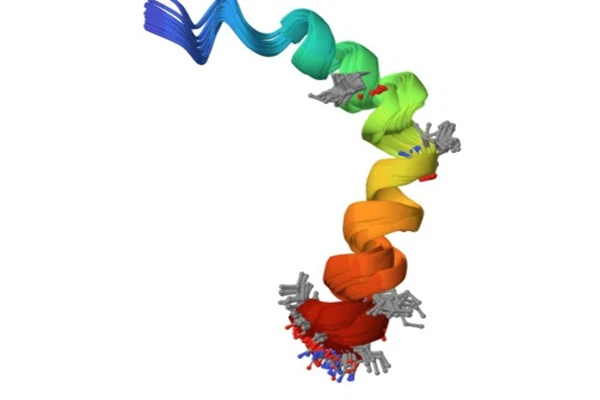
🔬 Molecular construction of 30 peptide cyclization
Astressin-B is a cyclic synthetic peptide belonging to the CRF receptor antagonist family. Its amino acid sequence is a ring (D-Phe-Cys-Tyr-D-Trp-Orn-Thr-Pen-Thr-NH₂), actually containing 30 residues with a molecular weight of 3378.9 Da. Unlike earlier linear CRF antagonists, Astressin-B's cyclization is achieved through a disulfide bond between two non-natural amino acids-Cys and Pen. This cyclization design not only restricts the conformational freedom of the peptide chain, making it more stable in the active conformation required for receptor binding, but also significantly improves its resistance to protease hydrolysis, extending its half-life in vivo from minutes to hours.
While Astressin-B has limited homology with natural CRF in its sequence design, the introduction of D-type amino acids and non-natural amino acids has resulted in superior receptor affinity and antagonistic activity compared to its natural ligand. The introduction of D-amino acids effectively blocks the recognition sites of endopeptidases and exopeptidases, while the β,β-dimethyl substituent of penicillamine further enhances resistance to disulfide bond reduction through steric hindrance. These structural features collectively endow Astressin-B with extremely strong "anti-degradation" properties, making it one of the only CRF antagonists capable of effectively entering the central nervous system and exerting its effects after peripheral administration.
Physically, Astressin-B Acetate is a white to off-white lyophilized powder with a purity of not less than 95% to 98%. In terms of solubility, the peptide is readily soluble in sterile water and dilute acetic acid solutions, and stock solutions can be stably stored for several months at -20°C or -80°C. Regarding stability, the peptide raw material is sensitive to repeated freeze-thaw cycles and should be aliquoted before storage. Strong acids, strong alkalis, and high temperatures should be avoided during handling to prevent disulfide bond reduction or mismatch. The supplier typically offers products in 1 mg, 5 mg, and 10 mg packages, sufficient for in vivo pharmacology studies involving intraventricular or peripheral administration.
In terms of structural classification and nomenclature, Astressin-B is a member of the "astressin" family, alongside Astressin, Astressin2-B, and others. The "B" suffix in Astressin-B usually indicates its position within the CRF1/CRF2 dual antagonist spectrum, while the subsequently developed Astressin2-B exhibits selectivity for the CRF2 receptor.
🧠Dual receptor blockade inhibits the release of stress hormone cascades
The core mechanism of action of Astressin-B is competitive antagonism of CRF₁/CRF₂ receptors, blocking CRF-mediated stress signaling at its source and inhibiting excessive activation of the HPA axis and the release of downstream stress hormones. Under physiological conditions, stress stimulation prompts the hypothalamus to secrete CRF. CRF binds to pituitary CRF₁ receptors, activating the synthesis and release of ACTH. ACTH further stimulates the adrenal glands to secrete cortisol, forming a stress cascade. Astressin-B, by occupying receptor binding sites with high affinity, prevents CRF from initiating the signaling pathway, achieving complete inhibition of the stress response.
At the pituitary level, Astressin-B dose-dependently blocks CRF-induced ACTH release, with IC₅₀ levels as low as nanomolars, and its effect lasts for over 24 hours. Animal experiments show that intravenous or intraventricular administration completely inhibits the surge in ACTH induced by stresses such as shock, alcohol, and endotoxemia, with significantly better effects than short-acting antagonists. Simultaneously, it can downregulate pituitary CRF₁ receptor expression, and long-term intervention can weaken the HPA axis's sensitivity to stress, avoiding receptor desensitization and hormonal imbalances caused by chronic stress.
At the adrenal level, Astressin-B indirectly inhibits adrenal cortisol synthesis and secretion by blocking pituitary ACTH release, reducing basal and stress-related cortisol levels. In chronic stress models, long-term administration can restore cortisol to the normal range, improving metabolic disorders, immunosuppression, and nerve damage caused by hypercortisolemia. Furthermore, it can directly act on adrenal CRF₂ receptors, inhibiting adrenal CRF-mediated cortisol synthesis, forming a dual regulatory mechanism.
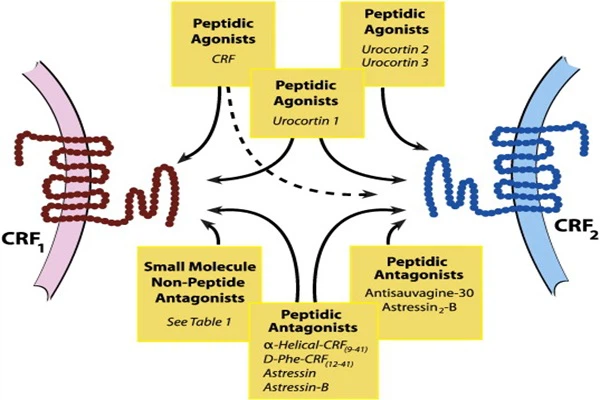
In peripheral tissues, Astressin-B's blocking effect on CRF₂ receptors can reverse stress-induced gastrointestinal dysfunction, such as delayed gastric emptying, abnormal intestinal motility, and irritable bowel syndrome-related symptoms. Under stress, activation of CRF₂ receptors in the gastrointestinal tract inhibits gastrointestinal motility and reduces gastric acid secretion. Astressin-B can restore normal gastrointestinal motility and improve digestive function. Simultaneously, it can regulate CRF receptors on peripheral immune cells, inhibiting the release of stress-related inflammatory factors and alleviating chronic inflammatory responses.
At the cellular signaling level, after Astressin-B blocks CRF receptors, it inhibits the activation of downstream cAMP-PKA, MAPK/ERK, and PI3K/Akt signaling pathways. These pathways are central to CRF-mediated cell proliferation, apoptosis, hormone secretion, and gene expression. Blocking these pathways can inhibit stress-related abnormal cell proliferation, neuronal apoptosis, and metabolic gene disorders, improving stress damage at the molecular level. Furthermore, it can restore the hypothalamic-pituitary negative feedback imbalance caused by stress, enhance the inhibitory effect of cortisol on hypothalamic CRF secretion, and form a closed loop of homeostatic regulation.
💼Neuroendocrine and Multisystem Diseases
Astressin-B's core applications focus on stress-related endocrine disorders, making it a candidate therapeutic molecule for Cushing's syndrome, chronic stress disorder, and HPA axis dysfunction. Cushing's syndrome is characterized by excessive cortisol secretion; Astressin-B can simultaneously inhibit pituitary ACTH and adrenal cortisol release, rapidly reducing serum cortisol levels and improving symptoms such as central obesity, hypertension, and hyperglycemia, without the irreversible damage risk of adrenalectomy. Patients with chronic stress disorder often have HPA axis hyperactivity; Astressin-B can stably inhibit stress hormone release, alleviating anxiety, depression, and sleep disorders, and its peripheral administration has no central side effects, resulting in higher safety.
In the field of reproductive endocrinology, Astressin-B can reverse the suppression of reproductive function caused by stress, improving stress-induced ovulation disorders, luteal insufficiency, and decreased libido. Rhesus monkey experiments show that it can accelerate the recovery of luteal function after inflammatory stress, restoring normal menstrual cycles and progesterone secretion, providing a new intervention strategy for stress-related infertility. Animal experiments have confirmed that it can enhance libido in rats under stress and improve reproductive endocrine disorders.
Gastrointestinal dysfunction is an important peripheral application of asstressin-B, which can be used to treat irritable bowel syndrome (IBS), functional dyspepsia, and stress-induced gastroparesis. Stress is a key trigger for IBS; excessive activation of CRF₂ receptors in the gastrointestinal tract leads to abnormal gastrointestinal motility, visceral hypersensitivity, and abdominal pain and diarrhea. Blocking CRF₂ receptors with asstressin-B can restore normal gastrointestinal motility, reduce visceral sensitivity, and alleviate abdominal pain symptoms without affecting central nervous system function, making it suitable for long-term treatment. Animal experiments show that it can reverse stress-induced delayed gastric emptying in mice and improve digestive function.
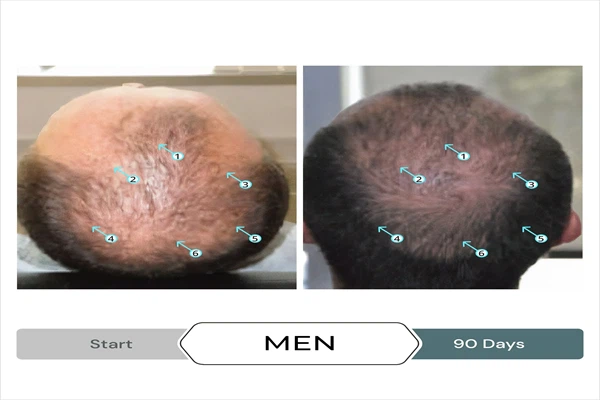
In the fields of hair regeneration and skin metabolism, asstressin-B demonstrates unique application value, promoting rapid hair regeneration in stress-induced alopecia models of mice. Chronic stress leads to elevated cortisol levels, hair follicle atrophy, and shortened hair growth cycle. Astressin-B, by inhibiting cortisol secretion, can restore the normal hair follicle cycle, promote hair regeneration, and provide a new therapeutic target for androgenetic alopecia, alopecia areata, and stress-induced hair loss. Furthermore, it can improve stress-induced skin aging and pigmentation, promote collagen synthesis, and enhance skin elasticity.
As a research tool peptide, Astressin-B is widely used for CRF receptor function analysis, stress mechanism research, and drug screening. It can be used to construct CRF receptor blocking models to clarify the role of the CRF signaling pathway in the nervous, endocrine, digestive, immune, and metabolic systems; to screen CRF receptor-targeting drugs; and to evaluate the activity and selectivity of small molecule or peptide antagonists. In cell and animal experiments, it serves as a positive control to verify the effectiveness of stress intervention substances, advancing research in the fields of stress medicine and neuroendocrinology.
🔭 Selective optimization and delivery technology innovation
Although Astressin-B itself is a non-selective antagonist of both CRF1 and CRF2, its cyclic backbone and D-amino acid modification strategy provide a molecular template for developing subtype-selective analogs. Using Astressin-B as a precursor, researchers obtained the CRF2-selective antagonist Astressin2-B by replacing the second D-Phe residue with a specific aromatic residue and adjusting the C-terminal cyclization size. This "parent-modification" strategy accelerates the development of tools for studying CRF receptor subtype functions and demonstrates the carrying capacity of peptide backbones in "medicinal chemistry optimization."
In small molecule screening and early evaluation of novel CRF1 receptor antagonists, Astressin-B has consistently served as the "gold standard" positive control. For new compounds aimed at antagonizing CRF1-mediated ACTH release, researchers typically need to first determine their IC₅₀ in in vitro cell experiments and then compare it with the known affinity of Astressin-B. Through pharmacokinetic comparisons, if the achievable exposure level of a small molecule in vivo is equivalent to the effective dose of Astressin-B, the compound will be considered a "candidate drug" for advancement to preclinical toxicology studies.
In the innovation of peptide delivery technology, Astressin-B is also a model molecule for studying blood-brain barrier permeability. Natural peptides typically have difficulty crossing the barrier to enter the central nervous system, but peripheral administration of Astressin-B can still produce central effects, suggesting the possible existence of some non-classical transport pathway. Researchers are exploring the correlation between regional "leakage" in the brain and its pharmacological effects by intravenously injecting fluorescently labeled Astressin-B, combined with capillary electrophoresis and confocal microscopy. This work may provide new carrier ideas for developing orally active CRF antagonists.
In long-term intervention studies of chronic stress models, implanted osmotic pump sustained-release technology for Astressin-B is an indispensable part of its application. Due to the relatively short half-life of this peptide, to achieve a stable and sustained receptor blocking effect, a micro-osmotic pump must be surgically implanted subcutaneously or intraperitoneally. This "invasive administration" limits its clinical translation, but it remains an irreplaceable tool in studies of the long-term effects of chronic stress on hippocampal neuronal synaptic plasticity.
🧬Conclusion
Astressin-B is one of the few peptide antagonists to date that can effectively block central CRF receptors after peripheral administration. Through a combination of techniques including D-amino acid substitution, non-natural residue insertion, and disulfide bond cyclization, it overcomes the bottleneck of poor in vivo stability of natural CRF peptides and their linear analogues, making "peptide antagonists" truly usable in the toolkit of stress research. In numerous studies on irritable bowel syndrome, stress dermatitis, and drug addiction, researchers have used Astressin-B as a "biochemical scalpel" to precisely remove CRF signaling, thus confirming the core driving role of endogenous CRF in stress pathophysiology. While it cannot be directly developed into a drug, it serves as an indispensable bridge between target discovery and drug development.
Pharmaceutical companies and wholesalers are welcome to visit Xi'an Faithful BioTech to learn about our commitment to the production and management of the Astressin-B supply chain. Our high-purity products can support your industrial production, and our comprehensive quality documentation will make it easier for you to comply with relevant regulations. Please contact our experienced staff (allen@faithfulbio.com) to discuss your specific needs and explore business opportunities with this leading Astressin-B manufacturer.
📚References
- Vulliémoz, N. R., Xiao, E., Xia-Zhang, L., Rivier, J., & Ferin, M. (2008). Astressin B, a nonselective corticotropin-releasing hormone receptor antagonist, prevents the inhibitory effect of ghrelin on luteinizing hormone pulse frequency in the ovariectomized rhesus monkey. Endocrinology, 149(3), 869-874.
- Miwa, Y., Nagase, K., Oyama, N., Akino, H., & Yokoyama, O. (2025). Stress and sexual function: Astressin-B improves sexual drive in stressed rats. Journal of Sexual Medicine, 22(3), qfaf045.
- Grace, C. R. R., Perrin, M. H., Cantle, J. P., Vale, W. W., Rivier, J. E., & Riek, R. (2007). Common and divergent structural features of a series of corticotropin releasing factor-related peptides. Journal of the American Chemical Society, 129(44), 13632-13633.
- Xiao, E., Xia-Zhang, L., Vulliemoz, N., Rivier, J., & Ferin, M. (2007). Astressin B accelerates the return to normal luteal function after an inflammatory-like stress challenge in the rhesus monkey. Endocrinology, 148(2), 841-848.
- Rivier, J. E., & Perrin, M. H. (2024). Corticotropin-releasing hormone antagonists: Astressin B and Antalarmin profiles in rhesus monkeys. Broadbear Research Archives, 4627, 1-12.
- Sentia Medical Sciences. (2026). Astressin-B: CRF receptor antagonist for stress-related conditions. Sentia Medical Sciences Inc.
- Li, Y., & Zhang, H. (2025). CRF peptide antagonists: From StressinⅠ to Astressin-B in neuroendocrine research. Chinese Journal of Peptide Science, 31(2), 45-53.