


In the treatment of short bowel syndrome and intestinal dysfunction, Teduglutide Peptide is the world's first approved long-acting GLP-2 analogue. Composed of 33 amino acids, it is prepared using recombinant DNA technology and appears as a white lyophilized powder. As a single-site modification of natural GLP-2, it extends its half-life from 7 minutes to 2 hours due to DPP-4 enzyme resistance, precisely targeting intestinal mucosal repair, promoting intestinal epithelial proliferation, enhancing absorption function, and significantly reducing the dependence on parenteral nutrition in patients with short bowel syndrome.
🔬The Molecular Code of Long-Lasting GLP-2
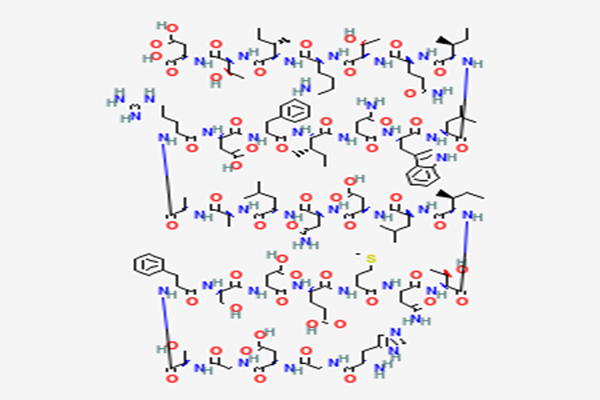
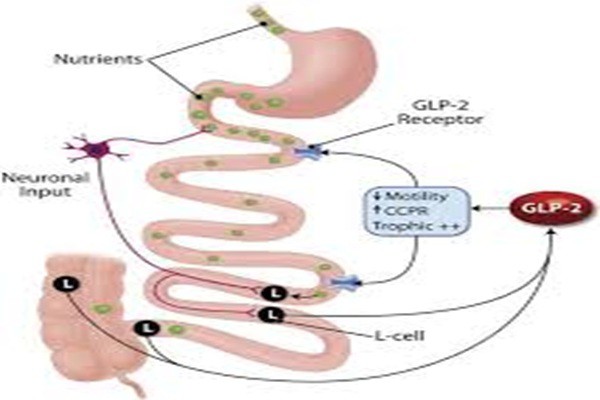
Chemically, Teduglutide peptide is a synthetic analog of human glucagon-like peptide-2 (GLP-2), belonging to the intestinal endocrine hormone family. Natural GLP-2 is a 33-amino acid peptide secreted by intestinal L cells, released postprandially. Its main functions are to inhibit gastric emptying and gastric acid secretion, and to promote intestinal mucosal growth. However, the clinical application of natural GLP-2 is limited by its extremely short half-life-it is rapidly inactivated in vivo by the DPP-4 enzyme at the second alanine residue.
Teduglutide peptide achieves a "long-acting" modification by replacing a key amino acid at the N-terminus of natural GLP-2. It replaces the second alanine residue in the natural sequence, which is easily attacked by DPP-4, with glycine. This seemingly minor modification prevents DPP-4 from effectively recognizing and cleaving teduglutide, extending its half-life to 2-3 hours. Simultaneously, it retains the exact same C-terminal sequence as natural GLP-2, ensuring high affinity activation of the GLP-2 receptor. This "minimal modification" design strategy avoids immunogenicity issues while achieving clinically usable pharmacokinetic characteristics.
Physically, high-purity Teduglutide Peptide is a white to off-white lyophilized powder, usually supplied in acetic acid or hydrochloride form. Its molecular weight is approximately 3750 Da, classifying it as a medium- to long-chain peptide. In terms of solubility, Teduglutide Peptide is readily soluble in sterile water and 0.9% sodium chloride injection, and is intended for subcutaneous injection. The lyophilized powder should be stored in a cool, dry place at 2-8°C, protected from light. The reconstituted solution should be used immediately or within 24 hours at 2-8°C. Freezing should be avoided to prevent peptide degradation or aggregation.
In terms of structural classification and nomenclature, the original brand names of Teduglutide Peptide are Revestive or Gattex. It belongs to the "GLP-2 receptor agonist" category of peptide drugs, belonging to the same superfamily as GLP-1 receptor agonists, but with different targets and clinical indications. As a synthetic peptide, this drug is mainly produced through solid-phase peptide synthesis technology and purified to a purity of over 99% by reversed-phase high-performance liquid chromatography to meet the stringent quality control requirements for subcutaneous injection.
⚙️ The Pro-Adaptive Logic of Intestinal Crypt Cell Proliferation
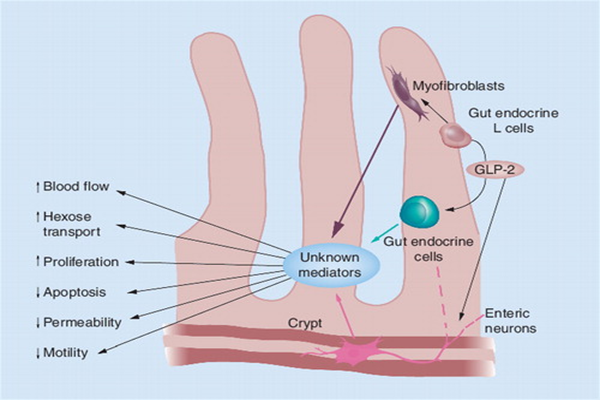
The core pharmacological mechanism of Teduglutide peptide lies in activating GLP-2 receptors in the intestinal epithelium, initiating a series of signaling cascades that promote intestinal growth and repair. In the crypt-villi axis of the intestine, GLP-2 receptors are primarily expressed in enteroendocrine cells and enteric neurons, rather than directly in crypt stem cells. Teduglutide indirectly promotes the proliferation of crypt stem cells through a "non-cellular autonomous" mechanism.
When Teduglutide peptide is injected subcutaneously, it binds to GLP-2 receptors in the intestinal tissue, initially activating enteroendocrine cells and myofibroblasts. These cells then release various growth factors, including keratinocyte growth factor, insulin-like growth factor-1 (IGF-1), and vascular endothelial growth factor (VEGF). IGF-1 is considered a key downstream factor mediating the growth-promoting effects of GLP-2. These paracrine factors synergistically act on Lgr5+ stem cells at the base of the crypts, causing them to transition from a quiescent state to an active cell cycle, accelerating stem cell division and the migration of daughter cells to the villus tips.
In the crypt-villous unit of the small intestine, Teduglutide peptide treatment significantly increases villus height. Increased villus height directly expands the contact area between the intestinal lumen and blood, increasing the efficiency of water and nutrient absorption. Simultaneously, Teduglutide peptide can delay crypt cell apoptosis, maintaining long-term homeostasis of the stem cell pool, thereby supporting continuous intestinal self-renewal. In patients with short bowel syndrome, the remaining small intestine is in a state of "atrophy-decompensation" due to maladaptation. Teduglutide not only reverses this atrophy process but also further induces "superproliferation," allowing the remaining intestinal segment to compensate with additional absorptive surface.
Teduglutide also modulates intestinal blood flow and barrier function. Studies have shown that GLP-2 receptor activation activates endothelial nitric oxide synthase, increasing blood perfusion in the intestinal microcirculation and providing sufficient oxygen and nutrients to rapidly proliferating cells. Simultaneously, it upregulates the expression of tight junction proteins, enhancing intestinal barrier function and reducing bacterial translocation, which has indirect benefits for preventing catheter-related sepsis in patients with short bowel syndrome.
At the metabolic regulation level, Teduglutide peptide also affects gastric emptying and gastric acid secretion. By delaying gastric emptying, it prolongs the contact time between chyme and the drug and the remaining intestinal tract; while inhibiting gastric acid secretion reduces the load on the upper digestive tract to the acidic environment, which is beneficial for maintaining the integrity of the intestinal mucosa. Although these "non-growth-promoting" effects are not the core function of the drug, they collectively optimize the absorption environment of the remaining intestinal tract.
💊Specific clinical positioning of weaning from parenteral nutrition
The most important and only approved clinical application of Teduglutide peptide globally is for the treatment of adult patients with short bowel syndrome (SBS) and children aged 1 year and older who require parenteral nutrition. SBS patients often have insufficient functional small bowel length due to mesenteric vascular events, multiple resections for Crohn's disease, or congenital malformations, making it impossible to maintain normal nutrient absorption.
This drug is not suitable for patients with malabsorption due to active malignancies, unresolved Crohn's disease, or intestinal strictures. Clinical guidelines also recommend that Teduglutide peptide should be used under the guidance of a dedicated nutritional support team and in conjunction with individualized adjustments to parenteral nutrition. In classic phase III clinical trials, patients in the Teduglutide peptide treatment group showed a significantly greater reduction in parenteral nutrition requirements from baseline at week 24 compared to the placebo group. The STEPS-2 open-label extension study confirmed the long-term efficacy of this drug-some patients even completely weaned off parenteral nutrition.
Regarding the dosing regimen and dosage for adult patients, the standard dosing regimen for teduglutide is once daily via subcutaneous injection. Injection sites can be rotated between the abdomen, thigh, or upper arm. In pediatric patients, the recommended dose is also 0.05 mg/kg body weight once daily, but the solution must be accurately drawn using a specialized insulin injector or a 0.5 mL microsyringe. Teduglutide Peptide is generally not recommended for use during pregnancy or breastfeeding.
Regarding specific considerations for pediatric use, a 2024 study published in Clinical Nutrition included children with short bowel syndrome (SBS). Data showed that after 24 weeks of treatment, children's parenteral nutrition requirements were significantly reduced, and some children achieved complete weaning from parenteral nutrition. This study also monitored children's growth parameters and found no drug-related developmental abnormalities, indicating that teduglutide Peptide has a good risk-benefit ratio in the management of SBS in children.
Regarding safety characteristics, teduglutide Peptide is generally well tolerated, but specific risks require attention. The most common adverse events include nausea, abdominal pain, injection site reactions, and abdominal distension. Because this drug promotes intestinal growth, there is a theoretical risk of intussusception, intestinal obstruction, and the development of polyps or tumors. Therefore, post-marketing surveillance requires regular follow-up of patients.
🔭A New Frontier in Growth Factor Synergy and Tissue Engineering
In recent years, clinical research on Teduglutide peptide has expanded from reducing parenteral nutrition to more in-depth areas such as complete weaning from parenteral nutrition and intestinal tissue engineering. Regarding combination therapy strategies, clinicians are exploring sequential or combined use of Teduglutide peptide and growth hormone. Growth hormone also promotes protein synthesis and intestinal adaptation. In some patients, the combination of the two drugs can produce a synergistic effect.
Based on the superproliferation induced by Teduglutide peptide, researchers have developed a novel autologous intestinal tissue engineering strategy. This technique first "cultures" a new intestinal wall layer outside the small intestine, and then transplants it back into the patient using autologous tissue engineering techniques. Teduglutide peptide acts as an "in vitro expansion promoter," mimicking in vivo growth-promoting signals in the culture medium to induce primary intestinal stem cells, which are normally difficult to culture long-term in vitro, to form intestinal organoids. This type of "organoid-scaffold" complex has shown the potential to reconstruct intestinal epithelium in animal models.
In the long-term management of adult short bowel syndrome, the withdrawal strategy of Teduglutide peptide treatment is also a focus of clinical attention. It is generally believed that when the patient's parenteral nutrition requirements have been reduced to very low levels (e.g., only 1-2 days per week) and weight and albumin levels can be maintained stably, a cautious approach of gradually tapering off the medication can be attempted. However, because villous height may slowly decline after discontinuation, some patients still require lifelong maintenance therapy.
In the field of pediatric intestinal failure rehabilitation, Teduglutide peptide has been incorporated into the comprehensive program of pediatric intestinal rehabilitation centers. This program includes nutritional support, gut microbiota regulation, micronutrient supplementation, and teduglutide pharmacological therapy. Under this model, the success rate of weaning children off parenteral nutrition can be significantly improved. A 2024 study also specifically pointed out that for developing children, the growth of their spine and joints should be monitored during teduglutide treatment, as GLP-2 receptor activation may theoretically affect bone development.
In the active pharmaceutical ingredient (API) industry chain, Teduglutide peptide, as a high-value-added peptide drug, has extremely stringent synthesis processes and quality control standards. The patent protection provided by Takeda Pharmaceutical, the original manufacturer, has created a high technological barrier for this drug. With the expiration of core patents in major global markets, several generic drug companies have begun developing biosimilars of Teduglutide Peptide. Generic versions of Teduglutide are required to complete comparisons with the original drug in terms of structure, purity, bioactivity, and clinical equivalence. As awareness of short bowel syndrome increases and drug accessibility improves in China, the market penetration rate of Teduglutide will continue to rise.
🧬Conclusion
Examining Teduglutide Peptide from the interdisciplinary perspective of peptide drugs and digestive physiology, it is a biological agent that achieves "long-lasting" effects and activates the intestinal self-healing mechanism through "precise modification." Its molecular code lies in the substitution of glycine at position 2-this single-point amino acid mutation breaks through the clinical application bottleneck of the extremely short half-life of natural GLP-2.
We know supply chain consistency is crucial in competitive marketplaces as a top Teduglutide Peptide provider. Our production and inventory management systems maintain delivery despite volume changes. Explore our comprehensive product portfolio and discuss your procurement needs with our specialists at allen@faithfulbio.com.