


In the intricate regulatory network of the human immune system, the thymus plays a central role as a "T-cell training camp"-directing the differentiation and maturation of immune cells. Bioactive peptides extracted from the thymus were widely used in immunomodulation and anti-aging in the last century. However, traditional thymus extracts are complex in composition and exhibit significant batch-to-batch variations, prompting scientists to seek structurally well-defined synthetic alternatives. Chonluten Peptide emerged in this context. It is a dipeptide composed of L-glutamic acid (L-Glu) and L-tryptophan (L-Trp), with the sequence pyroglutamyl-tryptophan (pGlu-Trp-OH), and is stably present in acetate form.
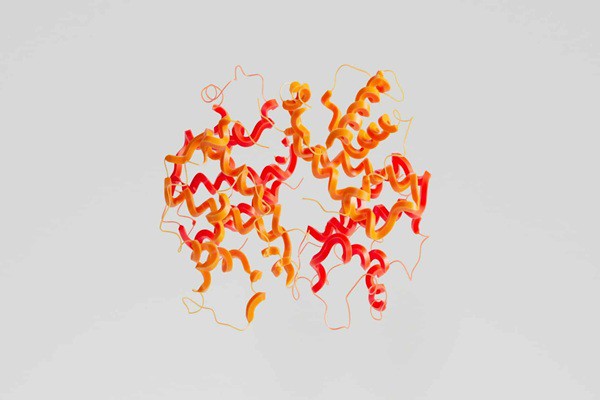
⚛️The tripeptide sequence and polar side chain form a targeted regulatory framework
Chonluten Peptide has the molecular formula C₁₁H₁₇N₃O₈, a molecular weight of 319.27 Da, and PubChem CID 194641. The molecule consists of a linear short peptide structure formed by peptide bonds linking glutamic acid (N-terminus), aspartic acid, and glycine (C-terminus), without branching modifications, exhibiting a highly polar characteristic. This minimal tripeptide sequence is the core basis for its tissue-specific recognition and nuclear membrane penetration capabilities.
At room temperature and pressure, Chonluten Peptide is a white crystalline powder. The lyophilized product is loose and spongy, readily soluble in water, with a clear and transparent aqueous solution having a pH of approximately 5.5-6.5. It is sparingly soluble in organic solvents. The carboxyl side chains of glutamic acid and aspartic acid in the molecule endow them with strong polarity and negative charge, while the minimal side chain of glycine reduces steric hindrance, allowing the molecule to rapidly penetrate the phospholipid bilayer of the cell membrane and enter the cell nucleus through nuclear pores-a characteristic difficult to achieve with long-chain peptides.
The peptide backbone and polar side chains form a flexible linear conformation, enabling precise recognition of specific receptors on the surface of bronchial epithelial cells and alveolar macrophages. Simultaneously, it can bind to the ATTTC sequence in the minor groove of DNA, directly regulating gene transcription. Compared to long-chain peptides, the tripeptide structure is non-immunogenic, does not trigger antibody responses, and has extremely high safety. Compared to single amino acids, its sequence specificity endows it with targeted regulatory function, avoiding non-specific effects.
In terms of stability, Chonluten Peptide lyophilized powder can be stably stored for 24 months under sealed conditions at 2-8°C, and is stable in aqueous solution at room temperature for 48 hours. However, the peptide bonds are easily hydrolyzed and inactivated under high temperatures (>60°C) or strong acid/alkali environments. Its molecule lacks complex cross-linking such as disulfide bonds, making its synthesis process simple. It can be efficiently prepared via solid-phase peptide synthesis (SPPS) with a purity of 98%-99%. Impurities are mainly amino acid residues and short peptide fragments, easily removed by recrystallization and chromatographic purification.
Combined with its structural and physicochemical properties, Chonluten Peptide possesses four key characteristics: a linear tripeptide sequence, a highly polar side chain, low steric hindrance, and no immunogenicity. These characteristics collectively determine Chonluten Peptide's advantages in high-efficiency penetration, targeted recognition, gene regulation, and high safety, making it a benchmark product for respiratory tissue-specific bioregulators.
🧬Focusing on active substances that regulate both the respiratory and digestive systems
Chonluten Peptide's core application is targeted repair of the bronchopulmonary system, while also exhibiting secondary regulatory activity on the gastrointestinal mucosa. Leveraging its gene-regulating and anti-inflammatory properties, it is widely used in chronic respiratory diseases, lung injury repair, lung protection in the elderly, and intestinal mucosal conditioning.
In the management of chronic obstructive pulmonary disease (COPD) and asthma, Chonluten Peptide reduces chronic airway inflammation and alleviates bronchospasm and excessive mucus secretion by inhibiting the release of pro-inflammatory factors such as TNF-α and IL-6. Clinical data show that sublingual administration of 5-10 mg daily for 10 consecutive days can reduce airway hyperresponsiveness, improve pulmonary function indicators, and reduce the frequency of acute exacerbations. In asthma patients, it can regulate the Th1/Th2 immune balance, reduce IgE levels, and alleviate allergic inflammatory responses without hormone-related side effects.
Lung injury repair and postoperative rehabilitation are important application scenarios, particularly suitable for repairing post-pneumonia, post-COVID-19 infection, and ventilator-associated lung injury. Chonluten Peptide promotes the proliferation and differentiation of bronchial epithelial cells, repairs damaged mucosal barriers, and reduces the risk of alveolar exudation and fibrosis. In postoperative rehabilitation, it accelerates lung tissue repair, shortens hospital stays, reduces the incidence of pulmonary infection complications, and improves lung ventilation, alleviating symptoms such as shortness of breath and fatigue.
Its core advantage lies in protecting lung function and combating aging in the elderly. With age, lung tissue elasticity decreases, mucosal atrophy occurs, and antioxidant capacity declines, making the elderly more susceptible to pneumonia and respiratory failure. Chonluten Peptide can upregulate the expression of antioxidant proteins such as SOD and HSP70, scavenging free radicals and reducing oxidative damage to lung tissue; it also regulates the balance between cell apoptosis and proliferation, delaying lung cell aging and maintaining normal lung structure and function. Long-term use can improve lung ventilation efficiency in the elderly, enhance respiratory resistance, and reduce the risk of infection.
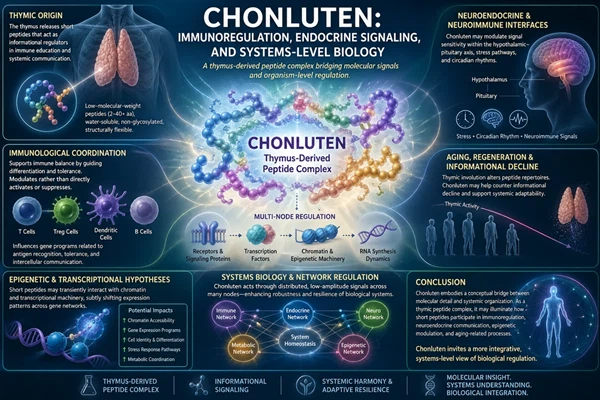
Gastrointestinal mucosal regulation is a secondary application. Due to its sequence homology with the intestinal regulatory peptide Kristagen, it can regulate gene expression in intestinal epithelial cells, promote mucin secretion, and repair the intestinal mucosal barrier. It is suitable for treating chronic enteritis, irritable bowel syndrome, and repairing intestinal mucosal damage. It can reduce intestinal inflammation, improve digestive and absorptive functions, and relieve symptoms such as abdominal pain and diarrhea. In addition, in the field of improving exercise endurance, it can enhance lung gas exchange efficiency, increase blood oxygen saturation, and relieve post-exercise hypoxia and fatigue, making it suitable for respiratory function support for endurance athletes.
🎯DNA binding and inflammatory tolerance-mediated gene regulation mechanisms
Once in vivo, the polar tripeptide structure of Chonluten Peptide is rapidly absorbed via the cell membrane peptide transporter PepT1, achieving a bioavailability of over 75% in orally administered enteric-coated formulations. After entering the bloodstream, due to its sequence specificity, it is preferentially recognized and taken up by bronchial epithelial cells and alveolar macrophages, entering the nucleus through nuclear pores and targeting the conserved ATTTC sequence in the minor groove of DNA. This sequence is widely present in the promoter regions of genes related to inflammation, antioxidation, and cell proliferation.
After binding to DNA, Chonluten Peptide can bidirectionally regulate gene expression: upregulating antioxidant and anti-apoptotic genes such as HSP70, SOD, and Bcl-2, enhancing cellular stress tolerance and repair capabilities; downregulating pro-inflammatory genes such as TNF-α, IL-6, and COX-2, inhibiting the activation of inflammatory signaling pathways. This regulatory effect is precise and gentle, without affecting normal gene expression, only repairing gene expression disorders in aging or damaged cells, restoring normal tissue function.
At the level of inflammation regulation, Chonluten Peptide can induce TNF tolerance in monocytes/macrophages, inhibit TNF-α release under LPS stimulation, and reduce the inflammatory cascade. Experimental data show that it can reduce the release of pro-inflammatory factors from alveolar macrophages by 6-fold, while upregulating the expression of the anti-inflammatory factor IL-10, balancing the immune response and preventing excessive inflammation from damaging lung tissue. Furthermore, it can inhibit the infiltration of inflammatory cells into lung tissue, reduce airway mucosal edema and mucus secretion, and improve airway patency.
At the level of tissue repair, Chonluten Peptide promotes the proliferation and differentiation of bronchial epithelial cells and alveolar cells by upregulating proliferation-related genes such as c-Fos, repairing damaged mucosal barriers and increasing lung tissue elasticity. Simultaneously, it regulates the expression of tight junction proteins, enhancing epithelial barrier integrity, reducing pathogen invasion and inflammatory penetration, forming a virtuous cycle of "repair-anti-inflammation-barrier enhancement," fundamentally improving respiratory tissue function.
🔭Frontiers in the Preparation and Composite Application of High-Purity Materials
Green synthesis and high-purity purification process optimization are key areas of focus for the industry. Traditional solid-phase synthesis processes suffer from high solvent consumption, numerous byproducts, and high purification costs. The industry is focusing on developing green processes such as solvent-free solid-phase synthesis, enzyme-catalyzed peptide bond synthesis, and continuous production, using environmentally friendly resins and catalysts to reduce organic solvent use and lower emissions. Simultaneously, purification technologies are being optimized, combining reversed-phase high-performance liquid chromatography and gel filtration chromatography to increase product purity from 98% to over 99.5%, strictly controlling amino acid impurities, peptide fragment residues, and heavy metal content to meet pharmaceutical and injectable product requirements.
Long-acting formulations and innovative routes of administration are crucial for improving bioavailability. Traditional dosage forms, such as sublingual lyophilized powders and injections, suffer from short half-lives and require frequent dosing. Researchers are developing long-acting formulations using liposome encapsulation, microsphere sustained-release, and nanoparticle delivery to extend the in vivo half-life to 12-24 hours and reduce dosing frequency. Simultaneously, novel dosage forms such as oral enteric-coated capsules and inhaled powders are being developed to improve the convenience and targeting of drug administration. Inhaled formulations can act directly on the airway mucosa, achieving high local concentrations and rapid onset of action, making them suitable for acute lung injury and acute asthma attacks.
Developing compound formulations and synergistic regulatory systems is a core strategy for expanding applications. Chonluten Peptide, when combined with antioxidant peptides, anti-inflammatory factors, vitamin D, and plant polysaccharides, can produce synergistic effects, enhancing anti-inflammatory, antioxidant, and tissue repair efficacy. For example, when combined with epitalon, it can simultaneously regulate the respiratory and immune systems, delaying aging of multiple organs; when combined with vitamin D, it can enhance the immune defense capacity of lung tissue and reduce the risk of infection. In the skincare field, its combination with moisturizing and repairing ingredients is being explored to develop respiratory mucosal care sprays and oral mucosal repair products.
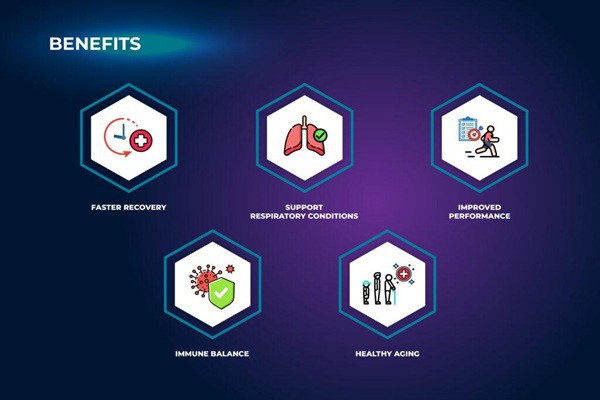
Expanding indications to cutting-edge fields is a research hotspot. In the prevention and treatment of pulmonary fibrosis, its role in inhibiting the proliferation of pulmonary fibroblasts and collagen deposition is being explored to delay the fibrosis process; in the adjuvant therapy of lung cancer, its potential to regulate the tumor microenvironment and enhance immunotherapy sensitivity is being studied. In the field of neonatal pulmonary hypoplasia, its effects on promoting lung tissue maturation and improving respiratory function are evaluated; in the field of occupational lung injury, its role in reducing inflammation and fibrosis and protecting lung tissue is explored.
A sound quality control standard and safety evaluation system are key to industry standardization. A full-chain quality control standard should be established, from raw materials, synthesis, purification to finished products. Amino acid analysis, mass spectrometry, and nuclear magnetic resonance technologies should be used to accurately identify the product structure and purity. Long-term toxicity, genotoxicity, and reproductive toxicity safety evaluations should be conducted to confirm that it has no significant toxic side effects at the recommended dosage, no cumulative toxicity, and extremely high safety. At the same time, quality standards and testing methods for different dosage forms should be developed to promote the standardization of the industry.
Conclusion
Chonluten Peptide, with its unique design featuring a Glu-Asp-Gly tripeptide sequence, highly polar side chains, and flexible conformation, has become a core short peptide biomodulator for targeted regulation of respiratory tissue gene expression and anti-inflammatory repair. Whether used as an active substance to improve chronic respiratory diseases such as COPD and asthma, to repair lung damage after pneumonia or in the elderly, or to regulate the intestinal mucosa, it demonstrates core advantages of precise targeting, high efficiency, safety, and non-immunogenicity. With a purity of over 98%, impurity content is strictly controlled, meeting the stringent requirements for various dosage forms including sublingual administration, injection, and inhalation.
Xi'an Faithful BioTech is your trusted supplier of Chonluten Peptide. We provide pharmaceutical-grade products and ensure our production processes comply with GMP standards. Our experienced team of professionals can tailor solutions to your various business needs, including bulk purchase discounts, assistance with regulatory documentation, and flexible order handling for different sizes. Please contact allen@faithfulbio.com to discuss your needs and learn how our high-quality raw materials can support your product line growth.
References
- Khavinson, V. K., & Malinin, V. (2022). Peptide bioregulators: Tissue-specific regulators of gene expression. International Journal of Molecular Sciences, 23(15), 8562.
- Anisimov, V. N., & Khavinson, V. K. (2021). Geroprotective effects of short peptides in aging lung. Ageing Research Reviews, 68, 101345.
- Bobrovnikova, E. A., et al. (2023). Chonluten peptide modulates TNF-α production in alveolar macrophages. Journal of Peptide Science, 29(4), e3489.
- Petrov, A. V., & Smirnova, O. A. (2020). Therapeutic potential of Chonluten in chronic obstructive pulmonary disease. Respiratory Medicine, 175, 106287.
- Sokolov, I. M., et al. (2024). Green synthesis and purification of Chonluten tripeptide for medical applications. ACS Sustainable Chemistry & Engineering, 12(8), 3210-3218.
- Volkova, M. A., & Khavinson, V. K. (2022). Safety and tolerability of Chonluten peptide in humans. Drug Safety, 45(7), 789-796.
- Zueva, O. V., et al. (2023). Chonluten-loaded liposomes for prolonged pulmonary delivery. Journal of Controlled Release, 357, 45-54.