


JXL-069 is a small-molecule compound that has attracted attention in hair-related research due to its activity against the mitochondrial pyruvate carrier (MPC). Hair follicle biology involves several metabolic processes, and researchers have been looking more closely at how these processes affect hair follicle activity. The study of compounds such as JXL-069 offers another way to explore this area. In particular, its role as an MPC inhibitor has made it a subject of interest in research involving cellular metabolism and hair growth. The following sections introduce the background of JXL-069, its chemical characteristics, relevant research findings, and its potential value in further development.
Research Background
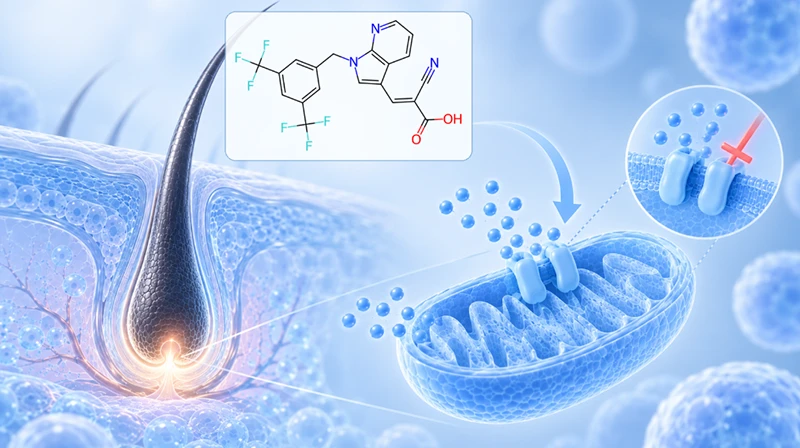
Research into new compounds for hair-related studies has continued to expand over the years. While many molecular structures have already been explored, a considerable number of existing compounds share similar chemical frameworks. This can make it difficult for researchers to find alternatives when investigating new molecular structures or looking for compounds with different biological activities.
At the same time, interest in the relationship between cellular metabolism and hair follicle function has brought new research targets into focus. The mitochondrial pyruvate carrier (MPC), which plays a role in cellular energy metabolism, is one such target. Researchers have been exploring whether changes in pyruvate transport and mitochondrial metabolism can influence processes associated with hair follicle activity.
It was in this area of research that JXL-069 came into focus. As part of the development of new MPC inhibitors, the compound was investigated for its inhibitory activity and its relevance to hair-related research. Its study adds another example to the growing body of work exploring the connection between cellular metabolism and hair follicle biology.
Introduction to JXL-069
JXL-069 (CAS No. 2260696-63-5) is a small-molecule compound investigated for its inhibitory activity against the mitochondrial pyruvate carrier (MPC). It was developed as part of research into MPC inhibitors, with particular attention to the role of mitochondrial metabolism in hair follicle biology.
Chemical Structure
JXL-069 contains a 7-azaindole-based molecular structure, together with fluorinated aromatic and cyanoacrylic acid groups. These structural features distinguish it from some earlier MPC inhibitors and form an important part of its chemical profile.
Molecular Target
JXL-069 targets the mitochondrial pyruvate carrier (MPC), a protein complex responsible for transporting pyruvate from the cytosol into mitochondria. This process is closely linked to cellular energy metabolism and how cells use glucose-derived pyruvate.
Research Profile
JXL-069 was investigated in a 2021 study published in the Journal of Medicinal Chemistry. The research focused on developing new MPC inhibitors and exploring their potential relevance to hair loss studies, including their effects on cellular metabolism.
Relevant Research Findings
Research into JXL-069 is closely connected to the development of MPC inhibitors for hair loss studies. In a 2021 study, researchers synthesized and evaluated a series of compounds based on UK-5099, examining their inhibitory activity against MPC and their effects on cellular metabolism. JXL-069 was among the compounds investigated, and the study provided several findings relevant to understanding its biological activity.
MPC Inhibition
One of the main findings was that JXL-069 showed significant inhibitory activity against MPC. This transporter regulates the movement of pyruvate into mitochondria and is involved in cellular energy production. Its inhibition allows researchers to study how changes in pyruvate transport may affect other metabolic processes within cells.


Metabolic Changes
The study also examined changes in cellular metabolism following MPC inhibition. When the transport of pyruvate into mitochondria is reduced, more pyruvate may be converted into lactate through lactate dehydrogenase (LDH). Changes in lactate production were used as an indicator when evaluating the activity of the newly developed compounds. This helped researchers examine how MPC inhibition affects cellular metabolism and its possible relationship with hair follicle stem cell activity.
Structure-Activity
Another part of the research focused on how molecular structure affects MPC inhibitory activity. Researchers modified different parts of the original UK-5099 structure, including its indole core and attached chemical groups. Among the compounds evaluated, JXL-069, which contains a 7-azaindole structure, demonstrated significant MPC inhibitory activity. These findings showed how changes to the molecular framework can influence the activity of related compounds.


Hair Growth Studies
The research also included animal experiments to examine the effects of MPC inhibitors on hair growth. More than ten compounds from the series were evaluated through topical application in shaved mice, and hair growth was observed in treated animals. These results provided preliminary evidence supporting further investigation of MPC inhibition in hair growth research. However, the reported animal findings relate to the compound series as a whole and should not be interpreted as direct evidence of hair growth effects from JXL-069 individually.
Significance of Development
JXL-069 is of interest not only because of its reported MPC inhibitory activity, but also because of its connection to research on cellular metabolism and hair follicle function. The compound provides researchers with a defined molecular structure for studying MPC-related pathways and evaluating how changes in mitochondrial metabolism may affect biological processes associated with hair growth.

01
Mechanistic Research
JXL-069 can be used to study how MPC inhibition affects cellular metabolism. This is particularly relevant to research exploring the relationship between mitochondrial function, pyruvate transport, and hair follicle biology.
02
Screening Value
With its reported MPC inhibitory activity and distinct molecular structure, JXL-069 can serve as a reference compound in related screening studies. Researchers can use it when comparing similar molecules and examining how structural differences influence biological activity.
3
Development Potential
The structural features of JXL-069 also make it relevant to further compound development. Research may focus on modifying its molecular structure, comparing related compounds, and examining how these changes affect MPC inhibitory activity.
04
Research Applications
Beyond hair-related studies, JXL-069 may also be considered in research involving mitochondrial metabolism, pyruvate transport, and cellular energy regulation. These areas provide additional contexts for studying its biological activity and related metabolic pathways.
Future Research Directions

Although existing studies have provided useful findings on MPC inhibition and hair follicle research, there is still more to learn about the underlying processes. Further studies involving JXL-069 could help clarify how it affects cellular metabolism and whether changes in pyruvate transport have a measurable impact on hair follicle function.
Future research may also focus on its biological activity, stability, and possible structural modifications. Comparing JXL-069 with related compounds could help researchers better understand which molecular features are important for MPC inhibition. Such work may also provide a clearer picture of its potential role in future hair-related research.
FAQ
Disclaimer: The articles published on this site are mainly used to promote academic exchanges and learning, and do not mean that this site agrees with its views or confirms the authenticity of its contents. Please filter carefully. If you believe this article is infringing, please contact the administrator. We are not responsible for the consequences of using the information and services on this website.
Note: This compound should be used for research purposes only. These claims have not been evaluated by the Food and Drug Administration. Please consult your doctor and learn about available studies before using them. This product is not intended to diagnose, treat, cure or prevent any disease.