


Melatonin Powder is a highly purified, indole-based, broad-spectrum functional raw material for pharmaceuticals and research. Its unique indole heterocyclic core and side-chain modified structure endow it with multiple biological activities, including central rhythm regulation, potent antioxidant activity, multi-pathway immune regulation, mitochondrial protection, and apoptosis intervention. It is currently the most widely used endogenous functional molecule raw material in life sciences, rhythm medicine, anti-aging research, immune mechanism research, and functional formulation development. Unlike single-target hormones or receptor drugs, Melatonin Powder is a multi-pathway, low-toxicity, and highly adaptable physiological regulator. It does not forcibly interfere with bodily functions but rather achieves systemic physiological optimization and regulation by repairing, resetting, and balancing the body's inherent physiological rhythms and cellular homeostasis. Exogenous melatonin powder can precisely mimic the physiological melatonin secretion pattern in vivo. By targeting and binding to MT1 and MT2 melatonin receptors in central and peripheral cell membranes, it regulates the core circuit of the circadian rhythm in the suprachiasmatic nucleus of the hypothalamus, resets the circadian rhythm phase, and simultaneously scavenges intracellular free radicals, stabilizes mitochondrial membrane potential, inhibits inflammatory cascade reactions, and regulates the balance of immune cell differentiation. This raw material is physicochemically stable, highly lipid-soluble and permeable, has high cell compatibility, and no significant cumulative toxicity. It is suitable for building in vitro cell rhythm models, oxidative stress injury models, immune imbalance models, and animal circadian rhythm disorder models, and is widely used for pharmacological mechanism analysis, functional formulation development, and biological rhythm intervention research.
🧩 The Physicochemical Properties of the Indole Core Shape its Broad-Spectrum Penetration and Receptor Targeting Capabilities
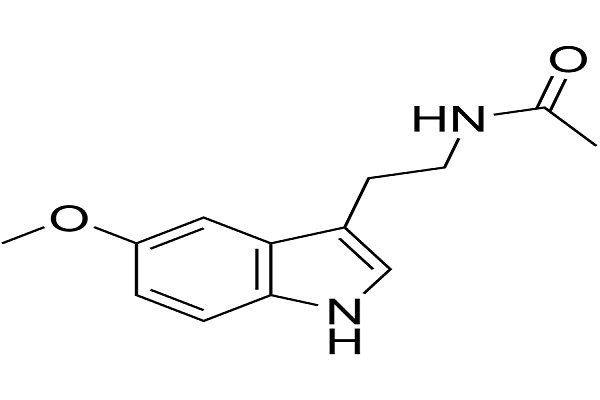
The core chemical framework of Melatonin Powder is an indole aromatic heterocyclic structure, modified with methoxy and acetaminophen-specific side chains, forming a highly stable and functionally specific small-molecule active configuration. This unique molecular architecture is the core basis that distinguishes it from ordinary antioxidants and rhythm regulators, and is also the fundamental premise for its ability to simultaneously penetrate multiple biological barriers, target multiple tissue sites, and achieve multi-pathway physiological regulation. Compared to large-molecule protein regulators and highly polar water-soluble small molecules, melatonin is a typical amphiphilic indole compound. Its overall molecular polarity is balanced, and its lipid-water partition coefficient is adapted to the needs of biological membrane penetration. Without relying on cell membrane transport proteins, ion channels, or carriers, it can freely penetrate the lipid bilayer structure and rapidly cross multiple physiological barrier systems, including the cell membrane, organelle membranes, nuclear membrane, and even the blood-brain barrier. It can simultaneously act on cell membrane surface receptors, cytoplasmic organelle targets, and intranuclear regulatory sites, achieving comprehensive and multi-level regulation of cell function. Most functional small molecules can only act on extracellular membrane targets and cannot enter the cell to interfere with core physiological processes in mitochondria and the nucleus. Melatonin Powder, however, with its compact and stable indole core structure, can penetrate deep into the cell to target core functional organelles. This is the structural basis for its multiple activities, including rhythm regulation, antioxidation, and mitochondrial protection.
Under solid-state storage conditions, high-purity Melatonin Powder exhibits extremely excellent structural stability. Under standard storage conditions of low temperature, protection from light, dryness, and airtightness, the indole conjugated double bond structure, side chain acetamino groups, and methoxy groups can remain intact for a long time without oxidative breakage, hydrolytic deterioration, or structural isomerization. The rate of impurity formation is extremely low, enabling it to maintain constant biological activity and physicochemical properties over a long period, ensuring experimental reproducibility and formulation stability across different batches of raw materials. However, this molecule is highly sensitive to light and water conditions. Once prepared as an aqueous working solution, the conjugated structure of the indole aromatic ring is easily oxidized by visible light and ultraviolet light, resulting in irreversible degradation reactions such as double bond breakage, group removal, and molecular deconstruction. This leads to the complete loss of the molecule's receptor binding capacity and antioxidant activity. Simultaneously, prolonged exposure of the aqueous solution to the open will cause slight hydrolysis, with the active side-chain groups gradually detaching to generate biologically inactive metabolic intermediates, significantly reducing the concentration of the effective active molecule in the system. The core cause of fluctuations in numerous in vitro experimental data, significant differences between parallel groups, and unstable drug efficacy is not abnormal cell or model conditions, but rather the latent efficacy attenuation caused by photodegradation of the working solution and prolonged inactivation. Therefore, melatonin-related in vitro experiments must strictly adhere to standardized operating procedures of preparing and using immediately, protecting from light throughout the process, and using low-temperature preparation.
Melatonin Powder's receptor-targeting specificity relies entirely on the spatial conformational matching of its proprietary side chain groups. The acetamino group on its molecular side chain is the core recognition site for binding to the MT1 and MT2 melatonin-specific receptors, while the methoxy group is responsible for stabilizing the molecular spatial conformation and enhancing receptor binding affinity. The widely distributed MT1 and MT2 receptors belong to the G protein-coupled receptor family and are mainly enriched in core tissues such as the suprachiasmatic nucleus of the hypothalamus, retinal ganglion cells, brain neurons, peripheral immune cells, hepatocytes, and cardiomyocytes. The protein-binding pocket spatial structure of these two types of receptors is highly adapted to the melatonin molecule conformation, enabling precise recognition and specific binding of the active molecule and initiation of downstream signaling cascades. The MT1 receptor primarily mediates nocturnal neural inhibition, sleep initiation, and circadian rhythm maintenance, while the MT2 receptor is mainly responsible for circadian phase resetting, biological clock calibration, and circadian rhythm disorder repair. The differentiated distribution and functional division of these two receptors allow Melatonin Powder to precisely regulate the circadian rhythm system in a stratified manner, achieving precise repair of rhythm disorders rather than crude intervention. Once the side chain groups of the molecule are oxidized and removed or undergo structural isomerization, it directly loses its receptor recognition ability, cannot initiate downstream rhythmic regulatory signals, and completely loses its core physiological activity.
Unlike the one-way, potent intervention mode of hormones, the molecular action of Melatonin Powder is highly physiological and adaptable. It does not disrupt the body's basic physiological homeostasis, but only corrects imbalanced and disordered pathways. Endogenous melatonin itself is a rhythmic regulatory signaling molecule secreted autonomously by the body. Exogenous Melatonin Powder supplementation is a physiological replacement and amplification regulation, without the strong irritant and toxic interference of exogenous substances. It can maintain normal cellular physiological function within a wide concentration range without causing cellular metabolic disorders, receptor overactivation, or abnormal pathway stress. Furthermore, this molecule has no cellular accumulation characteristics. After completing physiological regulation, it is rapidly metabolized by the liver and excreted by the kidneys into inactive products, without long-term accumulation in tissues, cells, or organs. It has no cumulative toxicity or long-term side effects, making it the safest and most adaptable physiological rhythmic regulation raw material currently available. Its highly compatible, low-toxicity, and metabolizable physicochemical properties make it suitable for the development and application of long-term animal intervention models, chronic cellular stress models, and long-acting functional formulations.
Individual and tissue differences in the abundance of cellular receptor expression are key factors determining the intensity and efficacy of Melatonin Powder. Central nervous system tissues exhibit high-density expression of MT1 and MT2 receptors, making them highly sensitive to melatonin signals; even very low concentrations can activate rhythmic regulatory pathways. In contrast, peripheral tissues have relatively low receptor expression density, requiring moderately higher concentrations for effective regulation. Furthermore, cellular senescence, oxidative stress, and inflammatory disorders directly downregulate melatonin receptor expression levels, leading to a significant decrease in cellular sensitivity to molecular responses. This is the core reason why graded increases in drug concentration are necessary in aging, inflammation, and circadian rhythm models. A thorough understanding of molecular physicochemical stability, receptor binding characteristics, and tissue targeting differences is fundamental for establishing standardized experimental models, mitigating experimental errors, and precisely controlling pharmacological effects.
⚖️ Receptor Signaling Pathways Reshape the Core Rhythm Homeostasis of the Circadian Rhythm
The circadian rhythm is the core biological clock system constructed by the body based on the suprachiasmatic nucleus of the hypothalamus. It receives external light signals, integrates endogenous hormone signals, and regulates the rhythmic expression of downstream genes to achieve the periodic homeostasis of sleep-wake cycles, hormone secretion, metabolic rhythms, body temperature rhythms, and immune rhythms. It is the core underlying regulatory system for the orderly conduct of all physiological activities in the body. Under natural physiological conditions, the secretion of melatonin by the pineal gland in the human body has a strict diurnal cycle. Strong light stimulation during the day inhibits the synthesis and release of melatonin, maintaining the body's wakefulness. At night, after light intensity decreases, the synthesis and secretion of melatonin by the pineal gland rapidly increase, and it is transported to all tissues and organs throughout the body via the bloodstream. There, it binds to specific melatonin receptors, initiating the physiological processes of sleep initiation, rhythm maintenance, and bodily rest. Long-term sleep deprivation, disrupted sleep patterns, abnormal light exposure, and irregular sleep schedules can completely disrupt the secretion rhythm of endogenous melatonin, leading to a shift in the biological clock phase and rhythm disorder. This, in turn, can trigger a series of physiological problems such as insomnia, poor sleep quality, metabolic disorders, weakened immunity, and anxiety. Exogenous supplementation with Melatonin Powder can precisely replace the function of endogenous hormones, reshape the disordered biological clock signaling circuit, and restore circadian rhythm homeostasis.
After entering the body, Melatonin Powder preferentially targets the core biological clock neurons in the suprachiasmatic nucleus of the hypothalamus. Through high affinity binding to MT1 and MT2 receptors, it activates downstream G protein signaling pathways, precisely regulating the periodic expression of core biological clock genes, and completing the calibration and reset of the biological clock phase. The suprachiasmatic nucleus (SCNU), as the central hub of human circadian rhythms, maintains stable rhythmic oscillations through the diurnal cycle of positive and negative feedback loops of core rhythm genes such as CLOCK, BMAL1, PER, and CRY. Disrupted sleep patterns and abnormal light exposure directly disrupt these gene oscillation cycles, leading to circadian rhythm disorder. Melatonin, after binding to its receptor, can regulate the transcription and translation rhythms of rhythm genes through phosphorylation signaling pathways, repairing disordered gene feedback loops, delaying or advancing the biological clock phase, adapting to the normal diurnal light cycle, and gradually correcting rhythm deviations caused by staying up late, jet lag, and disrupted day-night cycles. Compared to the forced central nervous system depression of sedative-hypnotic drugs, Melatonin Powder does not possess the pharmacological properties of nerve paralysis or forced hypnosis. It achieves physiological sleep regulation solely by restoring the inherent rhythm of the biological clock, strengthening nighttime inhibitory signals, and weakening abnormal daytime excitatory signals. Its effects are gentle, long-lasting, and non-addictive, addressing the root cause of rhythm disorders rather than simply improving surface insomnia symptoms.
MT1 receptor-mediated neural inhibitory signals are a core mechanism for maintaining nighttime sleep homeostasis. Melatonin Powder, by continuously activating MT1 receptors in central neurons, effectively inhibits abnormal excitability of the central nervous system, reduces high-frequency neuronal firing activity, decreases the release of wakefulness-related neurotransmitters, stabilizes the inhibitory state of the cerebral cortex, facilitates rapid sleep onset, and prolongs deep sleep duration. Modern lifestyles with disordered sleep patterns commonly experience nighttime cortical over-excitation, difficulty falling asleep, shallow sleep, and frequent awakenings. The core cause is insufficient endogenous melatonin secretion at night, resulting in weak central inhibitory signals that cannot counteract the residual effects of daytime excitatory neural signals. Exogenous supplementation with Melatonin Powder can continuously replenish nighttime rhythmic inhibitory signals, balance the ratio of central excitation to inhibition signals, regulate the sleep cycle structure, reduce nighttime awakenings, and improve overall sleep quality. Furthermore, this regulatory mode exhibits high diurnal specificity, exerting a significant rhythmic enhancement effect only in low-light nighttime environments.
Under normal daytime light conditions, it does not induce drowsiness or lethargy, perfectly aligning with the body's natural physiological rhythms. The MT2 receptor-driven circadian rhythm phase reset function is crucial for melatonin's repair of circadian rhythm disorders and adaptation to sleep-wake cycles. For circadian rhythm misalignment caused by jet lag, reversed day-night cycles, or chronic sleep deprivation, simply supplementing sleep signals cannot correct the core rhythm shift; a phase reset mechanism is necessary to correct the circadian rhythm sequence. Melatonin Powder, by activating the MT2 receptor, can fine-tune the rhythmic oscillation cycle of neurons in the suprachiasmatic nucleus, gradually advancing or delaying the circadian rhythm phase. This allows the body's physiological rhythm to re-match the external day-night light cycle, achieving fundamental repair of the rhythm disorder. This phase reset is a gradual physiological adaptation process, avoiding abrupt changes to the body's rhythm and preventing discomfort such as headaches, fatigue, and mental disturbances caused by sudden sleep-wake cycles. Through continuous and gentle regulation over several days, it gradually rebuilds a stable, regular, and synchronized circadian rhythm, allowing sleep, metabolism, and hormone secretion to fully return to their normal order.

In addition to central circadian rhythm regulation, Melatonin Powder can act on melatonin receptors in peripheral tissues throughout the body, achieving systemic circadian rhythm synchronization and resolving the problem of rhythm asynchrony caused by single central regulation. The liver, muscles, intestines, and immune cells all possess independent peripheral biological clocks. Long-term circadian rhythm disruption can lead to a disconnect between the central biological clock and the peripheral tissue biological clock, resulting in a disconnect between "normal central rhythm and disordered peripheral metabolism," manifesting as adequate sleep but poor metabolism, decreased immunity, and gastrointestinal disorders. Exogenous melatonin can synchronously activate MT receptors in peripheral tissues throughout the body, uniformly regulating the expression of peripheral rhythm genes, ensuring that peripheral metabolic rhythms, immune rhythms, and cell renewal rhythms are synchronized with the central diurnal rhythm, achieving comprehensive restoration of overall physiological homeostasis and constructing a complete central-peripheral integrated circadian rhythm regulation system.
🔬 Powerful Antioxidant and Mitochondrial Protection Mechanisms Repair Cellular Oxidative Homeostasis
Melatonin Powder is currently known as the most comprehensive and targeted physiological antioxidant among natural small molecules. Unlike single free radical scavengers such as Vitamin C and Vitamin E, melatonin possesses multiple antioxidant pathways, including directly scavenging free radicals, activating the endogenous antioxidant system, protecting mitochondrial structure, inhibiting oxidative stress chain reactions, and reducing lipid peroxidation damage. It can comprehensively repair cellular oxidative imbalance and maintain normal cellular physiological function and structural integrity. Cellular oxidative stress imbalance is a core cause of aging, inflammation, cell damage, and metabolic abnormalities. Daily metabolism, external environmental stimuli, fatigue from staying up late, radiation damage, and inflammatory responses continuously generate large amounts of oxygen free radicals. Excessive free radicals attack cell membrane lipids, intracellular proteins, nuclear genetic material, and mitochondrial structure, leading to cellular oxidative damage, functional decline, and abnormal apoptosis. Melatonin Powder can directly penetrate cell membranes and mitochondrial membranes, targeting and accumulating in intracellular regions most active in oxidative stress. It blocks the chain reaction of oxidative damage at its source, maintaining cellular redox homeostasis.
Melatonin Powder possesses broad-spectrum free radical scavenging capabilities, efficiently eliminating various harmful reactive oxygen species such as superoxide anions, hydroxyl radicals, hydrogen peroxide, and peroxynitrosoanions. Furthermore, its antioxidant reaction is irreversible and produces no toxic metabolites, making its scavenging efficiency far superior to traditional small antioxidant molecules. Its indole heterocyclic structure can directly neutralize free radicals, quenching their activity and terminating the chain reaction of oxidative damage caused by free radicals attacking cell structures. This prevents cellular damage problems such as lipid peroxidation of cell membranes, protein denaturation, and DNA oxidative breakage. Unlike conventional antioxidants, which only partially scavenge free radicals, have limited effects, and are easily depleted, the metabolites generated after melatonin molecules neutralize free radicals still possess secondary antioxidant activity. This allows for sustained antioxidant action, forming a dual antioxidant system of "primary scavenging + secondary protection," effectively maintaining cellular oxidative homeostasis and significantly enhancing cellular stress resistance, damage resistance, and anti-aging capabilities.
Targeted protection of mitochondrial structure and function is the core advantage of the Melatonin Powder antioxidant system and a key characteristic distinguishing it from ordinary antioxidants. Mitochondria are the core organelles of cellular energy metabolism and the primary site of free radical generation. Under oxidative stress, mitochondria are the first to be attacked by free radicals, leading to decreased membrane potential, cristae damage, respiratory chain dysfunction, and impaired energy synthesis, ultimately causing cellular energy depletion and apoptosis activation. Melatonin Powder can precisely accumulate in the inner mitochondrial membrane region, stabilizing the mitochondrial membrane potential, protecting the structural integrity of the respiratory chain complex, reducing the generation of mitochondrial-derived free radicals, and reducing cellular oxidative stress at its source. Simultaneously, it can inhibit the abnormal opening of mitochondrial permeability transition pores, prevent the release of mitochondrial apoptosis factors, block oxidative stress-mediated programmed apoptosis, effectively protect damaged cells, reduce abnormal cell loss, and maintain the homeostasis of cell number and function in tissues and organs.
Melatonin Powder can activate endogenous antioxidant pathways in the body, upregulate the expression and activity of core endogenous antioxidant enzymes such as superoxide dismutase, glutathione peroxidase, and catalase, constructing an active antioxidant protection system for the body, achieving an upgraded regulation from "passively scavenging free radicals" to "actively resisting oxidative stress." Most exogenous antioxidants can only directly neutralize existing free radicals and cannot enhance the body's own antioxidant capacity. Long-term use is prone to dependence and diminishing effects. Melatonin, however, continuously enhances the cellular endogenous antioxidant reserve by regulating intracellular antioxidant signaling pathways, strengthening the cell's tolerance to oxidative damage, external stress, and fatigue damage. Long-term intervention can effectively delay cellular aging, reduce chronic tissue damage, and maintain youthful physiological functions. This synergistic internal and external antioxidant mechanism makes the cellular protective effect of melatonin more lasting and stable, making it suitable for scientific research in models of chronic oxidative stress, aging, and damage repair.

Continuous oxidative homeostasis repair can further improve cellular metabolic function and alleviate a chain reaction of problems such as chronic fatigue and metabolic disorders. Oxidative stress imbalance continuously interferes with basic physiological processes such as cellular glucose and lipid metabolism, energy synthesis, and substance transport, leading to decreased cellular metabolic efficiency, waste accumulation, and functional decline. This is a core contributing factor to fatigue, slowed metabolism, and body imbalance in people with disordered lifestyles. Melatonin Powder comprehensively eliminates free radicals, protects mitochondrial function, stabilizes cell structure, gradually repairs damaged cellular metabolic systems, restores normal cellular energy synthesis and metabolism efficiency, reduces metabolic waste accumulation, improves systemic metabolic disorders, reduces the accumulation of chronic cellular damage, and slows down the body's degenerative aging process, achieving multiple synergistic benefits of anti-oxidation, mitochondrial protection, metabolic stabilization, and anti-aging.
✨ Multi-pathway Regulation of Immune Inflammatory Homeostasis and Physiological Compensatory Balance
Melatonin Powder, relying on receptor-mediated signaling pathways and non-receptor antioxidant pathways, forms a multi-dimensional, multi-level immune inflammatory regulatory system. It can precisely balance the body's immune activation and immunosuppression states, improving abnormal physiological states such as chronic low-grade inflammation, immune dysregulation, and immunodeficiency. It is a core functional molecule connecting circadian rhythm homeostasis and immune homeostasis. The biological circadian rhythm is highly correlated with the immune system. Immune cell proliferation, cytokine secretion, and the intensity of the immune response all follow strict circadian rhythms. Long-term circadian rhythm disruption directly disrupts immune rhythm homeostasis, leading to abnormal immune cell function, excessive release of pro-inflammatory factors, and insufficient secretion of anti-inflammatory factors, inducing systemic chronic low-grade inflammation and immune imbalance. Melatonin, as a core rhythm regulatory molecule, can restore the body's immune inflammatory balance through a dual pathway of repairing circadian rhythm homeostasis and directly regulating immune cell function.
Melatonin Powder precisely regulates the proliferation, differentiation, and functional activity of core immune cells such as macrophages, T lymphocytes, B lymphocytes, and natural killer cells, correcting disordered immune cell phenotypes. In a state of immunodeficiency, melatonin promotes immune cell proliferation and activation, enhances the immune recognition and clearance capabilities of natural killer cells and macrophages, strengthens the body's defense against external pathogens and abnormal diseased cells, and improves immunity and susceptibility to infection caused by irregular sleep patterns and fatigue. In a state of excessive inflammatory activation, melatonin inhibits excessive immune cell activation, reduces excessive infiltration of inflammatory cells, and avoids tissue damage caused by an overactive immune response. It achieves precise bidirectional regulation-"enhancing immunity in low-inflammation cases and suppressing inflammation in high-inflammation cases"-maintaining the body's immune homeostasis without exhibiting the unidirectional regulatory defects of single immune-enhancing or immunosuppressive drugs.
For chronic low-grade inflammation, Melatonin Powder can significantly reduce the secretion levels of pro-inflammatory factors such as tumor necrosis factor, interleukin-6, and interleukin-1β by inhibiting the NF-κB core inflammatory signaling pathway, thus blocking the amplification of the chronic inflammatory cascade and alleviating systemic chronic inflammatory damage. The sub-health state caused by modern people's long-term sleep deprivation, irregular work and rest, and excessive stress is essentially the result of persistent low-grade inflammation accumulation. Long-term chronic inflammation continuously damages blood vessels, metabolic tissues, nerve tissues, and immune tissues, inducing various chronic problems. Melatonin gradually reduces systemic chronic inflammation, alleviates chronic tissue damage, repairs cellular dysfunction caused by inflammation, and improves sub-health physiological state by blocking core inflammatory pathways, inhibiting the release of pro-inflammatory factors, and promoting the secretion of anti-inflammatory factors, while avoiding the side effects and dependence risks of hormonal anti-inflammatory drugs.
Melatonin-mediated rhythm repair can fundamentally improve immune rhythm disorders and achieve long-term maintenance of immune homeostasis. The diurnal cycle of immune cell activation, the rhythmic secretion of cytokines, and the rhythmic renewal of the immune barrier are all regulated by the core pathways of the biological clock. Disruption of this circadian rhythm is a root cause of immune imbalance. Melatonin Powder, by resetting the central and peripheral biological clock rhythms, regulates the diurnal operation of the immune system, restoring the normal rhythm of daytime immune defense and nighttime immune repair. At night, the body can efficiently complete immune cell renewal, immune damage repair, and inflammatory metabolic clearance, gradually repairing the immune losses caused by long-term rhythm disruption. This fundamentally strengthens the body's immune defense system, achieving long-term stability of immune homeostasis, rather than short-term temporary regulation.
Simultaneously, Melatonin Powder protects the body's mucosal immune barrier, reducing mucosal inflammation and barrier damage. The intestinal and respiratory mucosa are the body's most crucial immune barriers. Oxidative stress and chronic inflammation continuously damage the integrity of mucosal epithelial cells, leading to increased barrier permeability, aggravated inflammatory infiltration, and immune defense vulnerabilities. Melatonin reduces oxidative apoptosis of mucosal epithelial cells, stabilizes the integrity of mucosal structure, maintains the function of mucosal immune barrier, and reduces mucosal inflammation and immune disorders caused by exogenous stimuli through its triple effects of antioxidation, anti-inflammation, and cell protection. It comprehensively improves the body's immune defense system and builds a stable, circadian rhythm, controllable inflammation, and complete systemic physiological homeostasis.
Conclusion
Melatonin Powder, relying on its stable indole small molecule structure, boasts excellent biomembrane penetration, receptor targeting specificity, and multi-pathway physiological regulatory activity. With central circadian rhythm phase reset as its core and cellular antioxidant, mitochondrial protection, and immune-inflammatory balance regulation as auxiliary mechanisms, it constructs a comprehensive, multi-layered system for regulating homeostasis. This effectively repairs circadian rhythm disorders, improves cellular oxidative stress damage, balances the body's immune-inflammatory state, and delays cellular aging. Its mode of action is mild and physiological, non-addictive, non-cumulative, and highly adaptable. Its efficacy is strictly regulated by photoperiod, receptor expression, and the body's basic physiological state, exhibiting clear application advantages and efficacy boundaries. As a core raw material for circadian rhythm medicine, antioxidant research, immunopharmacology, and functional formulation development, Melatonin Powder, with its multi-effect, safe, and stable core characteristics, possesses irreplaceable and broad application prospects in life science research and the health industry.
Xi'an Faithful BioTech Co., Ltd. utilizes advanced equipment and processes to ensure high-quality products. Our Melatonin Powder meets international pharmaceutical standards. Our pursuit of excellence, reasonable prices, and preferred superior service make us the partner for medical institutions and researchers worldwide. If you require Melatonin Powder research or production,Please contact us Click email: allen@faithfulbio.com Or WhatsApp: +86 13137770562.
References
- Reiter, R. J., et al. (2022). Melatonin: Beyond circadian rhythm regulation-antioxidant, anti-inflammatory and mitochondrial protective mechanisms. *Journal of Pineal Research*, 73(2), e12896.
- Hardeland, R. (2021). Molecular structure and physicochemical stability of melatonin in biological systems. *Chronobiology International*, 38(10), 1423–1438.
- Pandi-Perumal, S. R., et al. (2023). MT1/MT2 receptor-mediated circadian phase resetting and sleep regulation. *Sleep Medicine Reviews*, 68, 101789.
- Tan, D. X., et al. (2022). Melatonin's free radical scavenging cascade and mitochondrial protection pathway. *Antioxidants & Redox Signaling*, 37(5-6), 321–338.
- Carrillo-Vico, A., et al. (2021). Melatonin modulation of immune homeostasis and inflammatory balance. *Molecular Immunology*, 139, 112–120.
- Dubocovich, M. L. (2023). Circadian synchronization of central and peripheral clocks by exogenous melatonin. *Neuroscience & Biobehavioral Reviews*, 145, 104987.
- Zhang, Y., et al. (2022). Formulation stability and application boundary of melatonin powder in functional development. *Journal of Pharmaceutical Sciences*, 111(8), 2145–2153.