


After years of industry adjustment and market consolidation, the global tourism industry has gradually emerged from its volatile cycle, with visitor numbers, consumer spending, and ease of cross-border travel continuing to rebound, and the overall recovery trend becoming increasingly stable. The latest monitoring data from the World Tourism Organization shows that cross-border tourist arrivals are steadily approaching historical peaks, with core tourism markets in the Asia-Pacific, Europe, and the Middle East continuing to release growth momentum. Sub-sectors such as leisure and vacation travel, cultural study tours, health and wellness travel, and cross-border business travel are also showing signs of recovery. Countries are continuously optimizing policies related to entry visas, customs clearance facilitation, and tourism-related services, constantly improving cultural and tourism infrastructure, and enriching the supply of diverse tourism products. At the same time, the logic of tourism consumption has also undergone a significant shift, with tourists placing greater emphasis on the quality of travel experiences, green and low-carbon services, and localized experiences, forcing the industry to accelerate digital transformation and service upgrades. As a comprehensive pillar industry, the steady recovery of tourism not only drives the coordinated growth of upstream and downstream industrial chains such as hotels, airlines, catering, and cultural and creative industries, but also injects continuous vitality into global employment, regional economic circulation, and international cultural exchanges. Despite the overall positive trend, the industry still faces multiple challenges, including uneven regional development, cost fluctuations, and risks from unforeseen events. Cultural and tourism authorities and tourism enterprises in various countries are also continuously exploring long-term development models to promote the industry from simple recovery of tourist traffic to high-quality and sustainable development.
Cross-border passenger traffic continues to rebound, with strong growth in core markets
The most direct indicator of the global tourism recovery is the continued release of cross-border travel demand. Statistics from the World Tourism Organization show that the total number of international inbound tourists worldwide has maintained a steady upward trend this year, with passenger traffic in many popular destinations recovering to previous peak levels, and some emerging tourist destinations even surpassing them. Different regional markets are showing differentiated recovery paces. Europe, relying on its mature cultural and tourism resources and convenient Schengen travel system, has long maintained a stable passenger flow base, with city sightseeing, rural leisure, and cross-border short-haul travel remaining consistently popular. The Middle East, with its unique cultural and tourism projects and large-scale conferences and events, attracts a large number of international business and leisure tourists, becoming one of the fastest-growing regions in recent years. The Asia-Pacific market continues to unleash its recovery potential. With the continued relaxation of customs and visa policies within the region, demand for cross-border short-haul travel, island vacations, and cultural heritage visits is rapidly increasing, becoming a core engine driving global tourism growth.
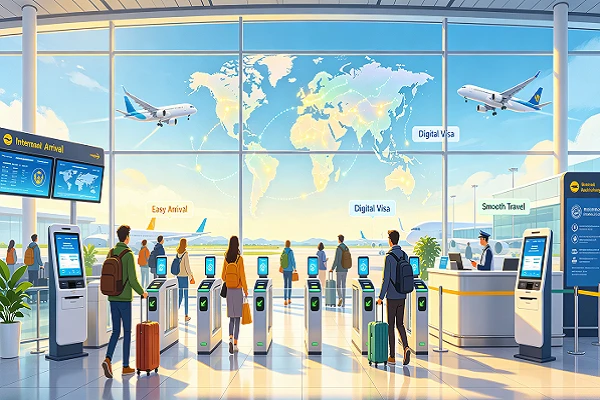
The continued reduction of travel barriers is a significant driver of the revitalization of the cross-border tourism market. Many countries have simplified their entry visa procedures, introducing convenient policies such as e-visas, visas on arrival, and short-term visa-free entry, optimizing airport and port clearance processes, and shortening passenger waiting times. Some economies have launched regional tourism connectivity mechanisms, significantly reducing the cost of travel within the region and greatly stimulating demand for short-distance travel. The aviation industry has followed suit with capacity adjustments, continuously increasing international flight frequencies. Major airlines have resumed many long-suspended intercontinental routes, gradually increasing ticket supply and further balancing supply and demand, providing basic capacity support for cross-border travel.
Tourist travel preferences have also changed significantly. In the past, long-distance cross-border travel was mostly focused on visiting classic popular attractions; now, more and more tourists prefer in-depth experiential trips, favoring visits to less-traveled towns, local villages, and nature reserves, seeking immersive local cultural experiences. Family travel, youth group travel, and senior citizen health and wellness travel constitute the main customer groups in the market. The divergence in needs among different groups has also driven destinations to continuously enrich their product offerings.

The recovery of the business travel sector is also noteworthy. With the regular holding of international trade and economic exchanges, industry exhibitions, and transnational conferences, business travel bookings have steadily rebounded. Business travelers often combine these trips with short leisure excursions, creating a hybrid "business + tourism" consumption model, which drives growth in high-end hotels, convention and exhibition services, and urban cultural and tourism consumption. The recovery of the business travel market also reflects the continued increase in global economic and trade activity, forming a two-way boost with leisure tourism.
However, the recovery progress is uneven across regions. Some remote island nations and niche inland tourist destinations are experiencing relatively slow recovery in visitor numbers due to insufficient transportation capacity and weak supporting facilities. Some regions are also affected by seasonal factors, with significant differences in visitor numbers between peak and off-peak seasons. How to mitigate cyclical fluctuations has become a primary challenge for these destinations.
The tourism industry is experiencing a coordinated recovery, with new changes in consumption patterns
The tourism industry possesses strong inter-industry linkages. The recovery in tourist traffic directly drives the simultaneous recovery of upstream and downstream industries such as air transport, hotel accommodation, catering and retail, scenic spot operations, cultural tourism and creative industries, and tour guide services, gradually restoring the vitality of the entire industry chain. The hotel industry has shown the most significant market feedback, with occupancy rates in popular destinations continuing to rise during holidays. Mid-to-high-end resort hotels, distinctive homestays, and boutique camping establishments have seen particularly strong order growth. Many accommodation providers are no longer simply competing on price, but are instead upgrading their facilities, launching customized services, wellness packages, and local cultural experiences to enhance their competitiveness and cater to tourists' demands for quality.
Digital transformation is deeply penetrating the entire tourism chain, reshaping industry operating models. Online booking platforms, intelligent guide systems, seamless park entry, and digital cultural tourism products are becoming widely adopted. Tourists can complete all operations online in one stop, including visa consultation, flight and hotel booking, scenic spot reservations, electronic guides, and itinerary planning. Many scenic spots have launched digital exhibition halls and VR cloud tours, which not only supplement offline activities but also reach potential users who cannot travel in person. Tourism enterprises are leveraging big data analytics to analyze tourist preferences, precisely develop products, adjust pricing, and improve operational efficiency. Digital capabilities have become one of the core competitive advantages of cultural and tourism enterprises.

The structure of tourism consumption continues to optimize, with the proportion of non-ticket-related spending steadily increasing. Traditional tourism revenue heavily relies on scenic spot tickets, but in the current market, the proportion of spending on specialty dining, cultural and creative products, outdoor experience projects, health and wellness services, and performances and exhibitions is continuously rising. Many destinations are focusing on developing nighttime cultural and tourism economies, launching night markets, live performances, and light-themed cultural and tourism projects to extend tourists' stay and boost overall consumption. Green tourism and eco-tourism products continue to gain popularity, with low-carbon accommodation, Leave No Trace outdoor activities, and ecological study tours attracting a large number of young tourists, and the concept of sustainable tourism is gradually being accepted by the market.
Capital market confidence in the cultural and tourism industry continues to recover, and various market players are increasing their investment. Capital is flowing more towards resort complexes, cultural and tourism IP development, smart tourism infrastructure, and eco-tourism projects, while emerging outdoor cultural and tourism sectors such as camping, hiking, and diving continue to see new projects launched. Small and medium-sized tourism service providers are also seeing development opportunities. Travel agencies specializing in customized small group tours, themed study tours, and niche routes are rapidly emerging, filling market gaps beyond traditional standardized tourism products.
Meanwhile, upstream cost pressures remain a common challenge for the industry. Fluctuations in fuel, labor, and material costs continue to squeeze the profit margins of airlines, hotels, and scenic spots, leading to slight price increases for some services and impacting public willingness to travel. Industry practitioners are also seeking stable profit models to offset cost pressures through refined management, intensive operations, and differentiated product offerings.
As tourist traffic steadily recovers, the global cultural and tourism industry is no longer solely pursuing increased visitor numbers. Green, safe, and inclusive sustainable development has become an industry consensus, with countries and industry organizations jointly promoting the transformation and upgrading of tourism development models. The World Tourism Organization continues to advocate for sustainable tourism, guiding destinations to protect natural ecosystems and preserve local culture while developing cultural and tourism resources, avoiding excessive commercial development that could damage the ecological environment and native customs. Many popular scenic spots have implemented visitor flow control measures, set maximum carrying capacity limits, improved ecological protection facilities, and balanced development and resource protection.
The tourism safety guarantee system continues to improve. Many countries have established dynamic early warning mechanisms for tourism risks, improved emergency rescue and medical facilities in scenic areas, standardized the tourism market order, cracked down on false advertising and forced consumption, and protected the legitimate rights and interests of tourists. Cross-border tourism risk linkage mechanisms are gradually taking shape, and the support for tourist transfer and consular protection in the event of public emergencies is becoming more mature. A stable and safe environment is the fundamental guarantee for the continued recovery of the tourism industry.
Inclusive development of cultural and tourism continues to advance, focusing on amplifying the livelihood value of tourism. Many underdeveloped regions are leveraging their local natural scenery and ethnic cultural resources to develop tourism, improving rural roads, communication, and accommodation infrastructure. This has boosted local employment and income, making cultural tourism a crucial driver of rural revitalization and economic development in many remote areas. Local residents are deeply involved in tourism services and the operation of specialty products, directly benefiting from the industry's development and creating a virtuous cycle of local growth.
International cultural tourism exchange and cooperation continues to deepen. Cultural tourism departments and industry associations from various countries regularly conduct exchanges and collaborations, jointly developing cross-border tourism routes, exchanging cultural tourism resources, and sharing market promotion experiences. Transnational cultural tourism cooperation not only stimulates economic growth but also promotes cultural communication between people of different countries, enhances mutual understanding, and leverages the unique value of tourism as a vehicle for people-to-people diplomacy. Different countries are also exploring mutual recognition of tourism standards and coordination of service norms to further reduce barriers to cross-border cultural tourism cooperation.
In the long term, the industry needs to continuously address multiple uncertainties. Extreme weather, public health fluctuations, and changes in geopolitical situations can all potentially impact market stability in the short term. This also forces the industry to build stronger risk resistance capabilities, enrich its product portfolio, avoid dependence on a single market or a single business model, enhance industrial resilience, and ensure that the recovery trend can be stable in the long term.
Conclusion
The global tourism industry is currently experiencing a steady recovery, with cross-border passenger traffic steadily rebounding, upstream and downstream industry chains synergistically activated, and consumption patterns and business models continuously iterating and upgrading. The cultural and tourism industry has once again become a vital force driving the global economy and promoting cultural exchange. Behind this market recovery are the continued implementation of facilitation policies in various countries, the proactive transformation of cultural and tourism enterprises, and the continued release of public travel demand. However, beneath this prosperity, challenges such as uneven regional development, operating cost pressures, ecological protection, and risk control remain persistent. In the future, only by adhering to sustainable development, continuously improving supporting services, deepening digital upgrades, and strengthening risk response systems, while balancing economic benefits, ecological protection, and the well-being of the people, can the global tourism industry overcome short-term fluctuations, achieve high-quality, long-term stable development, and continuously unleash the unique economic and social value of the cultural and tourism industry.
Disclaimer: The information published on this website is sourced from the internet and does not represent the views of this website, nor does it guarantee the accuracy of its content. Please be aware of the distinction. Furthermore, the products provided by our company are for scientific research purposes only. We are not responsible for any consequences arising from improper use. If you are interested in our products, have any criticisms or suggestions regarding our articles, or are not completely satisfied with the products you received, please contact us by email: allen@faithfulbio.com Or WhatsApp: +86 13137770562; our team is dedicated to ensuring complete customer satisfaction.