


At 11:57 PM local time on July 12, a fire broke out at a bar hosting a live band performance on Lap Phrao Road in Chatuchak district, Bangkok, Thailand. The bar was packed with guests, and the lively gathering quickly turned into a deadly disaster. Following subsequent rescue and assessments, the Bangkok Metropolitan Administration updated the final figures on the evening of July 13, raising the death toll to 28, with 71 injured, including 25 with severe burns who are in critical condition. The fire department's on-site investigation determined that the fire originated from a short circuit in the ceiling's air conditioning system. The large amount of foam soundproofing material in the ceiling was rapidly ignited, and within 5-10 seconds, toxic smoke filled the enclosed space. A sudden power outage and the dim lighting exacerbated the panic among the patrons. An investigation confirmed that although the bar had recently obtained a compliance certificate through an official fire safety inspection, during its actual operation, two legally mandated safety exits were blocked by tables, chairs, and beer crates; the back door was even locked to prevent customers from skipping out on their bills; the fire sprinkler system had been missing for a long time; and the safety inspections were merely on paper. Thai Prime Minister Anutin immediately went to the scene of the fire and ordered a joint investigation team composed of police, fire, and municipal departments to thoroughly investigate the dereliction of duty by the operator and supervisors, while also launching a nationwide fire safety inspection of entertainment venues.
The fire spread rapidly, hindering escape.
The tragedy caused such heavy casualties not because of the large-scale burns from the open flames, but because of the rapidly spreading toxic smoke in the confined space. The escape routes were also deliberately blocked, depriving customers inside of their chance to escape. By the time rescuers arrived, most of those trapped had already lost vital signs from inhaling the highly toxic fumes. The incident occurred late on a weekend night, and the popular bar was filled with young people relaxing. A band was performing on stage, and the loud music masked the initial subtle sounds of smoke coming from the equipment. It wasn't until black smoke billowed from the electrical box next to the stage, followed by a small explosion, that the customers realized the danger.
The process from the fire starting to the smoke engulfing the entire space was beyond anyone's imagination. A short circuit in the aging air conditioning wiring inside the ceiling ignited the foam sound-absorbing material. This material, when burning, released highly toxic gases such as carbon monoxide and cyanide. The smoke quickly descended, engulfing the entire space. Damaged electrical circuits caused a power outage, rendering all lights and emergency indicator lights ineffective, plunging the once lively bar into darkness. Panicked crowds surged towards the main entrance, leading to a stampede. The narrow entrance area and the large number of people quickly gathered there severely slowed evacuation. Some customers, in their panic, sought refuge in the restrooms, mistakenly believing that water provided safety. Ultimately, the vast majority of the victims' bodies were found in the restrooms and the enclosed rear corridor. The on-site investigation revealed that the bar was designed with two backup escape routes. One was near the kitchen, but the passageway was cluttered with beer crates and storage shelves, significantly reducing passage space. The other, a back door, was locked by the owner, with a table selling snacks placed outside, making it impossible for customers to evacuate. Although bar staff attempted to extinguish the fire with small fire extinguishers, they were powerless against the rapidly spreading smoke. The establishment lacked an automatic sprinkler system, and the few handheld fire extinguishers were completely insufficient to extinguish the fire.
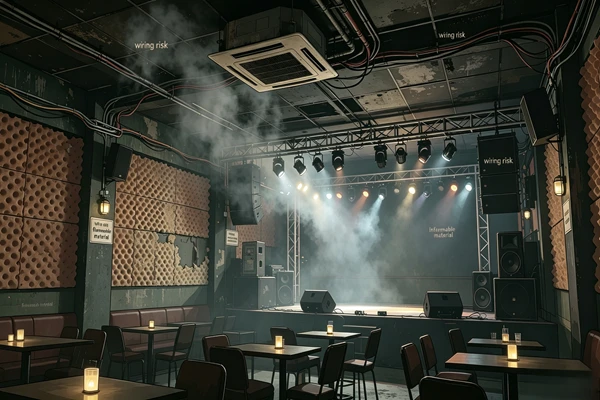
After receiving the alarm, multiple fire brigades from the Bangkok Fire Department rushed to the scene. Traffic congestion on the surrounding streets and densely packed buildings, coupled with the distance between the fire trucks and the bar's entrance, severely limited initial water spraying operations. Firefighters spent 30 minutes controlling the open flames and nearly 90 minutes extinguishing the remaining fires completely. By the time rescuers entered the building to conduct search and rescue operations, many trapped individuals had already lost their lives. The interior environment was extremely harsh due to the intense heat; ceilings, tables, and chairs were completely charred, and broken building materials were scattered everywhere, hindering the search and rescue efforts. Many victims did not have identification documents with them, and their faces were difficult to identify due to smoke damage. Forensic experts could only confirm identities through personal belongings and DNA comparison. Initially, only six victims were identified, leaving numerous families anxiously awaiting news of their loved ones. The identification process consumed a significant amount of time and manpower. Among the injured, some suffered internal organ damage from inhaling toxic fumes, while others sustained extensive burns. Bangkok hospitals faced a shortage of intensive care beds, and 25 critically ill patients were transferred to several large hospitals in Bangkok for treatment, placing immense pressure on medical resources.
As the cleanup operation progressed, more horrific details emerged. The bar owner, in pursuit of aesthetic appeal and soundproofing, extensively used low-cost, flammable foam materials, neglecting fire safety regulations. Emergency evacuation signs were dimly lit and unclear, with many corners lacking any escape route markings. Customers, usually relaxing, wouldn't notice the location of safety exits, leaving them completely lost in an emergency. Based on survivor accounts, it was confirmed that the bar was frequently packed with customers at night, consistently exceeding its capacity. The owner, prioritizing profit, deliberately disregarded crowd control regulations. These accumulated hazards ultimately led to this tragedy.
Paper inspections are merely a formality, exposing serious safety problems in Thailand's entertainment industry.
The loss of 28 precious lives reflects a long-standing regulatory loophole in Thailand: while regulations and rules are comprehensive, their implementation is severely compromised. Initial fire safety inspections are often perfunctory, followed by sporadic, reactive rectification efforts, only to see problems resurface – a cycle that has persisted for years in Thailand's entertainment industry. Thailand enacted fire safety regulations for entertainment venues long ago, explicitly requiring bars and nightclubs to be equipped with automatic sprinkler systems, smoke detectors, and adequate emergency lighting. Safety exits must be kept open at all times and free of obstructions. Fire departments are required to conduct at least two on-site inspections annually, and non-compliant establishments must be shut down. However, the reality differs significantly from these legal provisions. The bar involved in the incident had recently passed a fire safety inspection and received a certificate of compliance. Inspectors reviewed the submitted drawings and documents before signing off, without actually checking whether exits were locked during nighttime operation, whether passageways were blocked, or whether the building materials were flammable. The inspection was completed solely based on written documentation submitted by the operator, creating a loophole of "compliant drawings, but actual violations."
The lack of routine inspections by regulatory personnel and the problem of rent-seeking are the underlying reasons for the long-standing hidden dangers. Many bar operators have reached tacit agreements with local law enforcement officers, allowing them to pass annual inspections smoothly even with substandard facilities, as long as they pay the relevant fees on time. During daytime inspections, operators temporarily clear passageways and turn on fire-fighting equipment to appease staff, but when they officially open for business at night, they lock the back door and place tables and chairs in the passageways to expand their business area. Law enforcement only takes strict action after major incidents; during other times, they mostly issue verbal warnings with lenient penalties. High revenues lead businesses to disregard the consequences of punishment and are unwilling to spend money on upgrading electrical circuits, replacing fire-retardant materials, and equipping themselves with proper fire-fighting facilities. Looking back at past news, a fire at a nightclub in Chonburi Province in 2022 killed 26 people. The cause of the fire was also electrical problems combined with foam decoration materials and blocked safety exits. After the accident, the Thai government launched a nationwide investigation and shut down a large number of non-compliant shops. However, similar problems have recurred several years later, fully demonstrating that short-term rectification cannot change the industry's chaotic state.
Bangkok's tourism industry drives a booming nighttime economy, with bars, nightclubs, and music restaurants scattered throughout the city. Nighttime consumption is a popular leisure activity for local young people and a significant industry attracting foreign tourists. However, many business owners harbor a sense of complacency, believing fires are a low-probability event and that upgrading fire safety facilities would increase operating costs. Consequently, they commonly choose cheap, flammable building materials, arbitrarily modify electrical wiring, and illegally install stage lighting and sound equipment, resulting in long-term overloading of circuits and widespread aging wiring. Besides bars, small restaurants and night market shops also suffer from haphazard wiring, expired fire extinguishers, and narrow escape routes. Many shop staff lack fire safety training, do not know how to use fire extinguishers, and are unfamiliar with evacuation procedures. In the event of an emergency, they panic and flee, failing to guide customers to evacuate in an orderly manner. Meanwhile, local young people and foreign tourists have weak safety awareness, rarely noticing the location of escape routes upon entering entertainment venues. Immersed in the entertainment atmosphere, they are unprepared for potential dangers, further amplifying the harm caused by accidents.
Fragmented regulatory divisions also exacerbate the governance challenges. The fire department is responsible for facility inspections, the municipal department controls building structures, and the police department manages nighttime business operations. With multiple departments managing these areas separately, they often shift responsibility when problems arise, and there's a lack of regular joint surprise inspections. Most nighttime violations only surface during late-night business hours, making it difficult for daytime staff to detect problems. Regulatory departments rarely conduct surprise inspections at night, resulting in misaligned oversight and allowing numerous safety hazards to remain hidden for extended periods.
A comprehensive industry rectification campaign will be launched to improve the regulatory system and build a long-term safety defense line.
Following the tragedy, the Thai government swiftly implemented a series of measures. On one hand, it handled the aftermath for the injured and deceased and held those responsible accountable according to law. On the other hand, it introduced a strict rectification plan, addressing fire safety shortcomings and restoring safety order in nighttime venues through short-term inspections, system revisions, technological upgrades, and public awareness campaigns, safeguarding the lives of residents and tourists.
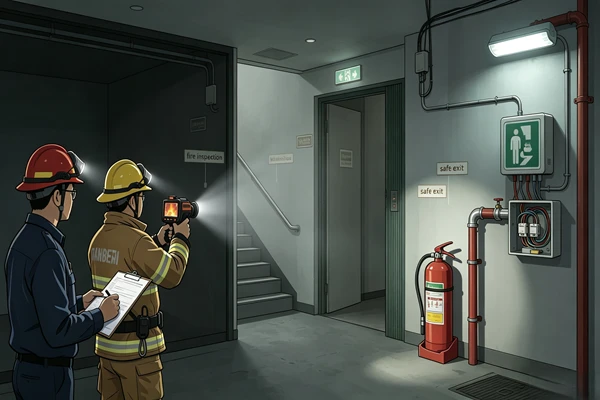
Regarding accountability and the aftermath, Thai police have detained the bar owner and management personnel, initiating an investigation for negligent homicide. Simultaneously, accountability procedures have been initiated against personnel involved in the initial fire safety inspections, thoroughly investigating whether there was any dereliction of duty or bribery during the inspection process. If any law enforcement personnel are found to have engaged in misconduct, they will be severely punished according to criminal law. The Ministry of Civil Affairs has established a post-accident task force, arranged for psychologists to comfort the families of the victims, the government is distributing compensation according to standards, and insurance companies are expediting claims processes to alleviate the financial burden on the victims' families. The Chinese Embassy in Thailand subsequently released a statement confirming that no Chinese citizens were injured or killed in the incident, and reminded Chinese tourists in Thailand to be extra vigilant when going out at night and to check the location of emergency exits immediately upon entering entertainment venues. Bangkok has urgently closed 83 bars and KTVs with significant safety hazards. Pattaya, Phuket, Chiang Mai, and other popular tourist cities have simultaneously launched city-wide inspections, verifying thousands of nighttime businesses within their jurisdictions. Any establishments lacking sprinkler systems, with blocked exits, or with malfunctioning electrical wiring are immediately shut down for rectification. They can only reopen after passing the rectification inspection; those refusing to rectify will have their business licenses permanently revoked.
At the regulatory level, Thailand has learned from this experience and revised its regulatory rules, moving away from the outdated model that relied solely on daytime written inspections. The new regulations require joint inspection teams composed of fire, police, and municipal authorities to conduct unannounced inspections during late-night business hours, focusing on whether safety exits are unobstructed at night. They mandate that entertainment venues use flame-retardant materials for ceiling and wall decoration, requiring the submission of material qualification certificates for approval. The regulations strictly limit the maximum capacity of venues, requiring the installation of customer flow monitoring equipment with automatic alarms when capacity exceeds the limit. They mandate annual fire safety training and emergency evacuation drills for all staff, requiring them to be proficient in operating fire extinguishers and guiding customers to evacuate in an orderly manner in the event of a fire. A blacklist system for operators will be established, permanently banning those with a history of safety violations from operating entertainment venues, thus increasing the cost of illegal activities for businesses. Simultaneously, the regulations simplify public reporting channels, allowing citizens and tourists to submit photos and videos of fire hazards online; verified reports will receive cash rewards, relying on public oversight to fill regulatory gaps.
These regulations also utilize modern technology to reduce safety hazards and promote the industry's upgrading and transformation. Thailand's Ministry of the Interior encourages large entertainment venues to install smart smoke detectors, automatic power-off systems, and luminous dynamic evacuation signs. These signs automatically illuminate to guide escape routes when dense smoke appears. Old wiring is being replaced with flame-retardant cables, and distribution boxes are being equipped with automatic overload trip devices to reduce the probability of electrical fires at the source. Businesses are encouraged to install surveillance cameras, allowing regulatory authorities to view store operations online and check the accessibility of exits in real time, reducing loopholes from manual inspections. Industry associations are playing a self-regulatory role, inviting engineering experts to conduct free lectures for operators, popularizing knowledge about circuit maintenance, fire-resistant decoration, and emergency evacuation, guiding businesses to realize that fire safety is not an unnecessary expense but a necessary guarantee for long-term operation, and encouraging them to proactively phase out high-risk materials such as foam sound insulation.
Conclusion
Short-term shutdowns can only address the immediate, superficial problems; Thailand has a long way to go to completely prevent similar incidents. Future efforts cannot rely solely on short-term, reactive crackdowns after accidents. Only by normalizing nighttime surprise inspections, establishing a robust and strict accountability system, strengthening supervision through technological means, coupled with industry self-regulation and increased public safety awareness, can the laws on paper be truly implemented. Bangkok relies on tourism to attract visitors from all over the world; a safe environment is the foundation of the city's development. Businesses cannot prioritize revenue over customer safety, and regulatory authorities must shoulder their responsibilities. May the lives lost lead to a complete transformation of the industry, ensuring that every entertainment venue upholds safety standards, allowing local residents and tourists to enjoy the city's nights with peace of mind, and preventing future fire tragedies.
Disclaimer: The information published on this website is sourced from the internet and does not represent the views of this website, nor does it guarantee the accuracy of its content. Please be aware of the distinction. Furthermore, the products provided by our company are for scientific research purposes only. We are not responsible for any consequences arising from improper use. If you are interested in our products, have any criticisms or suggestions regarding our articles, or are not completely satisfied with the products you received, please contact us by email: allen@faithfulbio.com; our team is dedicated to ensuring complete customer satisfaction.