


Piracetam Hydrazide is pretty sensitive to the stuff around it. If you change the environment, its chemical state can change too. For example, if things get really acidic or really alkaline, its structure might break or shift. High heat is another problem. It triggers state changes and makes the hydrazide group react way too fast. And if it sits around moisture or oxidizers for a long time, it changes too. So, you have to keep it in a sealed container. Store it away from heat, extreme pH, and wet air.
Faithful Chemical, a B2B bulk manufacturer and supplier. We pack and ship it using standard steps. To lower the chance of it changing state. This way, we can hand you raw material that works the same every single time for your synthesis.
Basic Information
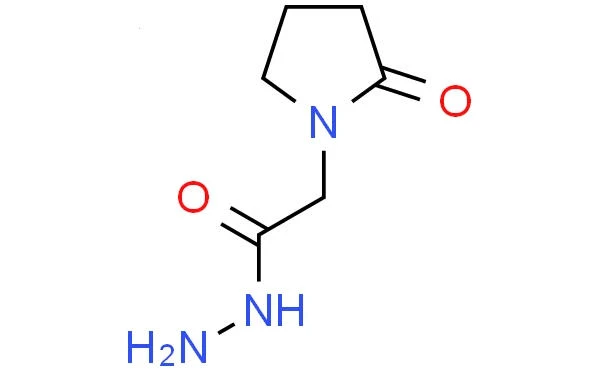
Piracetam Hydrazide, CAS 59776-89-5. People also call it 2-(2-oxopyrrolidin-1-yl)acetohydrazide. The formula is C₆H₁₁N₃O₂. It belongs to the pyrrolidine hydrazide family. Organic labs use it all the time to build stuff. Why? Because it has a 2-pyrrolidone ring and a hydrazide group at the end. Put those two together, and you get a very special reactivity.
That -NHNH₂ group at the end is your main spot to do chemistry. You can make it react with aldehydes, ketones, and carboxylic derivatives using condensation. This is super handy for making new rings. A lot of small lab routes use this spot to stick new pieces onto the pyrrolidone backbone.
You need to know how it dissolves before you start. It mixes pretty well in methanol and ethanol. But it won't mix well in alkanes or other non-polar liquids. This links right back to how its state changes. Most researchers pick their solvents based on this. That way, they don't get surprise precipitation, and the reaction doesn't start before they are ready.
Normal lab tests for this are HPLC, melting point, NMR, and IR. You use these to check if the structure is right. You also use them to check if every batch matches. Most basic research looks at ways to change the molecule in different solvents. They don't really use it for direct biological testing.
It is a common racetam-type intermediate. People always compare it to piracetam. The only real difference is the hydrazide part. Piracetam has an amide group. This one has a hydrazide group, which reacts much faster. That is exactly why researchers pick it when they want to change the core structure.
Research Demand
Piracetam Hydrazide's most demand comes from labs doing organic synthesis. Piracetam Hydrazide has a reactive hydrazide group and the pyrrolidone skeleton is already made. That makes it a great building block to modify structures. You get to skip the hard part of building the ring. You can just jump straight to condensation or making new rings.
There is also tons of published data on Piracetam Hydrazide. This makes it easier for teams to plan experiments that actually work twice. When new methods for hydrazide compounds come out, researchers grab this to test it. They also use it for further exploration. Demand is mostly at the lab and pilot scale.

Gives you an active hydrazide spot. You can use it for condensation and making rings. It lets you build many different pyrrolidine compounds.


Faithful Chemical is a professional factory and manufacturer. We are an in-bulk supplier of Piracetam Hydrazide. We take bulk orders and offer custom packaging and OEM service. We also provide full COA documents to support your virology and medicinal chemistry research. Feel free to contact us for the technical datasheet and a quotation.
Usage Guide
Condensation Fit
It reacts well with aldehydes and ketones. You can make hydrazone derivatives under mild conditions.
Cyclization Potential
It can form a ring within itself. This builds new nitrogen-containing rings.
Condition Limits
Strong oxidants and extreme pH will ruin it. They mess up the reactions you are trying to do.
The hydrazide group does all the work here. Amide groups are usually dead. But this end spot is active and you can tune it. That is why people use Piracetam Hydrazide for condensation and making rings. Most of these reactions run at room temperature or with a little heat. This means you don't need harsh heat that might destroy the pyrrolidone skeleton.
But you can't do anything you want. The things that cause state changes will also mess up your reaction results. If you have strong oxidants, concentrated acid, or strong base? Side reactions will fight with what you want to happen. You get things like hydrolysis and oxidation. This lowers your purity and yield.
When you plan a Piracetam Hydrazide synthetic route, you should keep good reagents away from bad ones. For condensation or making rings, neutral or weakly buffered systems work best. Picking the right partners keeps the pyrrolidone structure intact. It also makes sure you get the target result you want.
Solvent Guidelines
Polar Solvents
It dissolves well in polar protic solvents. This means everything mixes into one clear liquid.
Non-polar Restriction
It doesn't dissolve well in non-polar solvents. You get solids floating around and the reaction doesn't finish.
Stability Risk
Some polar solvents have a lot of water. That water will slowly break down the hydrazide over time.
Picking a solvent is one of the first things you do before starting. It is not just about making things dissolve. The solvent touches the hydrazide group. It changes how stable the whole thing is. So even if you get the temp and pH right, a bad solvent brings hidden side reactions. Then your experiments are hard to repeat. What do researchers do? They test different solvents based on what reaction they want. Condensation? Making a ring? Purification? Each one might need something different.
For long reactions, you really need dry solvents. Why? Because water in the solvent will slowly attack the hydrazide. What about non-polar solvents? Don't use them for the reaction. But you can use them at the end. They help push the crude product out of the liquid so you can separate it.
Faithful Chemical is a B2B bulk manufacturer and supplier. We keep consistent batch specifications for Piracetam Hydrazide. That supports reliable solvent compatibility tests and systematic method development in your lab work.
Reaction Mechanism
The hydrazide group is the Piracetam Hydrazide main player. The pyrrolidone ring usually just sits there and stays stable under normal lab conditions.
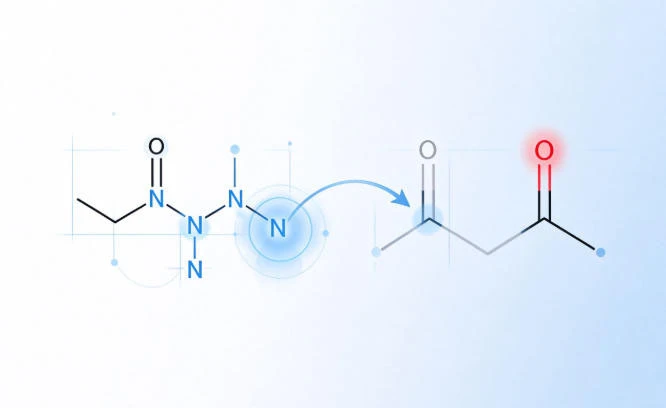
When you add aldehydes or ketones in Piracetam Hydrazide, the hydrazide group binds to them. It forms a hydrazone. This step can go forward and backward. If the solvent has too much water, it won't move forward. That is why dry solvents are better, as we said above.
Add the right catalyst, and the hydrazone keeps reacting. It forms new nitrogen-containing rings. But watch the conditions. Too much water, too much heat, or the wrong catalyst gets in the way. You won't get what you want. You will just get extra impurities.
01
Hydrazide Activation
The nitrogen on the hydrazide group reacts with aldehydes and ketones.
02
Reversible Condensation
This reaction is reversible. Water in the system will slow it down.
03
Cyclization Trigger
The hydrazone product can form a ring with the right catalyst.
04
Side Reaction Risk
High heat or the wrong catalyst easily makes unwanted by-products.
Procurement Notes
When research teams buy Piracetam Hydrazide, they don't just look at price and delivery time. They need to match the specs to their experiments. Different reactions, like condensation or making rings, need different impurity and moisture levels.
This is where batch test records help. Even for the same CAS compound, different batches can act differently. Why? Because the impurities vary.
Testing a sample first is a practical way to check if the Piracetam Hydrazide raw material works for you. Once the sample gives stable results, you can arrange a bulk supply.
Faithful Chemical is a B2B bulk manufacturer and supplier. We provide complete batch test documents for Piracetam Hydrazide. This helps you keep experimental records and trace test results.
Spec Confirmation
Check purity and moisture before ordering.
Batch Traceability
Complete batch records help you repeat experiments smoothly.
Sample Trial
Always test samples before buying bulk.
Compatibility Check
Make sure the material fits your planned reaction route.
Questions Buyers Ask Before Placing A Bulk Order
Conclusion and References
Conclusion
To sum it up, Piracetam Hydrazide is a really handy tool for organic chemistry. That reactive hydrazide group lets you do a lot. You can easily modify molecules or build new rings. But you have to remember it is a bit sensitive. It doesn't like extreme heat, strong acids, strong bases, or wet air. Just keep it sealed and dry. Do that, and it will work perfectly and give you stable results in your lab.
At Faithful Chemical, we know how much this matters. You need your materials to be exactly the same every single time. As a B2B bulk manufacturer and supplier, we make sure our Piracetam Hydrazide is packed right and shipped right. We give you full batch documents so you can track everything. If you want to test it out in your own system, just let us know. We are happy to send a sample, a technical datasheet, or a quote. Let's help you move your research forward.
If you need Piracetam Hydrazide for your research or production,
please contact Faithful Chemical:
Email: allen@faithfulbio.com
WhatsApp: +86 13137770562
References
1.Gorodnicheva, N. V., Vasil'eva, O. S., Ostroglyadov, E. S., et al. (2020). 2-[4-(Het)aryl-2-oxopyrrolidin-1-yl]acetohydrazides: synthesis, structures, and reactions with carbonyl compounds. Russian Chemical Bulletin, 69(5), 996–1008.
2.Shvekhgeimer, M. G. A. (2001). Synthesis of heterocycles from carboxylic acid hydrazides. Chemistry of Heterocyclic Compounds, 37(4), 385–443.
3.Silverstein, R. M., Webster, F. X., Kiemle, D. J., & Bryce, D. L. (2014). Spectrometric Identification of Organic Compounds (8th ed.). Wiley.
4.Reichardt, C., & Welton, T. (2010). Solvents and Solvent Effects in Organic Chemistry (4th ed.). Wiley-VCH.
5.Mullin, J. W. (2001). Crystallization (4th ed.). Butterworth-Heinemann.
6.National Center for Biotechnology Information. (2024). PubChem Compound Summary for CID 11491508, 2-(2-Oxopyrrolidin-1-yl)acetohydrazide. Retrieved from PubChem Database.
7.U.S. National Library of Medicine. (2023). Piracetam hydrazide. MeSH Supplementary Concept Data (Registry Number: 59776-89-5).