


Molecules and excipients with potential compatibility with O-304 Peptide Powder can be categorized into two groups. The first group consists of excipients for physical compatibility, including common pharmaceutical-grade ingredients such as trehalose, mannitol, maltodextrin, and microcrystalline cellulose. These substances may serve as potential carriers, fillers, or stabilizing agents in formulation development and physical compatibility studies, although their actual compatibility with O-304 must be experimentally verified. The second group comprises research compounds with potentially complementary mechanisms. SLU-PP-915, an ERR pathway agonist, may provide complementary metabolic signaling alongside AMPK activation, making it an interesting candidate for studying mitochondrial function and energy metabolism. Before considering these compounds as candidates for further research involving O-304, direct combination studies, chemical compatibility assessments, stability testing, and safety evaluations are necessary.
If you are planning to conduct relevant research, we recommend purchasing a small quantity of samples for preliminary experiments. As a supplier of biochemical research materials for B2B scientific clients, Faithful Chemical can provide O-304 Peptide Powder in customized quantities to suit your specific needs. Please feel free to contact our customer service team for further assistance.
Basic Introduction
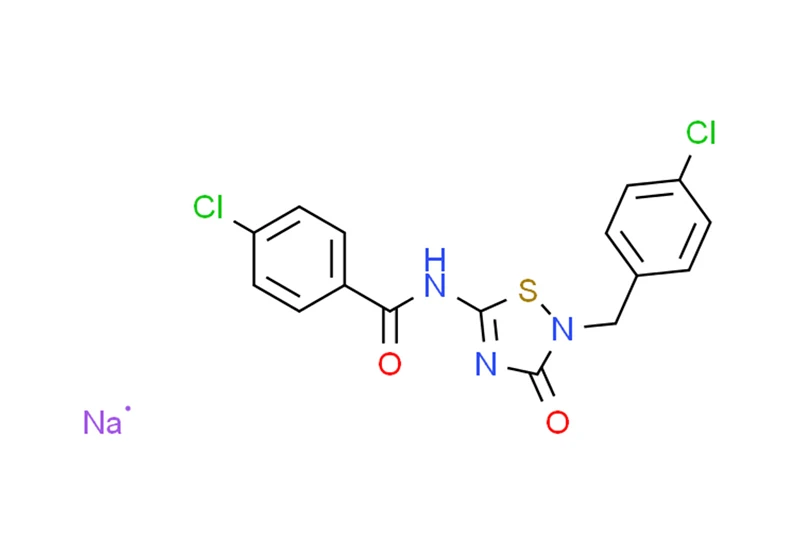
O-304 Peptide Powder is a small-molecule compound recognized for its function as an activator of AMP-activated protein kinase (AMPK). It is involved in the regulation of cellular energy metabolism and metabolic signaling pathways. Research applications for O-304 primarily focus on AMPK-related mechanisms, encompassing areas such as glucose metabolism, cellular energy balance, mitochondrial function, and metabolic activity in skeletal muscle. By modulating the AMPK signaling pathway, O-304 Peptide Powder serves as a valuable tool for researchers exploring cellular energy regulation and metabolic adaptation.
O-304 Peptide Powder holds scientific significance in studies concerning metabolic regulation, mitochondrial energy metabolism, glucose utilization, and cellular signaling. Researchers may investigate its interactions with other metabolic pathways, as well as potential mechanistic links between O-304 and other compounds involved in energy regulation.
Mechanism of action
The mechanism of action of O-304 Peptide Powder primarily involves the activation of the AMPK (AMP-activated protein kinase) signaling pathway. As a small-molecule AMPK activator, O-304 Peptide Powder functions through a unique mechanism: it reduces the dephosphorylation of activated AMPK, specifically by preserving the phosphorylation status of the Thr172 residue on the AMPK α-subunit. More precisely, O-304 Peptide Powder suppresses PP2C-mediated dephosphorylation of phosphorylated AMPK (pAMPK), helping maintain phosphorylation of the AMPK α-subunit at Thr172 and prolonging AMPK activation, thereby prolonging the duration for which AMPK remains in its active state. Unlike activators that bind directly to allosteric sites on AMPK, O-304 Peptide Powder enhances AMPK activity by maintaining its phosphorylation levels, rather than by directly increasing the enzyme's intrinsic catalytic activity.
AMPK serves as a critical regulator of cellular energy metabolism. Upon activation, it influences downstream targets-such as ACC (acetyl-CoA carboxylase)-and participates in biological processes including lipid metabolism, glucose utilization, mitochondrial energy regulation, and the maintenance of cellular energy homeostasis. In experimental studies, the activation of AMPK signaling by O-304 Peptide Powder has been associated with increased glucose uptake in skeletal muscle, improved insulin sensitivity, and alterations in microcirculatory function. Consequently, O-304 Peptide Powder serves as a valuable small-molecule tool for investigating AMPK signaling, cellular energy balance, and the mechanisms underlying metabolic regulation.
O-304 Peptide Powder
1
>>
Reduce PP2C-mediated dephosphorylation of pAMPK
2
>>
Maintain the phosphorylation status of AMPK at Thr172
3
>>
Enhance AMPK signaling pathway activity
4
>>
Regulating cellular energy metabolism and downstream signaling.
Including glucose utilization, lipid metabolism, and energy homeostasis
5
Faithful Chemical provides research-grade O-304 Peptide Powder for metabolic mechanism studies. Samples and flexible specifications are available, with COA supplied for each batch.
Key Properties & Specifications
The physicochemical properties and standard specifications of O-304 Peptide Powder are essential reference information for experimental design, formulation preparation and compatibility testing. All data below represent typical batch parameters for research-grade material and are provided for laboratory reference only.
Appearance
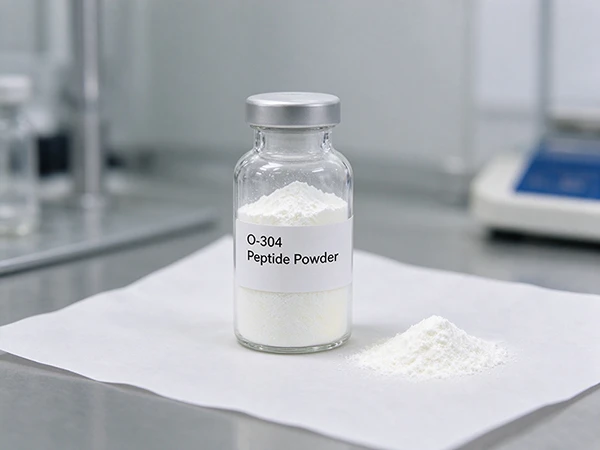
Off-white to white powder
Solubility
Freely soluble in DMSO; sparingly soluble in aqueous buffer at neutral pH; solubility can be improved under weakly acidic conditions. Stock solutions in DMSO are recommended for most in vitro cell assays.
Storage Condition
Store at -20 °C, protected from light and moisture. Avoid repeated freeze-thaw cycles.
Quality Test Items
HPLC purity, water content, residual solvent, appearance, microbial limit (research grade).
Faithful Chemical offers research-grade O‑304 Peptide Powder with stable physicochemical properties. Each batch undergoes standard testing, and COA is available. Samples and custom packaging are supported.
Experimental Notes
Rational solvent preparation, concentration selection and experimental setup are critical to obtaining stable, reproducible results when investigating O‑304 Peptide Powder. Final conditions should be optimized according to your specific cell model, assay system and research objectives.
Stock Solution Preparation
Prepare concentrated stock solutions using DMSO. It is recommended to prepare aliquots upon initial dissolution to avoid repeated freeze-thaw cycles. The final DMSO concentration in cell culture experiments should be minimized and optimized according to the sensitivity of the selected cell model.
01
Key Assay Readouts
For functional verification, common detection endpoints include pAMPK (Thr172) protein level, ACC phosphorylation status, glucose uptake rate, mitochondrial respiration parameters and cellular lipid content.
02
Control Design Tips
Since O‑304 acts by inhibiting PP2C-mediated dephosphorylation rather than allosteric activation of AMPK, appropriate control groups are strongly recommended, including blank solvent control and positive AMPK activator controls where needed.
03
Model Suitability
This peptide powder is widely applied in cellular models related to energy metabolism, such as skeletal muscle cells, hepatocytes and adipocytes, for exploring glucose metabolism, insulin sensitivity and mitochondrial function.
04
Faithful Chemical supplies O‑304 Peptide Powder for AMPK-related cell experiments. Our technical team can offer support on solvent preparation, assay design and control arrangement.
Applications & Research Directions
O‑304 Peptide Powder is a specialized research tool targeting the AMPK signaling axis. Its unique mechanism of preserving pAMPK Thr172 phosphorylation via PP2C inhibition makes it suitable for a broad spectrum of metabolism-related basic research and preclinical exploratory studies.


Faithful Chemical provides O‑304 Peptide Powder for diverse metabolic research covering glucose, lipid and mitochondrial studies, and supports combined-pathway exploratory research.
Supplier Advantages

Why Choose Us
Faithful Chemical serves B2B scientific customers and biochemical research laboratories, supplying O‑304 Peptide Powder as a research-grade raw material with flexible ordering options.
Sample Support
Small-quantity samples are available upon request for your preliminary compatibility screening, mechanism verification, formulation feasibility tests and in vitro pilot experiments.
Customized Packaging & Batch Size
We can provide tailored quantities according to your research plan, ranging from small lab-scale packages to bulk orders. Custom packaging specifications can be arranged for long-term research projects.
Lead Time
Delivery time depends on the ordered quantity and stock status. Our customer service team will confirm the estimated lead time when you submit an inquiry.
Technical Consultation
Feel free to contact our customer service team if you need COA previews, technical documents, quotation, or further technical consultation about O‑304.
FAQ
Conclusion and Reference
Conclusion
O‑304 Peptide Powder is a distinctive research-grade AMPK activator that sustains AMPK phosphorylation by inhibiting PP2C-mediated dephosphorylation. As a versatile tool compound, it supports extensive research on glucose and lipid metabolism, mitochondrial function and skeletal muscle energy regulation. It also offers potential for formulation compatibility tests and combined pathway studies with complementary molecules. Faithful Chemical provides this product with reliable quality and technical support to facilitate your metabolic signaling research.
If you require O‑304 Peptide Powder research or production
Please contact Faithful Chemical Click
Email: allen@faithfulbio.com
WhatsApp: +86 13137770562.
Reference
1.Hardie, D. G. (2018). AMPK: A nutrient and energy sensor that maintains energy homeostasis. Nature Reviews Molecular Cell Biology, 19(4), 251–260.
2.Garcia, D., & Shaw, R. J. (2017). AMPK: Mechanisms of cellular energy sensing and restoration of metabolic balance. Molecular Cell, 66(6), 789–800.
3.Oakhill, J. S., et al. (2011). AMPK is a direct adenylate charge-regulated protein kinase. Science, 332(6036), 1433–1435.
4.Davies, S. P., et al. (1995). Identification of the site on AMP-activated protein kinase phosphorylated by the upstream kinase. European Journal of Biochemistry, 232(3), 831–838.
5.Voss, M., et al. (2021). PP2C phosphatases as negative regulators of AMPK signaling. Cell Metabolism, 29(5), 1017–1032.
6.Narkar, V. A., et al. (2008). AMPK and PPARδ agonists are exercise mimetics. Cell, 134(3), 405–415.
7.Fan, W., et al. (2022). ERR pathway coordination with AMPK signaling in mitochondrial metabolic adaptation. Journal of Biological Chemistry, 298(8), 102214.