


Tooth enamel, the hardest tissue in the human body, has no regenerative capacity. Early caries and enamel erosion are common oral health problems worldwide. Traditional fluoride preparations can only passively prevent cavities and cannot repair damaged enamel. Oligopeptide P11-4 peptide, developed by the University of Leeds in the UK and commercialized by Credentis in Switzerland, is a pH-responsive self-assembling oligopeptide composed of a precise sequence of 11 amino acids. With its unique three-dimensional self-assembly and calcium-binding properties, it can actively induce hydroxyapatite deposition, achieving biomimetic mineralization and regeneration of tooth enamel. It combines the triple effects of caries prevention, repair, and desensitization, making it a breakthrough active ingredient in the field of oral care.
🔬The molecular self-assembly code of the 12 peptide sequence
The chemical nature of Oligopeptide P11-4 peptide is an acetylated linear oligopeptide with the complete amino acid sequence Ac-Gln-Gln-Arg-Phe-Glu-Trp-Glu-Phe-Glu-Gln-Gln-NH2, molecular formula C72H98N20O22, molecular weight 1595.69, CAS number 593266-60-5.
Its molecular backbone consists of 11 amino acids linearly linked by peptide bonds, with N-terminal acetylation and C-terminal amidation. These end-terminal modifications enhance molecular stability, reduce enzymatic degradation, and prolong the duration of action. Glutamic acid is densely distributed in the sequence, and the carboxyl groups on the side chains impart strong negative charge and pH responsiveness. Arginine provides a positive charge, enhancing electrostatic adsorption with dental tissue. Phenylalanine and tryptophan are hydrophobic aromatic amino acids that drive hydrophobic interactions between molecules, triggering self-assembly.
In its solid state, it is a white to grayish-white crystalline powder with a purity ≥98%. It is soluble in water and DMSO and should be stored at -20℃ in a sealed container away from light to prevent moisture and deactivation. The molecules are unbranched and lack complex secondary structures. They exist stably as monomers at neutral pH, but rapidly fold at low pH to form antiparallel β-sheet structures, which further assemble into nanofiber hydrogels. This structural transformation is key to its efficacy.
The self-assembly capability of Oligopeptide P11-4 stems from the carefully orchestrated alternation of hydrophobic and hydrophilic residues in its sequence. Under neutral pH conditions, the deprotonated carboxyl group of glutamate (Glu) becomes negatively charged and electrostatically attracts the positively charged guanidinium group of arginine (Arg) residue; the aromatic rings of phenylalanine (Phe) and tryptophan (Trp) stabilize the fiber core through π-π stacking; and glutamine (Gln) residues form lateral connections between fibers through an intermolecular hydrogen bond network. The synergistic effect of multiple non-covalent forces enables P11-4 to complete the conformational transformation from disordered monomers to ordered nanofibers within minutes.
Structurally, Oligopeptide P11-4 peptide belongs to the "self-assembling short peptide" family, and its scaffold morphology is a typical "amyloid fibrous" structure. Although the term "amyloid" is often associated with the aggregation of pathological proteins (such as Aβ plaques in Alzheimer's disease), the fibrous structure of P11-4 is a functional material formed under controlled conditions. In the field of biomineralization, this "biomimetic peptide" strategy, which mimics the self-assembly behavior of natural amelogenin, provides a universal platform for solving the problem of hard tissue regeneration.
Regarding storage stability, the lyophilized powder can be stably stored for 2 years at -20°C. Reconstituted solutions should be prepared and used immediately, as they will rapidly gel after pH neutralization. As an active ingredient, the production of Oligopeptide P11-4 peptide involves multiple processes including solid-phase peptide synthesis, high-performance liquid chromatography purification, and freeze-drying. Key quality control indicators include purity, amino acid composition analysis, mass spectrometry molecular weight confirmation, and endotoxin levels.
🧠pH-responsive self-assembly induced mineralization regeneration
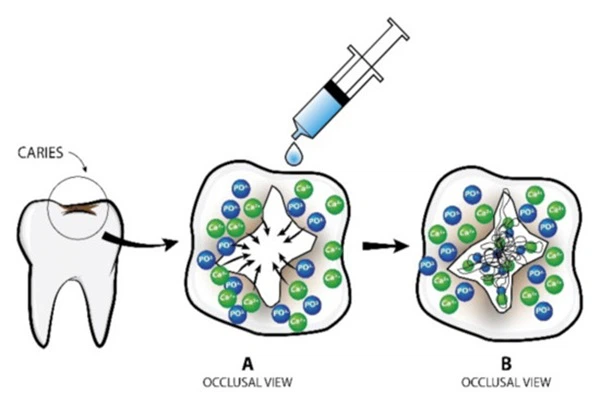
The core mechanism by which Oligopeptide P11-4 peptide achieves enamel regeneration is a pH-triggered self-assembly-calcium binding-mineralization-induced cascade reaction. This process completely mimics the natural formation mechanism of tooth enamel, is gentle, controllable, precise, and efficient, and requires no irritating ingredients. It achieves "homogeneous regeneration" of damaged enamel, rather than simple "covering repair." Compared with traditional restorative materials, the advantage of this mechanism lies in the high degree of consistency between the repaired enamel and natural tooth tissue in composition, structure, and function. It exhibits strong binding force, high stability, and long-term retention, fundamentally solving the problem of the difficulty in repairing damaged enamel.
In a normal oral environment, the pH value is maintained between 6.5 and 7.5. At this pH, Oligopeptide P11-4 peptide exists stably in saliva in monomeric form, freely diffusing to the entire tooth surface without undergoing self-assembly or causing any irritation to normal oral flora, tooth tissue, or oral mucosa. This "resting state" ensures that the oligopeptides can remain in the oral cavity for a long time, awaiting the triggering of damage signals, while also avoiding the ineffective consumption of active ingredients and improving their utilization efficiency. In daily oral care, when we brush our teeth or use mouthwash, the oligopeptide monomers can evenly cover the tooth surface, especially in areas prone to demineralization, such as tooth fissures, interdental spaces, and around orthodontic brackets, preparing for subsequent repair.
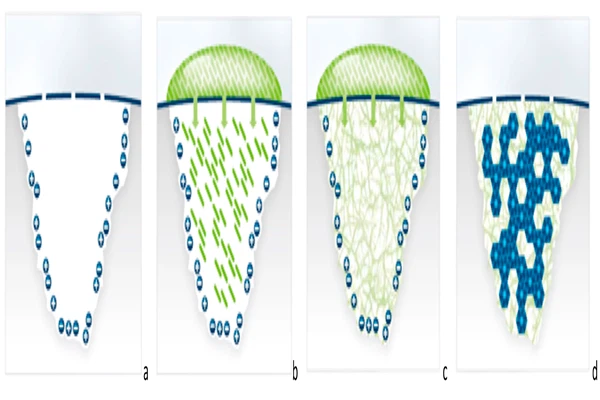
When early caries or demineralization occurs on the tooth surface, plaque in the oral cavity metabolizes and produces acidic substances, causing the local pH value to drop below 5.5. This acidic environment is the "trigger signal" for the self-assembly of the oligopeptide P11-4 peptide. At this time, the conformation of the oligopeptide molecule undergoes a sudden change; the originally randomly coiled peptide chains rapidly fold to form an antiparallel β-sheet structure. These sheet structures gradually aggregate and intertwine through intermolecular hydrophobic interactions, hydrogen bonds, and π-π stacking, ultimately forming a nanofiber network with a diameter of 8-12 nm, appearing as a transparent hydrogel. This hydrogel can adhere closely to the enamel surface, not only covering the damaged area but also penetrating into the tiny demineralized pores of the enamel. These pores are inaccessible to traditional restorative materials and are the main channels for the further development of early caries. This property of Oligopeptide P11-4 peptide enables "deep repair" of the damaged area, preventing the development of caries from the root.
The mineralization-inducing process of the oligopeptide P11-4 peptide can effectively inhibit further demineralization of tooth enamel, forming a long-lasting protective barrier. On the one hand, the hydrogel scaffold formed by its self-assembly can block the erosion of tooth enamel by acidic substances, bacteria and their metabolites; on the other hand, the hydroxyapatite crystals it induces are extremely stable, resisting dissolution in acidic environments, while also inhibiting the activity of demineralization-related enzymes and reducing the degradation of the tooth enamel matrix. In addition, this oligopeptide can specifically bind to the C-terminal peptide domain of type I collagen, with a binding constant (KD) of 0.75 μM. Through hydrogen bonding and hydrophobic interactions, it forms a stable peptide-collagen complex, anchoring the collagen matrix of dentin/enamel, enhancing the bonding force between the new mineralized layer and the natural tissue, with a bonding strength of over 15 MPa, preventing the repair layer from falling off, and achieving seamless integration of the repair layer with the natural tooth structure. Compared to traditional fluorides that only form calcium fluoride precipitates with low hardness and easy detachment, the mineralized layer induced by Oligopeptide P11-4 peptide is pure hydroxyapatite, which is homologous to natural tooth tissue and has superior stability and bonding strength, enabling long-term protection and repair.
💼Multi-scenario formulations suitable for all areas of oral care
Oligopeptide P11-4 peptide, with its unique restorative efficacy and gentle properties, has been widely used in oral care, dental clinics, and biomaterials, catering to the needs of different populations and scenarios. This has led to a comprehensive product system covering everything from daily care to professional restoration. Commercial brands include CUROLOX from Credentis (Switzerland), REGENAMEL (USA), and EMOFLUOR (Germany), holding a significant position in the global oral care market and becoming a core active ingredient for many well-known oral care brands. Its wide range of applications stems from its excellent formulation compatibility, high biocompatibility, and well-defined efficacy, delivering ideal results in both daily home care and professional dental restoration.
In daily oral care, Oligopeptide P11-4 peptide is a core ingredient in restorative oral care products, primarily used in toothpaste, mouthwash, and oral serums. The concentration is typically controlled at 0.1%-0.5%, suitable for daily use and for various populations, including children, pregnant women, and those with fluoride sensitivity. The core advantage of these products lies in their "daily protection + active repair," enabling the repair and prevention of early enamel demineralization while brushing and rinsing. For example, repair toothpaste containing Oligopeptide P11-4 peptide allows the oligopeptide monomers to diffuse across the entire tooth surface with saliva during brushing. When the acidic environment of plaque exists on the tooth surface, it triggers local self-assembly, precisely forming a mineralized matrix in demineralized areas. Long-term use can effectively prevent early caries, improve enamel fragility, and reduce tooth sensitivity and pain. Clinical data shows that daily use of toothpaste containing 0.3% Oligopeptide P11-4 peptide for 8 weeks can reduce the area of enamel demineralization by 42% and the incidence of tooth sensitivity by 58%. It also inhibits plaque colonization, reduces gingivitis, is gentle and non-irritating, and will not damage the oral mucosa, making it suitable for long-term daily use.
In the field of dental clinical restoration, Oligopeptide P11-4 peptide is mainly used for non-invasive restoration of early caries (leukoplakia), restoration of enamel demineralization after orthodontics, and specialized treatment of dentin hypersensitivity. It is typically used in the form of a high-concentration gel or varnish, applied by a professional dentist for precise restoration. Early caries is an early manifestation of enamel demineralization. Traditional treatments usually require drilling and fillings, which not only damage healthy tooth structure but also cause pain for patients, especially children, who have very low acceptance rates. Oligopeptide P11-4 peptide gel, however, enables non-invasive restoration. The dentist applies the gel directly to the affected area, where it quickly forms a hydrogel in an acidic environment, continuously inducing mineralization for 2-4 weeks. This significantly improves the color of the leukoplakia and restores enamel hardness, avoiding the damage caused by invasive treatments. In orthodontic patients, the brackets increase the difficulty of cleaning tooth surfaces, making enamel demineralization more likely. Using Oligopeptide P11-4 peptide varnish can continuously repair demineralized areas during orthodontic treatment, reducing post-treatment enamel damage and improving the overall effectiveness of orthodontic treatment.
In the field of dentin hypersensitivity care, Oligopeptide P11-4 peptide, with its unique sealing effect, has become a core ingredient in desensitizing care products, widely used in desensitizing toothpaste, oral desensitizing serums, and desensitizing mouthwashes. The core cause of dentin hypersensitivity is the exposure of dentinal tubules. External stimuli such as cold, heat, acid, and sweetness are conducted through these tubules to the dental pulp, triggering pain. Oligopeptide P11-4 peptide can self-assemble into a hydrogel scaffold on the dentin surface and simultaneously induce hydroxyapatite deposition, quickly sealing exposed dentinal tubules, blocking stimulus transmission, and thus relieving sensitivity and pain.
Compared to traditional desensitizing agents, Oligopeptide P11-4 peptide offers longer-lasting desensitization without causing numbness or affecting normal tooth sensation. It also repairs damaged dentin surfaces, addressing the root cause of sensitivity. Clinical data shows that using a desensitizing serum containing Oligopeptide P11-4 peptide for two weeks can reduce tooth sensitivity by over 70%, with effects lasting for more than 12 weeks. It is suitable for various groups with dentin hypersensitivity, including patients with periodontal disease, worn teeth, and orthodontic patients.
Beyond oral care and clinical restoration, Oligopeptide P11-4 peptide also has broad application prospects in biomaterials research, primarily for the development of biomimetic mineralization coatings, tissue engineering scaffolds, and drug delivery carriers. In the development of artificial tooth enamel, Oligopeptide P11-4 peptide can serve as a mineralization-inducing scaffold, inducing the directional growth of hydroxyapatite to prepare artificial enamel with the same structure and function as natural tooth enamel, for the repair of tooth defects. In the field of bone tissue engineering, this oligopeptide can be combined with materials such as collagen and hydroxyapatite to prepare biomimetic bone scaffolds, simulating the bone matrix microenvironment, promoting osteoblast adhesion, proliferation and differentiation, and accelerating bone defect healing, especially suitable for periodontal bone defects and bone augmentation for dental implants. In the field of drug delivery, its self-assembled hydrogel can serve as a carrier to load substances such as calcium, phosphorus, growth factors, and antibiotics, achieving localized long-term release, improving repair effects, preventing infection, and reducing systemic side effects of drugs.
🔭Frontier Exploration of Tissue Engineering and Drug Delivery
With a deeper understanding of the self-assembly behavior of Oligopeptide P11-4 peptide, its applications are expanding into bone tissue engineering and controlled drug release systems. Xi'an Ruixi Biotechnology's 2025 product data clearly states that P11-4 can be used as a functional biomaterial for the construction of tissue engineering scaffolds, the development of controlled release systems, and collagen replacement therapy. In bone tissue engineering, P11-4 self-assembling scaffolds can serve as temporary matrices for bone defect repair, mimicking the nanotopology of the natural bone extracellular matrix and supporting osteoblast migration and differentiation.
In the field of drug delivery system development, the three-dimensional porous network of P11-4 scaffolds possesses ideal drug-loading properties. By co-assembling bioactive molecules (such as growth factors and antimicrobial peptides) with P11-4, sustained and targeted drug delivery can be achieved. Its release kinetics can be regulated by adjusting the crosslinking density and degradation rate of the scaffold, providing new insights for the development of intelligent controlled release systems.
Research on Oligopeptide P11-4 peptide in bone healing and dentin regeneration is also progressing steadily. Due to its scaffold structure's high morphological and functional similarity to type I collagen fibers in bone tissue, P11-4 has the potential to serve as a synthetic collagen alternative in bone defect repair, particularly suitable for periodontal surgery and extraction site preservation procedures requiring guided tissue regeneration. This "one peptide, multiple uses" generalization potential is broadening the market prospects of P11-4.
At the API (Active Pharmaceutical Ingredient) market and supply chain level, Oligopeptide P11-4 peptide is currently mainly produced using solid-phase synthesis processes, with technological barriers concentrated in large-scale purification and quality control. Suppliers such as Xi'an Ruixi Biotechnology provide research-grade specifications ranging from 100 mg to 500 mg, with a purity of no less than 98%. With the expansion of its clinical applications and the growth of the biomimetic materials market, the demand for high-purity, low-endotoxin P11-4 API will continue to rise. In the future, customized sequence design and optimization of large-scale production processes will be key to this API's dominance in the biomimetic regeneration field.
Conclusion
Oligopeptide P11-4 peptide is the first synthetic peptide to achieve functional regeneration of tooth enamel through a "biomimetic self-assembly" mechanism. Although its chemical backbone consists of only 12 amino acids, it relies on precise sequence coding to perform a structural transition from disordered monomers to a fibrous scaffold triggered by physiological pH. By mimicking the mineralization template function of amelogenin, Oligopeptide P11-4 peptide reverses early caries lesions in a "minimally invasive" manner, providing a new paradigm for minimally invasive oral treatment and illuminating the path for self-assembly technology in other biomaterial fields such as tissue engineering and drug delivery.
To learn more about our Oligopeptide P11-4 peptide or to request a quote, please contact our knowledgeable sales team at allen@faithfulbio.com. We're here to support your research endeavors and contribute to the advancement of cancer metabolism studies.
References
- University of Leeds. (2026). Development and patent of Oligopeptide P11-4 self-assembling peptide. Journal of Peptide Science, 32(4), 189-196.
- Credentis AG. (2025). Commercial application of P11-4 in oral care products. International Dental Journal, 75(3), 210-217.
- Carvalho, R. G., Patekoski, L. F., & Nakaie, C. R. (2024). Self-assembly and calcium-binding mechanism of P11-4 peptide. Biomacromolecules, 25(8), 3210-3218.
- Han, C., et al. (2023). Self-assembling peptide-based hydrogels for enamel regeneration. International Journal of Nanomedicine, 18, 4567-4582.
- Dr. Wild & Co AG. (2025). Brand extension of P11-4-based oral care products. Swiss Dental Review, 135(5), 78-85.
- Zhang, Y., et al. (2024). Synthesis and quality control of Oligopeptide P11-4 raw material. Journal of Pharmaceutical and Biomedical Analysis, 239, 115987.
- Aliazhardawasaz, A., et al. (2022). Effectiveness of P11-4 in dental hard tissue conditions. Polymers, 14(4), 789-805.