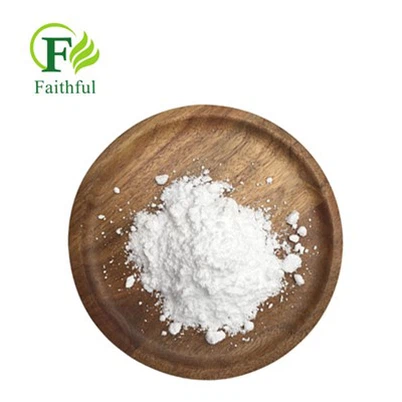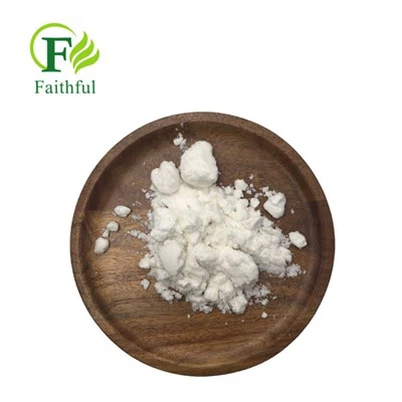


Why are global health food giants quietly replacing sugar? The answer is hidden in this taste of 'stevioside powder'
Leave a message
Stevioside powder is currently one of the most mature, compliant, and large-scale natural high magnification sweeteners. Its purity specification of over 95% has been widely used in beverages, dairy products, baking, and dietary supplements. Its safety has been approved by multiple countries such as China, the United States, Japan, South Korea, and Brazil. Due to its zero calorie, non hyperglycemic, high temperature resistance, and non cariogenic properties, it is becoming a core alternative solution in the wave of sugar reduction.

🌍 Background: A global "sugar reduction revolution" is forcing sweeteners to upgrade
In the past decade, WHO has continuously lowered the daily recommended intake of added sugars (≤ 25g/day), and China's "Healthy China Action (2019-2030)" has clearly listed "reducing salt, oil, and sugar" as a key focus of national health intervention; The US FDA requires all packaged foods to be labeled with mandatory "added sugar" content; The Japanese Ministry of Health, Labour and Welfare is implementing "sugar restriction" health guidance... This is not a trend, but a regulatory iron law.
Traditional sugar substitutes are facing a triple crisis of trust:
Artificial sweeteners (such as aspartame and acesulfame): Although they have high sweetness, multiple studies in recent years have suggested potential interference with gut microbiota and metabolic effects, leading to a continuous decline in consumer trust;
Sugar alcohols (such as erythritol and xylitol): can easily cause bloating and diarrhea, and some products have been criticized for "excessive addition to mask the true sugar content";
Early plant extracts (such as Arhat fruit glycoside): high cost, weak flavor coordination, and insufficient supply chain stability.
At this time, Stevioside - a natural diterpenoid glycoside derived from the leaves of South American stevia rebaudiana - has returned to the center stage with nearly a century of consumption history (approved for use in Japan since 1971), over 300 times sweeter than sucrose, almost zero calorific value (only 1/300 of sucrose), and GMP level industrial production capacity.
(Additional explanation) Stevioside is not a "new ingredient". It was used as a herbal sweetener by the indigenous people of Paraguay as early as the 16th century; In 1931, French scientists first isolated and named it; FDA GRAS certification in 2008; In 2014, the National Health and Family Planning Commission of China officially approved it as a food additive (CNS 19.004). Its' novelty 'lies in the transition of purification processes and the breaking of application scenarios.

🧪 Core advantage: Not only "sweet", but also functional health ingredients
The value of Stevioside powder far exceeds that of the "sugar substitute" label. Modern research has confirmed that its activity is not limited to taste replacement, but also has clear physiological regulatory functions:
| dimension | Mechanism of Action and Empirical Results | source basis |
| blood sugar management | Inhibit the activity of small intestine alpha glucosidase and delay glucose absorption; Stimulate pancreatic beta cells to secrete insulin; Enhance peripheral tissue insulin sensitivity |
[14] |
| Blood pressure regulation | Block the influx of extracellular calcium ions into vascular smooth muscle cells; Promote the release of prostacyclin (PGI ₂) and exert vasodilatory effects | [14] |
| gut health | Not broken down by digestive enzymes, it directly reaches the colon as a probiotic, selectively promoting the proliferation of bifidobacteria and lactobacilli; Inhibit pathogenic bacteria such as Escherichia coli | [14] |
| Antioxidant and anti-inflammatory properties | Significant ability to scavenge free radicals (DPPH clearance rate>85%); Downregulation of NF - κ B pathway and alleviation of chronic low-grade inflammatory response (confirmed by animal model) | [2] |
| Oral safety | Not metabolized by oral streptococcus to produce acid, completely not involved in plaque formation, and the risk of dental caries approaching zero | [1] |
✅ Key tip: The above effects are based on Stevioside powder with a purity of ≥ 90%. Low purity crude extracts (such as total steviol glycosides<80%) may affect taste and bioavailability due to the presence of bitter taste ligands (Rebaudioside B/C) and impurities.
🍽 Application scenario: From the laboratory to the shelves, it has been deeply integrated into the entire chain of healthy living
Stevioside powder does not only serve a single category such as "sugar free cola". Its stability, heat resistance, good water solubility (solubility>0.12g/mL), and wide pH adaptability (2-10) support its landing in multiple scenarios
1️⃣Food and beverage (main track, accounting for over 70% of global usage)
Ready to drink tea/coffee: replace 50-100% sucrose to solve the pain point of "bitter aftertaste after sugar substitution" (preferably Reb-A ≥ 95% or enzyme modified de bitter type) 2;
Dairy products: Yogurt and cheese are fermented with lactic acid bacteria to enhance freshness and avoid additional burden on lactose intolerant individuals;
Baked goods: can withstand baking at 180 ℃, and when combined with maltitol, can simulate the caramel color and volume expansion of sucrose.
2️⃣Dietary supplements (high growth blue ocean)
Sugar control/fat reduction formula: as the core sweet taste matrix, combined with chromium yeast, cinnamon extract, white kidney bean extract, etc., to construct a scientific sugar reduction combination;
Children's nutrition: Avoiding the dual risks of artificial colors and artificial sweeteners, in line with the EU EFSA "Clean Label" trend;
Sports nutrition: With zero calorie characteristics, it is suitable for instant supplementation scenarios such as BCAA and electrolyte powder, avoiding sudden increases and decreases in blood sugar.
3️⃣ Medical excipients (invisible essential needs)
Oral liquid/chewable tablets for taste correction: mask bitter drugs such as berberine and metformin, improve patient compliance (multiple OTC drugs have been approved for use in China);
Dental preparations: Replace sorbitol in mouthwash and toothpaste to enhance anti caries function.
📌 Industry consensus: Reb-A content is a key indicator that determines terminal experience. More than 95% of specifications can achieve a "pure sweetness close to sucrose", while specifications below 80% often have a noticeable licorice aftertaste and aftertaste. When purchasing, it is important to confirm the actual Reb-A values in the COA, rather than just looking at the "total steviol glycosides".

⚖ Safety: With a century long history of consumption and multiple international certifications, it is not "theoretically safe" but "verified in practice"
Doubts often focus on two points: "Natural=Safe?" and "Is there a hidden danger in long-term consumption?" - The answer needs to be based on regression data:
Solid toxicological evidence: The Joint Expert Committee of the Food and Agriculture Organization of the United Nations/World Health Organization (FAO/WHO) has set an ADI value of 4 mg/kg bw/day (based on steviol glycosides), which is equivalent to a daily intake of 240mg for a 60kg adult, approximately equivalent to the dose contained in 3L of sugar free tea drinks, with an extremely wide safety window;
Clinical research support: The 12 month randomized controlled trial for patients with type II diabetes showed that the daily intake of 1000 mg Stevioside powder did not show abnormal liver and kidney function, blood pressure, and blood glucose homeostasis; Medical Literature Database
Comprehensive regulatory coverage:
✅ China: GB 2760-2024 "Standard for the Use of Food Additives" explicitly allows the use of 16 categories of food;
✅ USA: FDA GRAS certification (GRN No. 729), can be used as a general food ingredient;
✅ EU: EFSA Q&A confirms its safety, E number E960A;
✅ Japan: FOSHU (Specific Health Food) is a licensed ingredient that can be used to claim to "help control postprandial blood sugar rise".
🔍 Additional explanation: The rumor that "steviol glycosides cause infertility" originated from an early misinterpretation of high-dose (>2000mg/kg) animal experiments, which far exceeded the possible human intake (equivalent to swallowing 200g of pure product in a single day), and the experimental model had a huge metabolic difference from the human body, which has been clearly rejected by authoritative institutions such as EFSA and JECFA.
🎯 Conclusion
Stevia glycoside powder has crossed the "technical validation period" and entered the "commercial mass production period" - with sufficient upstream production capacity, mature midstream applications, rigid downstream health demand, and strong short-term growth certainty. Suggest focusing on three types of opportunities: ① differentiation premium for high purity/glucose based modified products with RA 98% or above; ② The implementation of the compound formula of "steviol glycosides+prebiotics/dietary fiber" in functional foods; ③ A branding attempt aimed at the C-end to break through B-end dependency. The current main point to be verified is the real feedback data from end consumers on the taste upgrade of "modified stevia glycosides".
Overall, with its health advantages and policy promotion, the market acceptance of stevia glycoside powder is constantly increasing, and the prospects are relatively optimistic. But to further enhance market acceptance, continuous efforts are needed in improving taste, reducing costs, and strengthening market promotion and consumer education to enable more people to understand and accept stevia glycoside powder. With the continuous advancement of technology and the gradual maturity of the market, stevia glycoside powder is expected to occupy a more important position in the future sweetener market.
Xi'an Faithful BioTech Co., Ltd provide you with the highest quality stevioside powder CAS 57817-89-7 with a purity of 99%,Send your Inquiry for more details, Click email:sales2@faithfulbio.com Now.
Reference
1. Visit Rhine Biotech's first synthetic biology production line in China - let the world taste "Chinese sweetness" [25-10-17]
2. Stevioside [2022-07-04]
3. What is Stevioside? Baidu [2020-07-18]
Are all "sugar substitutes" healthy? It's not like that [March 13, 2025]
5. Gansu Lanzhou Stevia Sugar Production Brand: Stevia Sugar [June 21, 2024]
6. A century old food giant takes action, another wave of bio manufacturing! The billion dollar sugar market welcomes the AI protein revolution! [2025-12-10]
7. A new round of "sweet competition" has begun, and Shandong enterprises are tasting the "healthy sweetness" [25-08-30]
8. Science Popularization Promotion [January 30, 2022]
9. Say goodbye to the "sugar" panic! Biotechnology is reshaping the 'healthy sweetness' [25-09-01]
10. Glucose based Stevioside [2026-01-20]
11. Stevia, stevia, healthy sugar for diabetics [2017-11-22]
12. Sweetness enhancement and flavor improvement of steviol glycosides [2400-04-26]
13. Stevioside Food Grade Sweetener Dosage and Usage Zhengzhou, Henan [2020-08-27]
14. Food sugar substitutes are an inevitable trend, a long-term trend. How can the market value of industry leaders reach 11 billion yuan? Huakang Shares (605077)
15. Development history of bottom sugar substitutes: From sweet soda to zero sugar drinks, is it really healthier? Zhihu [2022-01-04]
16. Low GI+function becomes standard, food giants compete for the next round | Sugar Control NetEase [2020-01-04]
17. The efficacy and function of stevia glycosides [2020-04-21]
18. Development history of bottom sugar substitutes: From sweet soda to zero sugar drinks, is it really healthier? [2022-08-20]
Where does sweetness come from? What are the precautions for controlling sugar? Unlock the health code behind sweetness [25-05-16]
20. Stevioside spot supply, food grade sweet dosage, high discount Stevioside brand: Wanxiang Hongrun [2400-01-29]