


Diacerein Capsules is an anthraquinone-based active pharmaceutical ingredient for bone and joint repair. The refined raw material is an orange-yellow crystalline powder. Based on the chemical framework of dihydroxyanthraquinone carboxylic acid derivative, it does not directly inhibit cyclooxygenase. Instead, it improves osteoarthritis by downregulating pro-inflammatory factors and stimulating cartilage matrix synthesis. This mechanism of action differs from that of nonsteroidal anti-inflammatory and analgesic ingredients. It has long been used as a core active ingredient in oral bone and joint preparations. It also serves as a reagent for in vitro chondrocyte culture experiments and an ingredient in compound joint care products. It has unique and differentiated application value in the category of raw materials for rheumatic and bone diseases.

⚛️ Rigid parent nucleus of diacetoxyanthraquinone carboxylic acid
Diacerein Capsules, with the molecular formula C₁₉H₁₂O₈ and a molecular weight of 368.29, is a rigid tricyclic fused anthraquinone core. Two hydroxyl groups on the anthraquinone ring are modified by acetyl esterification, and the side chain carries a carboxyl-substituted alkyl chain. The conjugated fused rings constitute the rigid structure of the main molecule. The acetyl ester group and the terminal free carboxyl group regulate the molecule's water solubility and target binding performance, respectively. After entering the human digestive tract, the acetyl group is hydrolyzed by intestinal esterases, generating the active metabolite rhein, which exerts its full pharmacological effect. The prodrug modification avoids the inherent drawback of the high gastrointestinal irritation of the original drug.
The fused-ring conjugated system stabilizes the molecular spatial configuration, ensuring that the hydrolyzed rhein accurately binds to relevant transcriptional regulatory sites in chondrocytes. The acetyl group acts as a temporary protecting group, improving the stability of the raw material in the formulation matrix and reducing the probability of phenolic hydroxyl oxidation and deterioration during storage. The terminal carboxyl group provides weakly acidic hydrophilic properties, optimizing the dissolution rate of the active drug in intestinal fluids and facilitating the smooth absorption and conversion of the prodrug. The finished product is stable under normal temperature, light-proof, and airtight storage conditions. It is prone to ester bond hydrolysis in strongly alkaline aqueous solutions, and prolonged exposure to high temperatures and direct sunlight will cause anthraquinone epoxidation and discoloration. Strong alkaline environments must be avoided throughout the entire process of raw material production and formulation.
In terms of physicochemical properties, pharmaceutical-grade Diacerein Capsules is a uniform orange-yellow color and is almost insoluble in pure water and various alkane and oil solvents. Industrial refining involves repeated recrystallization with mixed solvents to remove free rhein and incompletely acetylated intermediate impurities. After refining, the active ingredient content is higher than 99.0%. Heavy metal and residual solvent parameters comply with ICH oral raw material control standards, making it suitable for large-scale production of hard capsules, tablets, and other oral solid dosage forms.
The complete esterification modification of the anthraquinone skeleton is a key feature of this product. The prodrug design optimizes the physicochemical stability of the formulation and relies on targeted hydrolysis in vivo to release the active product, laying the structural foundation for its slow-acting repair of articular cartilage.
🎯Dual pathway of inflammation control and matrix promotion improves joint degenerative diseases
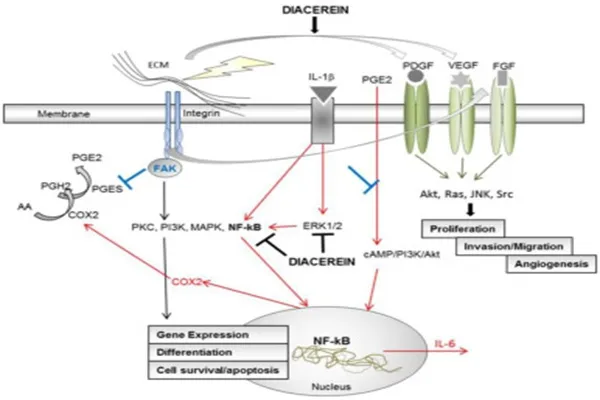
After oral administration, Diacerein Capsules reaches the intestines and, under the combined action of intestinal flora and esterases, is hydrolyzed to remove two acetyl groups, converting them into rhein. The active metabolites are absorbed into the bloodstream and accumulate in the synovium and cartilage tissue of joints. It gradually reverses osteoarthritis damage through three physiological processes: inhibiting inflammatory mediators, promoting matrix synthesis, and blocking cartilage-degrading enzymes. Its onset of action is gradual and prolonged, without the immediate inhibitory effect of fast-acting analgesics, relying on long-term conditioning to delay the degenerative aging process of joints.
The active product first regulates inflammatory signal transduction within the synovium, downregulating the gene expression of key pro-inflammatory cytokines such as IL-1β and TNF-α. Excessive release of interleukins during the pathogenesis of osteoarthritis continuously induces cartilage matrix degradation and synovial hyperplasia and edema. After the levels of pro-inflammatory factors decrease, chronic inflammatory infiltration within the joint cavity gradually alleviates, and secondary problems such as joint swelling and effusion improve. This effect does not interfere with the physiological synthesis pathway of prostaglandins, therefore it does not cause the adverse reactions commonly associated with nonsteroidal anti-inflammatory drugs, such as gastric mucosal damage and increased renal burden.
Building upon the suppression of inflammatory damage, the drug continuously stimulates chondrocytes to autonomously synthesize type II collagen and proteoglycans. These two substances are core components of the articular cartilage matrix, and degenerative joints exhibit a significantly reduced capacity for synthesis. Exogenous active substances, through intracellular signaling upregulation of related genes, gradually replenish the worn-out cartilage matrix, enhancing cartilage elasticity and compressive strength, thus fundamentally slowing the rate of thinning and damage to the articular cartilage.
The drug simultaneously inhibits the excessive production of matrix metalloproteinases and proteoglycans. These hydrolytic enzymes are key catalysts for breaking down cartilage matrix proteins. During arthritis flare-ups, enzyme activity is abnormally high, continuously eroding cartilage tissue structure. Active metabolites, by binding to enzyme precursor structures, block the activation process, significantly reducing the abnormal rate of cartilage matrix degradation and preventing further damage to existing intact cartilage tissue.
Additional benefits related to intestinal metabolism manifest in a gentle bowel-promoting effect. A small amount of unabsorbed original protein and metabolites remain in the colon. The anthraquinone structure slightly stimulates the colonic mucosa, accelerating intestinal peristalsis. A few individuals may experience soft stools, but this gradually subsides as the body develops tolerance and will not induce intractable diarrhea. This multi-layered regulatory logic makes this product a preferred ingredient for long-term chronic management of osteoarthritis.
🧬 Bone and joint preparations and multidisciplinary pharmacy
The core industrial application of Diacerein Capsules is the production of single-agent oral formulations for osteoarthritis. Pharmaceutical companies use qualified raw materials to fill hard capsules or compress them into tablets. This single-agent treatment is used for long-term symptomatic management of primary and secondary knee and hip osteoarthritis, and for managing the course of degenerative joint pain and sports-induced joint degeneration in middle-aged and elderly individuals. Continuous use over several months gradually improves joint stiffness and limited mobility, unlike symptomatic painkillers that only alleviate symptoms.
The development of compound osteoarthritis care formulations continues to broaden the application scenarios of raw materials. The industry is combining Diacerein Capsules with glucosamine and chondroitin sulfate to form tablets and capsules. Based on the synergistic logic of promoting cartilage synthesis and supplementing the matrix, this approach addresses both inflammatory control and nutritional supplementation, optimizing the treatment effect for moderate to severe osteoarthritis. Related compound products are simultaneously increasing in volume in the prescription drug and dietary supplement fields, continuously driving the demand for regular raw material procurement.
In the field of biochemical research, high-purity, standardized raw materials are used as in vitro chondrocyte modeling reagents to construct IL-1-induced chondrogenic cell models. These models serve as positive controls for screening novel joint-protective active substances. Simultaneously, they are used as external standards in liquid chromatography for detecting the effective content of commercially available joint preparations, standardizing the quality control standards for preparation production.
Veterinary bone and joint medications are gradually expanding downstream consumption. Veterinary drug manufacturers are processing this product into pet-specific oral tablets for long-term care of degenerative joint diseases and sports-induced arthritis in older dogs and cats, improving clinical symptoms such as lameness and difficulty getting up in aging pets, and opening up non-human pharmaceutical consumption channels for raw materials.
Functional dietary ingredients are being extended into practical applications, with low-addition formulations in joint care and health foods. These ingredients target sub-healthy individuals with joint strain as daily maintenance ingredients, filling a niche in health product raw materials by leveraging their gentle anti-inflammatory and cartilage-protective properties.
🔭Formulation optimization and in-depth expansion of application boundaries
Globally, the optimization focus surrounding Diacerein Capsules is concentrated on five key areas: development of novel sustained-release formulations, iteration of green synthesis processes, research and development of transdermal dosage forms, refinement of combination formulations, and optimization of derivative matrix. This continuous effort aims to address shortcomings in raw material delivery and expand application scenarios.
The long-acting sustained-release tablet process is being steadily refined. Addressing the shortcomings of poor water solubility and uneven intestinal release of the raw material, a matrix-based sustained-release carrier is used to encapsulate the active pharmaceutical ingredient (API), slowing the release rate in the digestive tract, steadily extending the effective duration of action in vivo, reducing the frequency of single dosing, and improving long-term patient adherence.
The green synthesis route replaces the traditional high-solvent process. The original esterification step consumes large amounts of glacial acetic acid and organic catalysts. A novel enzyme-catalyzed acetylation process completes group modification in a mild aqueous environment, reducing waste acid and wastewater emissions, increasing product yield, and helping domestically produced raw materials obtain GMP certification for oral APIs in Europe and the United States.

The topical transdermal gel formulation overcomes the limitations of single-dose oral administration. By encapsulating Diacerein Capsules with liposomes and liposomes as permeation enhancers, a topical gel for joint application is prepared. The drug penetrates the skin directly to the affected joint, avoiding the minor intestinal discomfort associated with oral administration. It is specifically designed for symptomatic treatment of localized, single-joint inflammation.
The formulation of multi-component combinations is continuously being refined. Parameters are being adjusted around oral formulations combining Diacerein Capsules with plant flavonoids and hyaluronic acid. Leveraging the complementary mechanisms of anti-inflammation, anti-oxidation, and matrix replenishment, the formulation for treating refractory osteoarthritis is optimized.
The anthraquinone core side chain is being fine-tuned to develop next-generation derivatives. By modifying side chain groups on the existing diacetylanthraquinone carboxylic acid, the water solubility and cartilage-targeting enrichment ability of the derivatives are optimized. Lead compounds with lower intestinal irritation and stronger cartilage affinity are being screened, shortening the development cycle of novel joint repair drugs.
Conclusion
Diacerein Capsules, relying on the acetylated anthraquinone carboxylic acid prodrug skeleton, and with its unique pharmacology of producing active rhein through in vivo hydrolysis and inhibiting inflammation and promoting cartilage synthesis, has taken a different approach to bone and joint conditioning than non-steroidal anti-inflammatory drugs. It has become an indispensable raw material for the chronic care of degenerative osteoarthritis, covering the entire application chain of human prescription formulations, pet joint medicines, scientific research calibration reagents, and health food ingredients.
Xi'an Faithful BioTech Co., Ltd. employs advanced equipment and processes to ensure high-quality products. Our high-quality Diacerein Capsules raw materials meet international pharmaceutical standards. Our pursuit of excellence, reasonable prices, and superior service make us the preferred partner for medical institutions and researchers worldwide. If you require research or production of Diacerein Capsules, please contact our technical team at allen@faithfulbio.com.
References
- Pelletier, J. P., et al. (2000). Diacerein: mechanism of action in osteoarthritis. Arthritis Research, 2(3), 209–215.
- Dougados, M., et al. (2001). Clinical efficacy of diacerein in the treatment of osteoarthritis. Osteoarthritis and Cartilage, 9(Suppl A), S65–S72.
- Martel-Pelletier, J. (2003). Effects of diacerein on cartilage matrix metabolism. Current Opinion in Rheumatology, 15(5), 621–626.
- Fautrel, B., et al. (2022). Long-term safety profile of diacerein for knee osteoarthritis. Drugs & Aging, 39(7), 563–572.
- Wang, L., et al. (2024). Transdermal ethosomal gel formulation of diacerein for localized osteoarthritis treatment. Journal of Drug Delivery Science and Technology, 92, 105287.
- Lajeunesse, D., et al. (2019). Rhein inhibits IL-1β mediated chondrocyte catabolism via NF-κB pathway suppression. Journ al of Cellular Biochemistry, 120(8), 13521–13529.