


How can Ammonium hexafluorozirconate be leveraged for diverse industrial applications?
Leave a message
In the evolution of metal surface treatment technology, chromate passivation has long held the position of "standard process." Hexavalent chromium can form a dense conversion film on metal surfaces, significantly improving the corrosion resistance of substrates such as aluminum alloys and galvanized steel. However, the carcinogenicity and environmental toxicity of hexavalent chromium have led to increasingly stringent regulations worldwide. Against this backdrop, Ammonium hexafluorozirconate, as a chromium-free and environmentally friendly alternative, is gradually moving from the laboratory to industrial production lines.
🧪 The structure of ionic crystals determines fundamental physicochemical properties.
Ammonium hexafluorozirconate is a typical ion-complex crystal. Its overall crystal lattice is composed of an ordered arrangement of hexafluorozirconate anions and ammonium cations. A central tetravalent zirconium ion forms an octahedral coordination structure with six fluorine ions. This coordination unit exhibits extremely high bonding strength, constituting the core framework of the molecular structure. The octahedral configuration has low space strain and balanced interatomic forces. Under normal room temperature and pressure conditions, the coordination bonds will not break or recombine, fundamentally ensuring the structural integrity of the crystal during long-term storage. Two ammonium ions are evenly distributed in the interstices of the complex anions, balancing the overall charge through ionic bonds, further stabilizing the entire crystal framework. This is the core structural reason why this raw material is not easily deteriorated at room temperature.
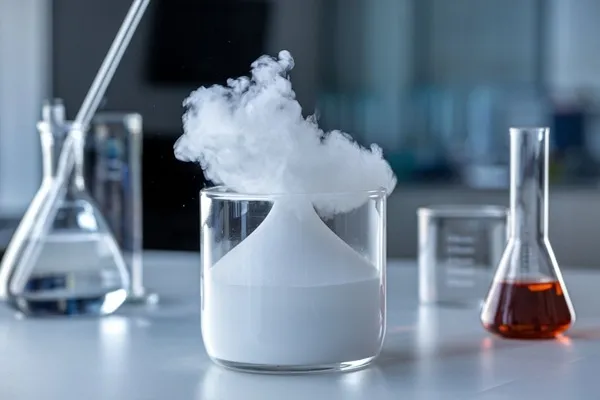
In terms of appearance and powder properties, industrially produced Ammonium hexafluorozirconate exhibits a regular rhomboid or hexagonal crystal morphology, with uniform particle size distribution, smooth particle surfaces, and excellent overall flowability. The powder's angle of repose is within a reasonable range, allowing for smooth material flow during automated industrial conveying, mixing, and feeding processes without bridging, sticking to walls, or agglomeration. This makes it perfectly suited for the continuous operation requirements of ceramic and metal surface treatment production lines. The raw material's hygroscopicity is within a controllable range. In a typical storage environment with 60% relative humidity, after 30 months of sealed storage, the powder remains loose. Only upon prolonged exposure to high humidity air will a slight amount of moisture absorption appear on the surface, which can be easily restored to its original state after simple drying.

Solubility is one of the most prominent physicochemical characteristics of this raw material. Due to its ionic crystal properties, Ammonium hexafluorozirconate is highly soluble in pure water. At 20 degrees Celsius, more than 280 grams of the raw material can dissolve in one liter of water, forming a homogeneous and transparent aqueous solution. This aqueous solution is generally weakly acidic due to a weak, reversible hydrolysis reaction of the hexafluorozirconate ions, releasing trace amounts of hydrogen ions. In contrast, this raw material exhibits extremely low solubility in common organic solvents, almost to the point of being insoluble. This characteristic directly limits its application systems, making it suitable only for aqueous phase production processes and unsuitable for direct use in pure organic phase reaction environments.
Its thermal stability and decomposition characteristics exhibit a defined temperature range. From room temperature to 100 degrees Celsius, Ammonium hexafluorozirconate remains completely stable physicochemically with no significant material changes. When the ambient temperature exceeds 100 degrees Celsius, the crystals begin to gradually pyrolyze, initially releasing ammonia gas. As the temperature continues to rise, the coordination structure of the hexafluorozirconate ion is disrupted, further releasing hydrogen fluoride gas, ultimately leaving behind a solid zirconium fluoride intermediate. Based on this characteristic, the usage time and temperature of this raw material under high-temperature conditions must be strictly controlled. Simultaneously, production and storage areas must be well-ventilated and protected to avoid the impact of irritating gases generated during decomposition. The conventional melting point cannot be directly measured; the substance undergoes thermal decomposition before reaching a molten state, which is a typical characteristic distinguishing inorganic complex salts from organic raw materials.
⚙️ The principle of matter interaction achieved through dissociation and transformation
When Ammonium hexafluorozirconate is added to an aqueous system, it first undergoes crystal dissociation. Ionic bonds break under the influence of water molecules, decomposing into free ammonium ions and hexafluorozirconate complex ions. The entire dissociation process is rapid and complete, leaving no crystal residue. The two ions after dissociation can remain stable for a long time in a weakly acidic aqueous environment. The hexafluorozirconate ions do not immediately undergo deep hydrolysis. This slow reaction characteristic allows the raw material to be evenly distributed throughout the system, reserving sufficient processing time for subsequent interfacial reactions and high-temperature conversions. This is its core advantage as an industrial additive.
In metal surface treatment systems, hexafluorozirconate ions undergo directional hydrolysis on the metal substrate surface, gradually releasing tetravalent zirconium ions and fluoride ions. Zirconium ions possess strong oxyphilicity and preferentially bind to the naturally occurring oxide layer and hydroxyl groups on the metal surface, undergoing a dehydration condensation reaction to gradually grow a dense nanoscale zirconium oxide film on the metal surface. This thin film, with its uniform thickness and dense structure, adheres firmly to the surfaces of metals such as aluminum, zinc, and steel, blocking contact between air, moisture, and corrosive media and the metal substrate, thus physically preventing corrosion reactions. The entire film-forming process does not require high temperature or pressure; it can proceed steadily at room temperature with a gentle reaction pace. The film thickness can be flexibly controlled by adjusting the raw material concentration and processing time.
When applied to high-temperature ceramic and glass systems, moisture evaporates rapidly, and the residual hexafluorozirconate complexes gradually decompose as the kiln temperature rises. Ammonium ions and fluorine evaporate in gaseous form, leaving high-purity zirconium dioxide uniformly dispersed within the glaze and glass substrate. Zirconium dioxide itself possesses high hardness, high heat resistance, and strong chemical inertness. Filling the microscopic gaps in the ceramic glaze layer, it improves the overall density of the glaze, reduces pinholes and cracks, and enhances the thermal shock resistance of the glaze, making ceramic products less prone to breakage under alternating hot and cold conditions. In colored glaze systems, the decomposed zirconium components can also encapsulate coloring ions, fixing the color structure and preventing pigment discoloration and fading during high-temperature firing.
When used as a precursor for high-purity zirconium compounds, Ammonium hexafluorozirconate can be decomposed stepwise and directionally prepared into high-purity zirconium fluoride through a precisely temperature-controlled pyrolysis process. Impurities do not accumulate during the entire conversion process; trace harmful components in the precursor are removed by volatilization, resulting in high-purity zirconium fluoride with regular crystal morphology. This zirconium can be further processed into metallic zirconium and zirconium alloys through reduction processes. The complete conversion pathway of zirconium from complex ions to solid oxides and fluorides is clear and the conversion efficiency is stable, ensuring consistent batch quality of downstream zirconium-based high-end materials and meeting the stringent purity requirements of the metallurgical and nuclear industries.
💊 Covering all types of practical industrial applications
The ceramics and glass manufacturing industries are the largest consumers of Ammonium hexafluorozirconate. Whether in architectural ceramics, everyday ceramics, or artistic ceramics, it is added to glaze systems. As a glaze stabilizer and flux, it optimizes the high-temperature flow properties of glazes, reduces firing temperatures, saves kiln energy, and enhances glaze gloss, hardness, and wear resistance. In ceramic inlay processes, this material improves the uniformity of pigment penetration, resulting in richer, more layered patterns on the tile surface. In glass production, it acts as a clarifying and decolorizing agent, eliminating micro-bubbles within the glass, neutralizing impurity ions in the raw materials, and improving the glass's transparency and appearance.
- Metal surface corrosion protection and passivation is the second largest core application of this material. As a core component of environmentally friendly chromium-free passivating agents, Ammonium hexafluorozirconate completely replaces traditional high-pollution chromate passivation processes. Widely used for surface treatment of aluminum alloy wheels, metal casings of home appliances, galvanized steel sheets, and steel structural workpieces, the resulting zirconium oxide protective film not only provides corrosion protection but also significantly improves the adhesion of subsequent paints, coatings, and metal substrates. The entire process is simple, operates at room temperature, and produces low levels of waste, fully complying with global environmental regulations. It has become the mainstream surface treatment solution in the automotive, home appliance, and hardware industries.
- High-purity zirconium materials and the metallurgical industry use it as a key precursor raw material. High-purity zirconium fluoride, prepared by the pyrolysis of Ammonium hexafluorozirconate, is the basic material for producing nuclear-grade zirconium alloys and aerospace zirconium components. Zirconium alloys are radiation-resistant, corrosion-resistant, and have high mechanical strength, making them widely used in core equipment such as nuclear reactors and aero-engines. Furthermore, in the smelting of steel, magnesium alloys, and aluminum alloys, adding a small amount of this raw material can deoxidize, refine grains, optimize the internal structure of the metal, and improve the overall strength, toughness, and corrosion resistance of the alloy, contributing to the upgrading of high-end metallurgical materials.
- The field of electronic functional materials has a rigid demand for high-purity Ammonium hexafluorozirconate, which is the core zirconium source for preparing zirconia-based oxygen sensors, low-temperature co-fired ceramics, and solid electrolytes. The decomposed zirconia possesses excellent oxygen ion conductivity and high-temperature stability, and is used in automotive exhaust gas sensors and industrial gas detection elements, widely applied in automotive manufacturing and industrial automation. In the production of 5G communication ceramic substrates and high-frequency electronic components, high-purity zirconium components can optimize the dielectric properties of ceramics, reduce signal loss, and meet the high-frequency requirements of the modern electronics industry.
A stable application market has also formed in additives and specialty chemical sub-sectors. In industrial cleaning agents and anodizing sealing agent formulations, this raw material, when compounded with silicates and surfactants, can close the micropores of metal oxide films, further enhancing the anti-corrosion effect. In some special fluorine catalytic reactions, it can serve as a weak fluorine source catalyst, improving the selectivity of organic synthesis reactions. Furthermore, refined reagent-grade products are used as standard substances by major chemical laboratories and testing institutions for zirconium salt composition analysis and complexation chemistry experiments, becoming a commonly used basic material in scientific research.
🔬 Development Direction of Process Optimization and New Application Systems
The iteration of green synthesis processes is a core focus of current industrial upgrading. Traditional production processes use large amounts of high-concentration hydrofluoric acid, leading to severe equipment corrosion and significant pressure on waste gas and wastewater treatment. Currently, the industry is vigorously promoting low-corrosion synthesis routes, using ammonium fluoride to partially replace hydrofluoric acid, coupled with closed-loop reaction devices to achieve the recycling and reuse of reactants. The new process not only significantly reduces the use of corrosive hazardous chemicals and decreases the emission of waste gas, wastewater, and solid waste by more than 50%, but also increases the overall product yield to over 90%, further reducing the impurity content of the finished product, fully meeting international environmental production standards, and helping products enter the global high-end market.
Powder modification and crystal form control technologies continue to be optimized. The dispersibility of native crystal particles in some ultrafine glazes and ultrathin coating systems is insufficient. Technicians are using a low-temperature directional crystallization process to control the crystal growth direction, preparing new crystal forms with finer particle sizes and more uniform morphology. Simultaneously, airflow classification technology is used to finely sort the finished powder, classifying it into different particle size specifications according to downstream needs. Fine-particle-size powders are suitable for precision electronic coatings and ultra-thin ceramic glazes, while large-particle-size powders are suitable for traditional ceramics and metallurgical feedstocks. The modified powder exhibits significantly improved dispersion capabilities, further expanding its application range.
Composite functional additive systems have become a hot research direction. Using Ammonium hexafluorozirconate alone can no longer meet the demands of high-end processes, leading the industry to develop compound zirconium-based additives. These are scientifically formulated with silane coupling agents, organic corrosion inhibitors, and inorganic silicates to create integrated metal treatment agents and multifunctional ceramic additives. The composite system combines the advantages of multiple materials to achieve multiple effects such as film formation, adhesion enhancement, and corrosion inhibition, reducing the types of materials and processes involved in production and improving industrial production efficiency. Currently, several compound products have completed pilot-scale testing and are gradually being launched into the market.
High-end new energy materials applications are a core area for future expansion. Nano-zirconia precursors prepared using this raw material are being applied in the research and development of solid-state batteries and energy storage ceramic materials. Zirconia-based solid electrolytes possess strong ionic conductivity and high safety, making them one of the core materials for next-generation power batteries. Using Ammonium hexafluorozirconate as a starting material, nano-zirconia powder with controllable particle size and extremely high purity can be prepared, meeting the production requirements of solid-state batteries. This direction has enormous market potential and is a key breakthrough for extending the zirconium salt industry chain into high-value-added fields.
Conclusion
Ammonium hexafluorozirconate, with its unique ion-complex crystal structure, possesses excellent water solubility, controllable dissociation, and easy high-temperature conversion. Utilizing multiple mechanisms including ion hydrolysis, interfacial film formation, and high-temperature phase transition, it plays an irreplaceable role in mainstream industrial fields such as ceramics, metal corrosion protection, metallurgy, and electronics. Its mature synthesis process, stable batch quality, and broad process adaptability make it a fundamental raw material bridging upstream and downstream segments of the zirconium salt and fluorochemical industry chain.
Xi'an Faithful BioTech Co., Ltd. combines advanced manufacturing technology with a comprehensive quality assurance system to provide high-quality Ammonium hexafluorozirconate that meets international pharmaceutical standards. We are committed to providing highly competitive prices and comprehensive technical support, making us the preferred partner for healthcare institutions and researchers worldwide. Please contact our technical team (allen@faithfulbio.com) to learn how our products can improve your formulations.


