




Product description

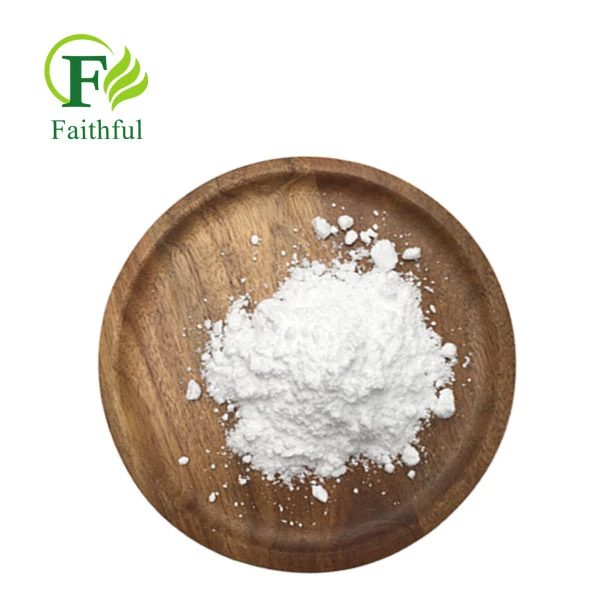
Polycaprolactone powder CAS 24980-41-4 is a semi-crystalline polymer, a chemically synthesized biodegradable polymer. Its structural repeating unit contains five nonpolar methylene-CH2 groups. Blending with substances such as starch can produce fully biodegradable materials.
Polycaprolactone is a biodegradable polymer, non-toxic, biodegradable in soil, with excellent miscibility, mechanical compatibility with many polymers, and good adhesion to many matrices. It is used as an extrusion aid, mold lubricant, release agent, pigment and filler dispersant, and in the polyester segment of polyurethanes and block polyesters.
As a biodegradable polymer, polycaprolactone is widely used in the biomedical field. Its degradation is mainly caused by the hydrolysis of the main chain ester bonds, and can be catalyzed by factors such as temperature, pH, enzymes, and free radicals. In the environment, it is mainly slowly degraded by microorganisms such as fungi, bacteria, and algae, while hydrolysis, oxidation, enzymatic reactions, and pH catalysis can also promote its degradation. Because the ester structure is easily decomposed by microorganisms or enzymes, with the final products being CO2 and H2O, polycaprolactone is easily recycled, allowing for appropriate control of environmental pollution. In the initial stages of degradation, the molecular weight of PCL decreases, and its macroscopic structure decomposes into smaller polymer fragments that can be completely metabolized by cells or microorganisms. Its terminal hydroxyl groups promote end-group degradation, leading to a linear decrease in the degree of polymerization. Free radicals generated by inflammation can also remove hydrogen from PCL, causing chain breakage and accelerating degradation. Thermoinduced PCL degradation is synergistically promoted through end-group decomposition, random chain scission, and free radical-mediated fragmentation. Furthermore, esterases and lipases may also participate in the PCL degradation process through enzymatic hydrolysis.

Send your Inquiry for more details, Click email:sales4@faithfulbio.com
COA
| Tests | Specifications | Results |
| Appearance | White granular | Complies |
| Color,Hazen | 75 max | 10 max |
| MF1 g/10min1'PVC die, 160℃,5.0kg |
2010-4030g | 2059g |
| Water | 0.35%max | 0.20% |
| Conclusion | Conform with enterprise specification | |
Send your Inquiry for more details, Click email:sales4@faithfulbio.com

Density 1.021 g/cm³
Boiling point 225.4ºC at 760 mmHg
Melting point 60ºC (lit.)
Molecular formula (C6H10O2)x
Molecular weight 114.14200
Flash point 84.8ºC
Exact mass 114.06800
PSA 26.30000
LogP 1.10360
Characteristics and functions of Polycaprolactone powder CAS 24980-41-4
Biocompatibility: Polycaprolactone (PCL) exhibits excellent biocompatibility with biological cells, allowing cells to grow normally on its scaffold and degrade into CO2 and H2O. Therefore, PCL can be used as a drug delivery carrier, cosmetic material, and blood transfusion.
Biodegradability: In soil and aquatic environments, PCL completely decomposes into CO2 and H2O within 6–12 months. However, its current high cost limits its application in the biodegradable plastics field.
PCL possesses good mechanical properties and can be processed using injection molding, blow molding, compression molding, and extrusion. Compared to the commonly used biodegradable plastic polylactic acid (PLA), PCL exhibits better hydrophobicity.
PCL can be used in plastic films and bags, 3D printing consumables, and shoe materials.
Good Compatibility with Other Polymers: Polycaprolactone is highly compatible with polymers such as PE, PP, ABS, AS, PC, PVAC, PVB, PVE, PA, and natural rubber. Therefore, PCL can be used as a low-temperature impact modifier for plastics, an environmentally friendly plasticizer, an organic colorant, and a hot melt adhesive.
High Crystallinity and Low Melting Point: PCL has high crystallinity, resulting in a slow degradation rate. Its Tg is -60°C, making it very soft and highly malleable; its melting point is 60~63°C, allowing for low-temperature molding.
Send your Inquiry for more details, Click email:sales4@faithfulbio.com

why choose us
Our Factory

Package

Shipping Methods
|
Transportation Time |
Shipping method |
Cargo weight requirements |
Advantage |
|
3-7 days |
DHL,Germany DHL,Germany DPD, |
Suitable for under 50kg. |
We have warehouses in Germany and California, USA, and customers in Europe and America can enjoy sending goods directly from these two places. |
|
7-15 days |
By Air |
Suitable for more than 50kg. |
|
|
15-60 days |
By Sea |
Suitable for more than 500kg. |
Send your Inquiry for more details, Click email:sales4@faithfulbio.com
FAQ
01. How does Polycaprolactone powder CAS 24980-41-4 degrade?
It degrades through the hydrolysis of ester bonds in its main chain, ultimately producing non-toxic small molecules that can be metabolized by organisms.
02. What is the role of Polycaprolactone powder CAS 24980-41-4 in aesthetic medicine?
As a microsphere filler material, it stimulates the body's own collagen regeneration, achieving long-lasting filling and rejuvenation.
03. Where can I buy Polycaprolactone powder CAS 24980-41-4?
Hot Tags: polycaprolactone powder cas 24980-41-4, China, suppliers, manufacturers, factory, customized, wholesale, buy, price, bulk, pure, producer, discount, for sale, in stock, free sample, raw powder, raw material, made in China