



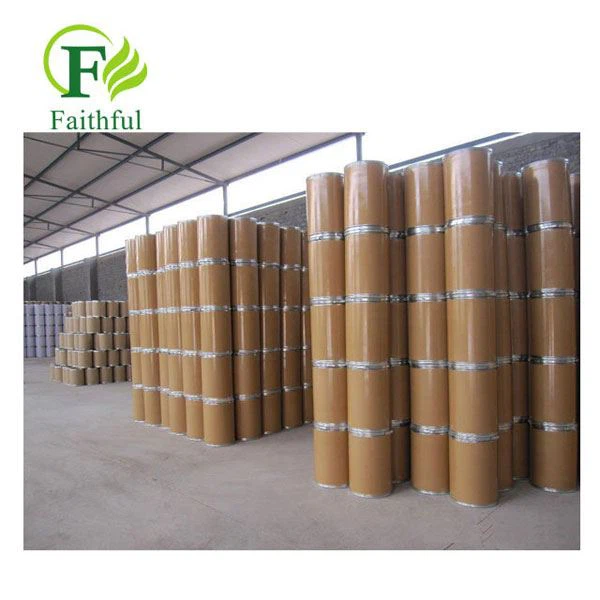
DNA Sodium Salt is an important biochemical compound widely used in molecular biology and genetics research. This DNA salt form is crucial for various applications such as gene cloning, PCR amplification, and recombinant DNA synthesis. Beyond its use in research, Polydeoxyribonucleotide Powder is also being increasingly explored in biotechnology and pharmaceutical fields. According to current market surveys, the DEOXYRIBONUCLEIC ACID provided by our company exhibits stability in aqueous solutions and high solubility, making it an ideal choice for laboratory experiments. This enables researchers to easily manipulate genetic material, allowing scientists to clearly reveal the complexities of gene interactions.
|
Item |
Specification |
Results |
|
Appearance |
White to yellow to beige powder |
Complies |
|
Identification |
IR /TLC (The infrared absorption spectrum should be consistent with the control spectrum) |
Complies |
|
ACTIVE INGREDIENTS |
|
|
|
DEOXYRIBONUCLEIC ACID |
≥98% |
98.8% |
|
HEAVY METALS |
|
|
|
Pb |
≤1.5ppm |
0.03ppm |
|
As |
≤1.0ppm |
0.10ppm |
|
Hg |
≤0.3ppm |
0.005ppm |
|
Cd |
≤0.3ppm |
0.001ppm |
|
Sulphated ash |
≤0.9% |
0.3% |
|
MICROBIOLOGICAL PARAMETERS |
|
|
|
Total Plate Count |
< 10000cfu / g |
10 cfu / g |
|
Yeasts & Molds |
< 1000cfu / g |
3.8 cfu / g |
|
E.Coli |
Negative/1.0g |
Negative |
|
Salmonella |
Negative/1.0g |
Negative |
|
Staphylococcus |
Negative/1.0g |
Negative |
|
Residual Pesticide |
Negative/1.0g |
Negative |
|
Bacterial endotoxins |
<0.25 EU/mg |
Negative |
| Conclusion: |
Conform with enterprise specification . |
Why does Polydeoxyribonucleotide often exist in the form of sodium salt?
Deoxyribonucleic Acid from Salmon sperm is the most common and stable structural form of DNA (deoxyribonucleic acid). It is formed by combining phosphate groups on DNA molecules with sodium ions (NaE) after purification process. According to market research, the "DNA" that you usually purchase from biotech companies mostly refers to this form of sodium salt commodity. According to relevant research, DNA sodium salt has very obvious characteristics in terms of stability and solubility.
1. Stability: The sodium salt form greatly enhances the long-term stability of DNA, making it more suitable for storage and transportation. Compared to other salt forms such as lithium salts and cesium salts, sodium salts are less prone to degradation at room temperature or 4 ℃.
2. Solubility: DNA sodium salt can dissolve well in TE buffer (Tris EDTA) or sterile ultrapure water, facilitating subsequent molecular biology experiments.
How to correctly distinguish and store Polydeoxyribonucleotide?
The DNA Sodium salt we provide is essentially no different from DNA extracted from living organisms. The DNA extracted from living organisms such as bacteria, animal tissues, and blood, after purification (such as ethanol precipitation), is usually obtained as DNA sodium salt. The Polydeoxyribonucleotide provided by our company is also a standardized product that has undergone high purification, quantification, and quality inspection. Its original source was salmon eggs from large-scale aquaculture. Compared to the extraction of wild salmon, the product we provide can avoid many sources of pollution and parasites in the sea. Compared to other biologically extracted products, such as calf thymus DNA, its purity is more refined, especially in the thymus of mammals such as calves, which contain varying degrees of hormone substances that are difficult to remove.
For the storage of Deoxyribonucleic Acid, we need to discuss it on a case by case basis.
1: Short term storage (within a few weeks): Dissolve in TE buffer solution (pH 8.0) and place in a refrigerator at 4 ℃.
2: Long term storage (months to years) can be divided into two situations:
Best method: Dissolve in TE buffer, divide into small portions, and place in a -20 ℃ or -80 ℃ refrigerator. Avoid repeated freezing and thawing.
Dry powder state: Undolved DNA Sodium salt dry powder should be stored in a dry and dark place at -20 ℃.
It should be noted that using TE buffer to dissolve or store DNA is recommended. There are two reasons:
1: Tris component: Provides a stable pH environment (usually pH 8.0) to prevent DNA from undergoing deprotonation (chain breakage) under acidic conditions.
2: EDTA component: chelates divalent metal ions such as magnesium ions (Mg ² ⁺) to inhibit the activity of DNA enzymes. DNAses are the "scissors" that degrade DNA and require Mg ² ⁺ as a cofactor to function.
Can I use water to dissolve Polydeoxyribonucleotide?
In theory, we can use clean sterile water to dissolve DEOXYRIBONUCLEIC ACID powder, but such solvents are not resistant to storage and are easily decomposed. We know that pure water may have a slightly acidic pH and does not contain EDTA to inhibit DNA enzymes. So when dissolving with water, strict requirements should be placed on the water solvent, which must be sterile, nuclease free high-purity water, and should be used as soon as possible (such as for PCR reactions), or immediately packaged and frozen.
Of course, even so, there are still many customers who are troubled by the issue of DNA degradation. Based on our own production and storage experience, our company provides the following experience for you:
1. Avoid repeated freeze-thaw cycles: Repeated freeze-thaw cycles can produce ice crystals and cut long DNA strands. Be sure to divide into small portions.
2. Use reagents and consumables without nucleases, such as gun heads, centrifuge tubes, etc.
3. Gentle operation: Avoid vigorous vortexing or blowing of high molecular weight DNA, as this can generate mechanical shear forces.
4. Low temperature operation: Conduct relevant experiments on ice.
A variety of shipping methods for you to choose
|
Transportation Time |
Shipping method |
Cargo weight requirements |
Advantage |
|
3-7 days |
DHL,Germany DHL,Germany DPD, |
Suitable for under 50kg. |
We have warehouses in Germany and California, USA, |
|
7-15 days |
By Air |
Suitable for more than 50kg. |
|
|
15-60 days |
By Sea |
Suitable for more than 500kg. |
Our strengths:
Our company has passed FDA and ISO19001 quality management system certification. And we have internal cooperation agreements with multiple factories and laboratories in China,Our company can provide Polydeoxyribonucleotide powder etc. at a more favorable price. If you are interested, please leave a message.
We not only have unique advantages in transportation, but also support multiple payment methods, whether you use US dollars, euros, Australian dollars, or local currencies from Singapore, Malaysia, Thailand, and so on. We can also support local currencies in these regions and countries. In addition, we also support bank cards (credit cards, etc.) for payments.
FAQ:
Q1. how to dissolve DNA Sodium salt dry powder?
Add the recommended volume of solvent (such as TE buffer or sterile water) into the centrifuge tube.
Centrifuge briefly to make the powder sink to the bottom of the tube.
Gently flick the tube wall or gently blow with a pipette for several times to make it fully dissolve. Do not swirl.
Standing at 4℃ for several hours or overnight can ensure complete dissolution, especially for high molecular weight DNA.
Q2. How to determine the concentration and purity of DNA?
The most commonly used method is to use a micro spectrophotometer.
Concentration: Measure the absorbance (A260) at 260 nm. 1 A260 units correspond to about 50 µg/mL of double-stranded DNA.
Purity: judged by absorbance ratio:
A260/A280 ratio: The ideal value is about 1.8. A low ratio (< 1.6) may indicate pollution in protein; A high ratio (> 2.0) may indicate RNA pollution or degradation.
A260/A230 ratio: The ideal value should be greater than 2.0. A low ratio may indicate residual salts (such as guanidine salt and EDTA) or organic solvents.
Q3. What if the concentration of DNA solution is too low?
Concentration can be carried out by ethanol precipitation. Add sodium acetate (or ammonium acetate) and ethanol, precipitate DNA at low temperature, discard the supernatant after centrifugation, wash the precipitate with 70% ethanol, and finally dissolve it again with a small amount of solvent.
Q4. what experiments is DNA sodium salt mainly used for?
It is a universal DNA material, which is widely used in:
Positive control of PCR
Restriction Digestion
Cloning experiment (cloning)
Make quantitative standard curve (qPCR) as standard.
In vitro transcription/translation
Cell transfection (although transfection efficiency may not be as good as optimization of specific transfection grade DNA)
Q5. Why doesn't my DNA work well in enzyme digestion or PCR?
Possible reasons include:
Degradation: Diffuse bands appeared on agarose gel electrophoresis.
Insufficient purity: pollutants (such as phenol, chloroform, salt, EDTA) will inhibit enzyme activity. Check the ratios of A260/A230 and A260/A280.
Inaccurate concentration: re-quantify.
Experimental operation problems: incorrect configuration of reaction system, primer problems, etc.
Q6. what is the difference between high molecular weight DNA and conventional DNA Sodium salt?
High molecular weight DNA: usually refers to the complete genomic DNA with a very large fragment length (> 100 kb), which is very fragile and easy to be mechanically sheared. Handling needs to be extremely gentle.
Conventional Polydeoxyribonucleotide: It may come from plasmid, PCR product or genomic DNA that has been cut to some extent, and the fragment length is relatively small, which is easier for routine operation.
Disclaimer: The information published on this website comes from the internet, which does not mean that this website agrees with its views or confirms the authenticity of the content. Please pay attention to distinguish it. In addition, the products provided by our company are only used for scientific research. We are not responsible for the consequences of any improper use.
If you are interested in our products, or have critical suggestions on our articles or are not completely satisfied with the products received, please contact us by Email :sales6@faithfulbio.com . Our team is committed to ensuring the complete satisfaction of customers.
Hot Tags: polydeoxyribonucleotide cas 100403-24-5, China, suppliers, manufacturers, factory, customized, wholesale, buy, price, bulk, pure, producer, discount, for sale, in stock, free sample, raw powder, raw material, made in China